
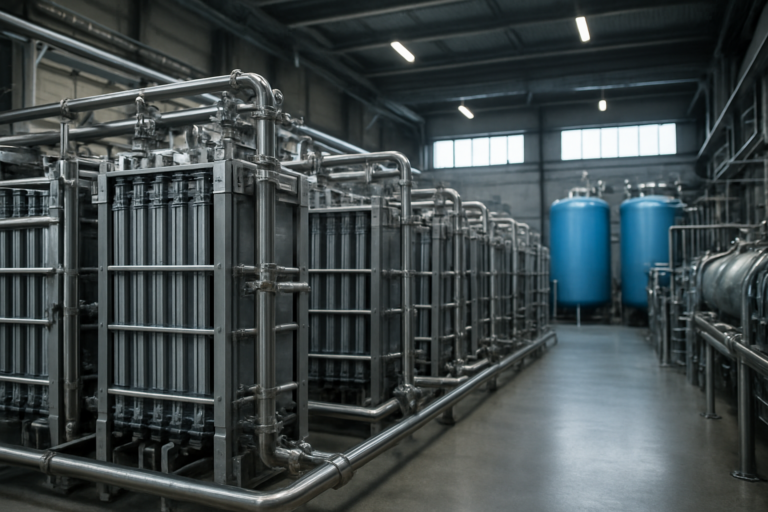
The global energy transition hinges on decarbonizing sectors that are notoriously hard to electrify—heavy industry, long-haul shipping, and chemical manufacturing. Green hydrogen, produced via electrolysis using renewable electricity, has emerged as a leading solution. But scaling this technology from pilot projects to gigawatt-scale infrastructure requires solving challenges in cost, supply chains, power supply, storage and transport all at once.
Why Green Hydrogen Matters
Most hydrogen produced today is “grey” hydrogen, made from natural gas through steam methane reforming—a process that releases large amounts of CO₂. Green hydrogen splits water into hydrogen and oxygen using electricity from solar, wind or hydropower, so it produces no direct carbon emissions. It can replace fossil fuels in applications where batteries and direct electrification struggle:
- Steelmaking – Hydrogen can replace coking coal in direct reduced iron (DRI) processes.
- Fertilisers and chemicals – Green ammonia and methanol can be produced from green hydrogen.
- Refining – Refineries already use large volumes of grey hydrogen that can be swapped for green.
- Shipping and aviation – Hydrogen-derived fuels such as ammonia, e-methanol and synthetic kerosene can power long-distance transport.
- Long-duration energy storage – Surplus renewable power can be stored as hydrogen for weeks or months.
Electrolyser Technologies Compared
Alkaline Electrolysers
The most mature and lowest-cost option, alkaline systems have been used industrially for decades. They are robust but respond more slowly to fluctuating power, which matters when paired with variable solar and wind.
PEM Electrolysers
Proton exchange membrane (PEM) electrolysers are compact and ramp up and down quickly, making them well suited to renewable power. Their drawback is reliance on scarce materials such as iridium and platinum.
Solid Oxide Electrolysers
Solid oxide electrolyser cells (SOEC) operate at high temperatures and can reach very high efficiency, especially when they use waste heat from industrial processes. They are less mature but promising for integration with steel and chemical plants.
The Infrastructure Needed to Scale
- Abundant cheap renewable power – Electricity accounts for the majority of green hydrogen’s production cost, so projects cluster where solar and wind are cheapest.
- Gigawatt-scale manufacturing – Electrolyser factories must scale up to cut costs, much as solar panel costs fell with mass production.
- Pipelines and storage – Repurposed gas pipelines, new hydrogen pipelines and underground salt-cavern storage will move and store hydrogen.
- Ports and export terminals – Hydrogen is often converted to ammonia for shipping between continents.
- Water supply – Electrolysis needs purified water; desalination may be required in dry, sunny regions.
Hydrogen Hubs and Valleys
Rather than building infrastructure piecemeal, governments are backing “hydrogen hubs” that co-locate production, storage and industrial users. The United States, the European Union, India, Australia and countries in the Middle East have launched programmes and incentives to build such clusters. India’s National Green Hydrogen Mission, for example, aims to make the country a major producer and exporter, with incentives for electrolyser manufacturing and green hydrogen production.
Key Challenges
- Cost gap – Green hydrogen remains more expensive than grey hydrogen, and closing the gap depends on cheaper electrolysers, cheaper renewables and carbon pricing.
- Demand certainty – Producers need long-term offtake contracts before committing billions to new plants.
- Efficiency losses – Converting electricity to hydrogen and back loses energy, so hydrogen should be prioritised where direct electrification is not practical.
- Safety and standards – Hydrogen’s flammability and tendency to embrittle some metals require updated codes and certification.
Conclusion
Green hydrogen is one of the most promising tools for decarbonising heavy industry and long-distance transport, but its success depends on infrastructure as much as on technology. Scaling electrolysis to gigawatt levels, building pipelines, storage and export terminals, and securing cheap renewable power will determine how quickly it moves from pilot projects to the backbone of a clean industrial economy. With strong policy support and falling costs, the coming decade will be decisive.