
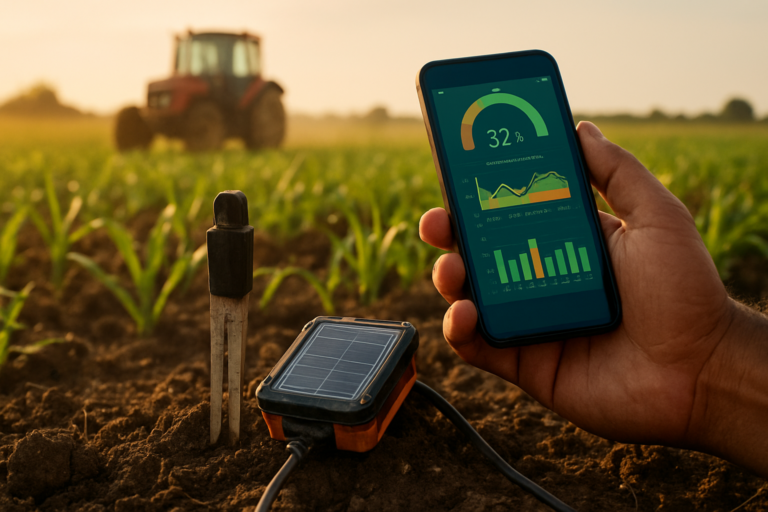
India’s agricultural sector is the backbone of its economy, employing nearly half the workforce and contributing significantly to the GDP. Yet, for decades, farming has faced unpredictable challenges: erratic monsoons, soil degradation, pest infestations, and market volatility. Enter machine learning (ML)—a branch of artificial intelligence that is now quietly revolutionizing how Indian farmers grow crops, manage resources, and make decisions. This isn’t about robots replacing farmers; it’s about empowering them with data-driven insights that were once unimaginable.
The Current State of Indian Agriculture
Indian agriculture is a story of contrasts. On one hand, the country is a global leader in producing milk, pulses, and spices. On the other, smallholder farmers—who make up over 80% of the farming community—struggle with low productivity, fragmented landholdings, and limited access to technology. Traditional farming methods, passed down through generations, are no longer sufficient to meet the demands of a growing population and a changing climate.
The need for a technological leap is urgent. According to a 2023 report by NITI Aayog, digital interventions could boost agricultural GDP by up to 20% by 2030. Machine learning is at the heart of this transformation, offering tools that analyze vast amounts of data to provide actionable insights.
How Machine Learning is Transforming Farming
Machine learning models work by learning patterns from historical and real-time data. In agriculture, this data comes from satellite imagery, weather stations, soil sensors, drones, and even mobile apps. The result is a suite of applications that address specific pain points.
Precision Farming: Less Waste, More Yield
Precision farming uses ML to optimize inputs like water, fertilizer, and pesticides. Instead of applying them uniformly across a field, algorithms analyze soil variability and recommend targeted applications. For example, a model trained on soil nutrient data and crop health images can suggest exactly where to irrigate or spray.
- Water conservation: ML-driven irrigation systems can reduce water usage by 30-50% by predicting crop water needs based on weather forecasts and soil moisture levels.
- Fertilizer efficiency: By analyzing leaf color and growth patterns, ML can recommend precise fertilizer blends, cutting costs and reducing environmental runoff.
Crop Yield Prediction: Planning for the Future
Accurate yield prediction is critical for farmers, traders, and policymakers. ML models combine historical yield data, weather patterns, and satellite imagery to forecast output with remarkable accuracy. The Indian Council of Agricultural Research (ICAR) has deployed such models to predict wheat and rice yields, helping farmers decide when to harvest and sell.
- A study published in the journal Computers and Electronics in Agriculture (2022) showed that ML models achieved 85-90% accuracy in predicting soybean yields in Maharashtra.
- Early warnings of low yields allow farmers to adjust planting schedules or diversify crops, reducing financial risk.
Pest and Disease Detection: Early Intervention
Pest attacks can wipe out entire harvests. ML-powered image recognition tools, often accessed via smartphone apps, allow farmers to photograph a leaf and instantly identify a disease or pest. These apps are trained on thousands of images and can diagnose issues like late blight in potatoes or whitefly in cotton.
- The government’s Kisan Suvidha app now integrates ML-based pest advisory services, reaching over 10 million farmers.
- Timely detection can reduce pesticide use by up to 30%, saving money and protecting beneficial insects.
Market Intelligence: Better Prices for Farmers
One of the biggest challenges for Indian farmers is price volatility. ML models analyze historical market data, weather impacts, and demand trends to predict future prices. This helps farmers decide when and where to sell their produce.
- Startups like Ninjacart and DeHaat use ML to match supply with demand, reducing post-harvest losses that currently account for 15-20% of total produce.
- Real-time price forecasts empower farmers to avoid middlemen and negotiate better deals.
Real-World Success Stories in India
The impact of ML is not theoretical. Several Indian agritech startups and government initiatives are already delivering results.
CropIn: Data-Driven Farm Management
CropIn, a Bengaluru-based startup, uses ML to provide farm management solutions to over 5 million farmers across India. Its platform analyzes satellite and weather data to generate personalized advisories on sowing, irrigation, and harvesting. In a pilot project with sugarcane farmers in Uttar Pradesh, CropIn’s recommendations led to a 15% increase in yield and a 20% reduction in water usage.
Fasal: Hyperlocal Weather Intelligence
Fasal, a startup focused on horticulture, uses ML to deliver hyperlocal weather forecasts and pest alerts. Its sensors collect data on temperature, humidity, and soil moisture, which are fed into models that predict disease outbreaks. For grape farmers in Nashik, Fasal’s system reduced pesticide costs by 40% while improving yield quality.
Government’s Digital Agriculture Mission
The Indian government’s Digital Agriculture Mission, launched in 2021, aims to create a unified platform for farmers. It uses ML to analyze data from over 100 million soil samples collected under the Soil Health Card scheme. The platform generates crop-specific recommendations, helping farmers improve productivity without overusing resources.
Challenges and the Road Ahead
Despite the promise, ML adoption in Indian agriculture faces significant hurdles.
- Data availability: Reliable, high-quality data is scarce, especially for small farms. Many regions lack internet connectivity and sensor infrastructure.
- Digital literacy: Many farmers are unfamiliar with smartphones and data interpretation. Training and user-friendly interfaces are essential.
- Cost: Advanced ML tools can be expensive for smallholders. Subsidies and public-private partnerships are needed to make them accessible.
- Scalability: Solutions that work in one region may not transfer easily to another due to differences in soil, climate, and crops.
To overcome these challenges, a multi-stakeholder approach is necessary. Government investment in rural internet and data collection, combined with startup innovation and farmer training, can bridge the gap. The Indian Space Research Organisation’s (ISRO) satellite data, for instance, is already being used by startups to create ML models for drought prediction and crop monitoring.
The Future of Smart Farming in India
The next decade will see machine learning become as commonplace as the tractor in Indian farms. Advances in edge computing and low-cost sensors will bring real-time analytics to remote villages. Imagine a farmer in Bihar receiving a text message: “Your paddy field shows early signs of nitrogen deficiency. Apply 10 kg of urea in the northwest corner tomorrow morning.” This is not science fiction—it is the direction we are heading.
ML will also play a key role in climate adaptation. As weather patterns become more extreme, models that predict floods, droughts, and heatwaves will help farmers take preventive measures. Additionally, integration with blockchain technology could create transparent supply chains, ensuring farmers get fair prices.
Conclusion
Machine learning is not a silver bullet, but it is a powerful tool that can make Indian agriculture smarter, more sustainable, and more profitable. By turning data into decisions, it empowers farmers to work with precision rather than guesswork. The journey is just beginning, and the potential is immense. For the millions of smallholder farmers who feed the nation, smart farming powered by ML is not just an option—it is the future.