
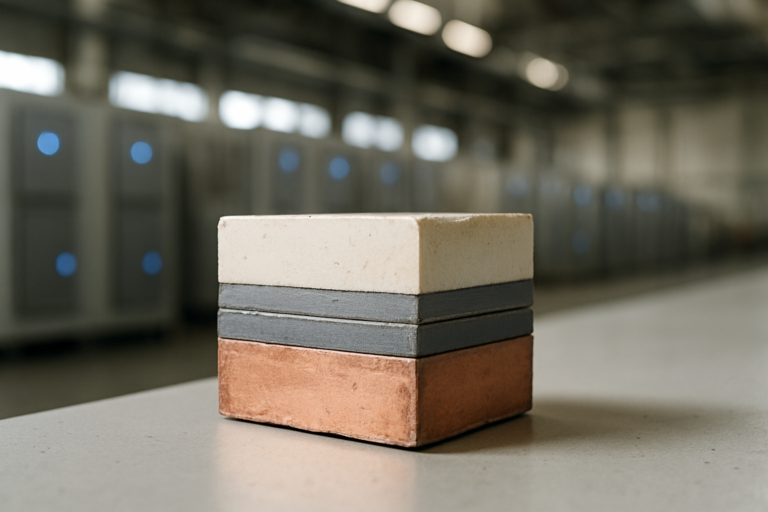
The global push toward renewable energy has created an urgent need for reliable, large-scale energy storage. Lithium-ion batteries, while dominant, face critical limitations when deployed at utility scale: flammable liquid electrolytes, modest energy density, and capacity fade over thousands of cycles. Solid-state electrolytes promise to rewrite this equation, offering a path to safer, denser, and longer-lasting grid storage. But how close are we to making this leap from lab to transformer yard?
What Are Solid-State Electrolytes?
In conventional lithium-ion batteries, the electrolyte is a liquid or gel containing lithium salts that shuttle ions between electrodes. Solid-state batteries replace this liquid with a solid material—typically a ceramic, glass, or solid polymer—that conducts ions without the risk of leakage or combustion. The most promising candidates include lithium garnets (like LLZO), sulfides, and oxide-based ceramics.
This fundamental swap unlocks several game-changing properties. The solid electrolyte acts as both an ion conductor and a physical separator, allowing the use of lithium metal anodes instead of graphite. Lithium metal anodes can store nearly ten times more energy per gram, dramatically increasing the battery’s energy density.
Safety: The Overlooked Advantage for Grid Storage
Grid-scale battery installations, such as those used for solar or wind firming, often contain tens of megawatt-hours of energy. A thermal runaway event in a liquid-electrolyte system can propagate across modules, leading to fires that are difficult to extinguish. Solid-state electrolytes are inherently non-flammable and stable at high temperatures. They do not produce the flammable gases that cause explosions in traditional lithium-ion packs.
For utilities and grid operators, this safety margin reduces insurance costs, simplifies permitting, and allows battery systems to be sited closer to populated areas or sensitive infrastructure. It also eliminates the need for expensive thermal management systems, lowering the balance-of-system cost.
Energy Density: More Power in Less Space
Energy density is critical for grid storage because land and footprint constraints often dictate project feasibility. Solid-state batteries can achieve energy densities of 400–500 Wh/kg at the cell level, compared to 250–300 Wh/kg for best-in-class lithium-ion. At the pack level, the difference is even larger because solid-state cells can be stacked without heavy cooling plates or fire barriers.
A 100 MWh solid-state installation could occupy roughly 60% of the footprint of an equivalent lithium-ion system. For projects in dense urban areas or on repurposed industrial sites, that saving is transformative. Additionally, higher energy density enables longer-duration storage (8–12 hours) without proportionally increasing land use, making it easier to shift solar power into evening peaks.
Cycle Life and Degradation
Grid batteries must survive thousands of cycles—often 5,000 to 10,000—to be economically viable. Solid-state electrolytes are chemically stable against lithium metal, reducing the formation of dendrites and the side reactions that degrade capacity. Early laboratory cells have demonstrated over 10,000 cycles with minimal fade, though real-world performance under variable temperatures and charge rates remains to be proven.
The absence of a liquid electrolyte also eliminates the problem of electrode dissolution and gas evolution, which plagues long-cycle lithium-ion. If solid-state batteries can maintain 80% capacity after 15,000 cycles, they would dramatically lower the levelized cost of storage (LCOS), making renewables-plus-storage cheaper than fossil peaker plants.
Challenges Holding Back Commercialization
Despite the promise, solid-state electrolytes face several hurdles before they can be deployed in megawatt-scale systems.
Interface Resistance: The solid-solid contact between the electrolyte and electrodes creates high resistance, especially during charging and discharging. Researchers are developing thin interlayers and pressure-management systems to maintain intimate contact.
Manufacturing Scalability: Producing defect-free ceramic electrolytes in large sheets is difficult and expensive. Current methods involve sintering at high temperatures, which limits throughput. Companies like QuantumScape and Solid Power are working on roll-to-roll processes, but costs remain above $200/kWh compared to $100/kWh for lithium-ion.
Operating Temperature: Some solid electrolytes require heating to 60–80°C to achieve sufficient ionic conductivity, adding parasitic energy consumption. Room-temperature conductors, such as sulfide-based glasses, are being developed but are sensitive to moisture.
Mechanical Brittleness: Ceramic electrolytes can crack under mechanical stress from cell swelling or vibration. Composite electrolytes that mix ceramics with polymers may offer a compromise.
Grid-Scale Deployment: Where and When
The first solid-state grid storage projects will likely target niche applications where safety or footprint is paramount. For example, urban substations, data centers, and hospital backup systems can benefit from the reduced fire risk. Pilot projects are already underway: in 2024, a 1 MWh solid-state system was installed at a solar farm in California to test cycling behavior.
Analysts at BloombergNEF project that solid-state batteries will reach cost parity with lithium-ion for stationary storage by 2030–2032, driven by economies of scale and improved manufacturing. By 2035, they could capture 20–30% of the new grid storage market, especially for durations longer than four hours.
The Road Ahead
Solid-state electrolytes are not a silver bullet—they must overcome cost and manufacturing barriers. But the safety and energy density advantages make them hard to ignore, especially for storage sites located near homes, data centres and city substations where fire risk is a major concern.
In the near term, expect pilot projects and hybrid designs—semi-solid and gel electrolytes—to bridge the gap while fully solid-state cells mature. Utilities and developers should watch three signals: falling cost per kWh at the pack level, proven cycle life beyond 5,000 cycles in field conditions, and the arrival of gigafactory-scale production lines.
If those milestones are met, solid-state electrolytes could reshape grid-scale storage into something safer, denser and longer-lasting—helping power systems absorb ever larger shares of solar and wind energy.