
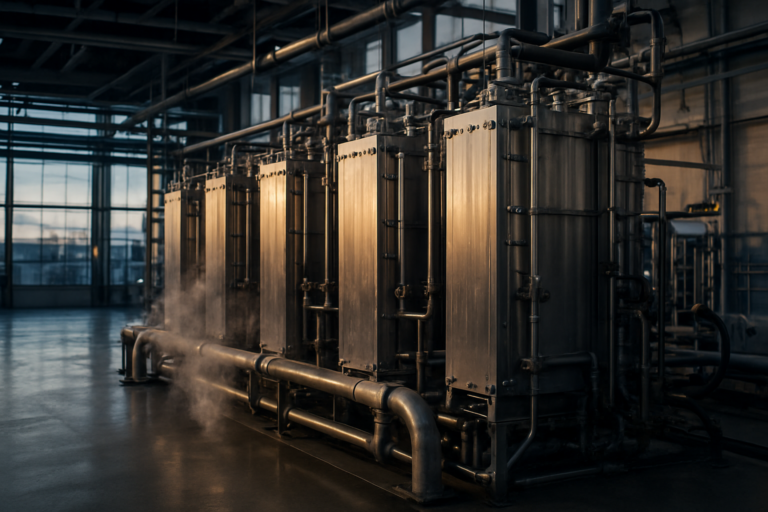
The race to decarbonize heavy industry and long-haul transport is entering a critical phase, and at the heart of this transformation lies a simple molecule: hydrogen. But not all hydrogen is created equal. While the world has long used hydrogen for refining and chemical production, the vast majority is “gray hydrogen,” produced from natural gas with significant carbon emissions. The game-changer is green hydrogen, produced by splitting water using renewable electricity—a process called electrolysis. As costs fall and technology scales, electrolysis is emerging as a foundational tool for industrial decarbonization.
The scale of the challenge is immense. Heavy industries like steel, cement, and chemicals account for roughly 20-25% of global CO2 emissions, and sectors like shipping and aviation are notoriously hard to electrify directly. Green hydrogen offers a way to replace fossil fuels as both a feedstock and a source of high-temperature heat, while also serving as a clean fuel for fuel-cell-powered trucks, ships, and potentially aircraft.
The Electrolysis Landscape: Three Key Technologies
Scaling electrolysis means choosing the right technology for the job. Three main types dominate the current market, each with distinct trade-offs in efficiency, cost, and scalability.
- Alkaline Electrolyzers (AEL): The most mature and cheapest technology. They use a liquid alkaline electrolyte (like potassium hydroxide) and operate at lower temperatures. While cost-effective for large-scale stationary applications, they have lower current density and slower response times, making them less ideal for pairing with intermittent renewables like solar and wind.
- Proton Exchange Membrane (PEM) Electrolyzers: These use a solid polymer membrane and operate at higher current densities. PEMs are more compact, respond rapidly to fluctuating power inputs, and produce high-purity hydrogen. This makes them excellent for dynamic renewable energy integration. However, they rely on expensive materials like platinum and iridium, driving up capital costs.
- Solid Oxide Electrolyzers (SOEC): Operating at very high temperatures (700-850°C), SOECs are highly efficient, especially when waste heat is available. They can also co-electrolyze water and CO2 to produce syngas, a precursor for synthetic fuels. The trade-off is material durability and the need for high-temperature thermal management, limiting them to specialized industrial settings.
According to the International Energy Agency (IEA), global electrolyzer capacity reached nearly 1 GW by the end of 2023, with projections suggesting over 170 GW of capacity could be installed by 2030 if all announced projects materialize. This rapid scaling is driving down costs, with the IEA estimating that green hydrogen production costs could fall by 50-70% by 2030, making it competitive with gray hydrogen in many regions.
Industrial Applications: Where Green Hydrogen Makes the Biggest Impact
The primary value of green hydrogen lies in sectors where direct electrification is impractical or impossible.
- Steelmaking: Traditional blast furnaces use coke (coal) to reduce iron ore, emitting massive CO2. Green hydrogen can replace coke in a process called direct reduced iron (DRI). When powered by renewable energy, this can cut steel production emissions by up to 95%. Major steelmakers like SSAB in Sweden and ArcelorMittal are already piloting hydrogen-based DRI plants.
- Chemical Production: Ammonia, used primarily for fertilizers, is currently made from gray hydrogen. Switching to green hydrogen for ammonia synthesis could decarbonize one of the world’s most carbon-intensive chemical processes. Similarly, methanol and other high-value chemicals can be produced using green hydrogen and captured CO2.
- High-Temperature Heat: Industries like glass, ceramics, and cement require temperatures above 1000°C. Hydrogen combustion can provide this heat without CO2 emissions, though retrofitting existing furnaces remains a technical challenge.
- Heavy Transport: Long-haul trucking, shipping, and aviation are difficult to electrify due to battery weight and energy density. Hydrogen fuel cells offer a viable alternative for trucks and ships, while synthetic fuels derived from green hydrogen (e-fuels) could power aircraft. The first hydrogen-powered trucks are already on European roads, and pilot projects for hydrogen-fueled ships are underway.
Infrastructure and Storage: The Hidden Challenge
Producing green hydrogen is only half the battle. Storing and transporting it economically presents significant hurdles. Hydrogen has a low volumetric energy density, meaning it requires high-pressure compression (350-700 bar) or cryogenic liquefaction (-253°C) for practical storage. Both processes consume energy and add cost.
Pipeline transport, similar to natural gas, is the most efficient option for large volumes, but existing natural gas pipelines require significant modification to handle hydrogen embrittlement. Blending up to 20% hydrogen into natural gas grids is feasible without major changes, offering a near-term pathway for gradual adoption. For long-distance transport, converting hydrogen to ammonia or liquid organic hydrogen carriers (LOHCs) is being explored, allowing use of existing infrastructure.
Economic and Policy Drivers
The economics of green hydrogen have improved dramatically. According to BloombergNEF, the levelized cost of green hydrogen could fall below $2 per kilogram in many regions by 2030, down from $4-6 per kg in 2020. Government incentives are accelerating this trend. The U.S. Inflation Reduction Act offers a production tax credit of up to $3 per kilogram for green hydrogen, while the European Union’s Hydrogen Strategy targets 10 million tonnes of domestic renewable hydrogen production by 2030.
Private sector investment is also surging. In 2023, global hydrogen project investments reached $10 billion, with more than 1,000 projects announced worldwide. Major oil and gas companies, utilities, and industrial conglomerates are all betting on green hydrogen as a core pillar of their net-zero strategies.
The Road Ahead: From Pilot to Scale
While the potential is enormous, scaling electrolysis to the terawatt level required for meaningful industrial decarbonization remains a monumental task. Challenges include securing sufficient renewable electricity, reducing the reliance on critical minerals like iridium, and building out a global hydrogen infrastructure.
Yet the momentum is undeniable. Electrolyzer manufacturing capacity is expanding rapidly, with factories in China, Europe, and North America ramping up production. Innovations in catalyst design, membrane materials, and system integration are driving efficiency gains. The coming decade will determine whether green hydrogen can fulfill its promise as the missing link in the global energy transition.
For heavy industry and transport, the path to net zero runs through the electrolyzer. As the technology matures and scales, green hydrogen is poised to become not just an alternative, but a cornerstone of a decarbonized industrial economy.