
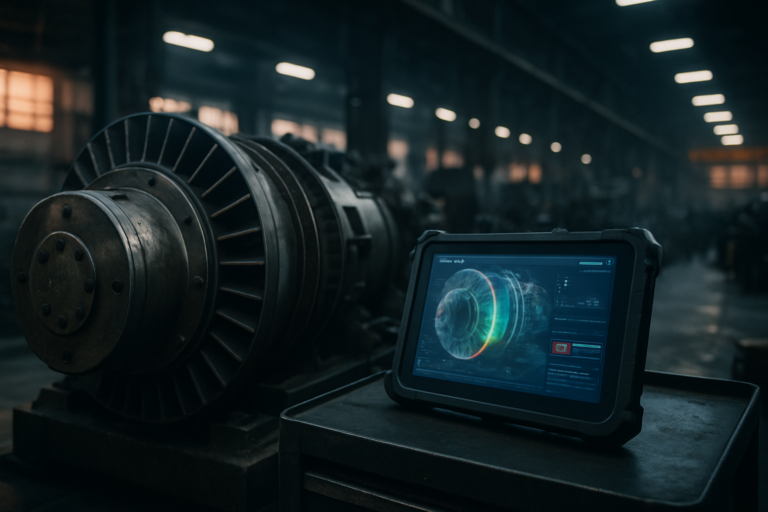
The industrial world is quietly undergoing a transformation—one that doesn’t always make headlines but is reshaping how factories, energy plants, and logistics hubs operate. At the heart of this shift is the digital twin: a living, breathing virtual copy of a physical asset. For managers of heavy machinery, this technology is no longer a futuristic concept. It’s a practical tool that cuts costs, prevents breakdowns, and extends the life of equipment worth millions.
Think of a digital twin as a mirror that reflects every bolt, sensor reading, and performance metric of a real machine. Unlike a static 3D model, this twin constantly updates itself using data from the physical asset. It can run simulations, predict failures, and even test new operating parameters without risking the actual equipment. The result? Maintenance teams shift from reactive repairs to proactive intervention.
What Exactly Is a Digital Twin?
A digital twin is a virtual representation that mirrors a physical object, process, or system. In the context of industrial asset management, it’s built from three core components:
- The physical asset – A turbine, conveyor belt, compressor, or any heavy machine equipped with Industrial IoT (IIoT) sensors.
- The data pipeline – Real-time feeds from temperature gauges, vibration monitors, pressure transducers, and more.
- The analytical engine – Software that processes this data, often using machine learning, to create a dynamic digital model.
The twin evolves throughout the asset’s lifecycle. A new machine starts with a design-based model; over time, it incorporates actual wear patterns, maintenance history, and environmental conditions. This makes it an increasingly accurate partner for decision-making.
How Digital Twins Predict Maintenance Needs
Predictive maintenance is arguably the most valuable application of digital twins. Traditional maintenance follows fixed schedules—replace a part every six months regardless of condition. That approach wastes resources and still misses sudden failures.
A digital twin changes the game by:
- Detecting anomalies early – If a vibration reading deviates 2% from the norm, the twin flags it and correlates it with past failure modes.
- Running “what-if” scenarios – Operators can simulate the effect of increasing load by 10% on a component and see how its temperature, wear rate and remaining useful life would change before anyone touches the real machine.
- Prioritising work orders – Instead of servicing every asset on the calendar, maintenance teams focus on the components the model shows are closest to failure.
Real-World Benefits for Asset-Heavy Industries
Manufacturers, utilities, oil and gas operators and logistics companies are already reporting measurable results from digital twin programmes:
- Less unplanned downtime – Catching faults weeks in advance turns emergency shutdowns into planned, short maintenance windows.
- Longer asset life – Running equipment within its optimal operating envelope reduces stress and slows wear.
- Lower spare-parts inventory – When you know what will fail and when, you stock the right parts instead of everything.
- Safer operations – Engineers can test risky procedures virtually before sending crews into hazardous environments.
For example, a wind farm operator can model each turbine’s gearbox and blades, combining SCADA data with weather forecasts to schedule repairs during low-wind periods when lost generation is minimal.
Building a Digital Twin: What You Need
A working digital twin rests on four layers:
- Sensors and connectivity – IoT sensors capture vibration, temperature, pressure, current and other signals, streamed over industrial networks or 5G.
- A data platform – Time-series databases and data lakes store and clean the incoming streams.
- Models – Physics-based simulations and machine-learning models describe how the asset behaves and degrades.
- Visualisation and integration – Dashboards, 3D views and links to CMMS/ERP systems turn insights into work orders.
Challenges to Plan For
Digital twins are not plug-and-play. Data quality is the biggest hurdle—missing or noisy sensor data produces misleading predictions. Legacy equipment often lacks sensors entirely and needs retrofitting. Organisations must also secure the expanded attack surface that comes with connecting operational technology to the cloud, and train staff to trust and act on model outputs.
The practical approach is to start small: pick one critical, failure-prone asset, prove the value, and then scale the twin across the fleet.
Conclusion
Digital twins are transforming industrial asset management from reactive and calendar-based to predictive and data-driven. By mirroring physical equipment in real time, they help companies cut downtime, extend asset life and make smarter maintenance decisions. As sensors get cheaper and AI models get sharper, the digital twin is set to become a standard tool for every asset-intensive business.