
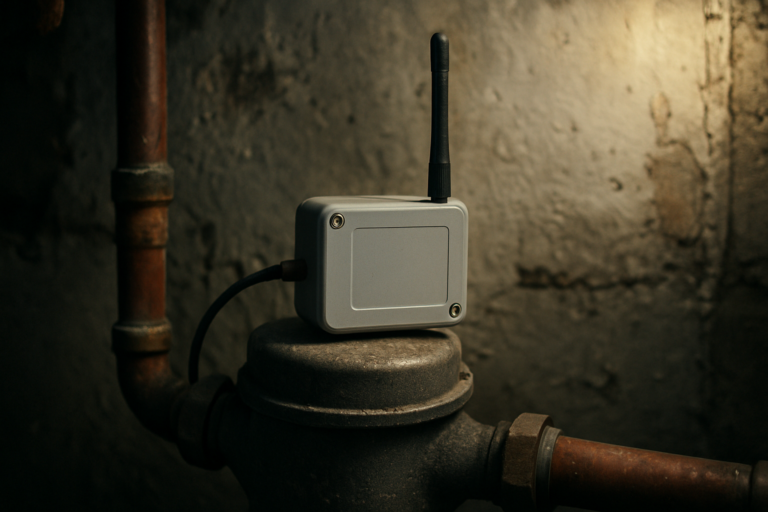
Urban water and gas networks are the silent arteries of modern cities. Yet many of these systems still rely on manual meter readings, periodic inspections, and reactive repairs. The result: billions of gallons of water lost to leaks each year, undetected gas leaks that pose safety risks, and operational inefficiencies that strain municipal budgets. Enter LoRaWAN (Long Range Wide Area Network), a wireless communication protocol designed specifically for IoT devices that need to transmit small amounts of data over long distances while consuming minimal power. By embedding LoRaWAN sensors into water meters, gas pipelines, and distribution nodes, cities can finally achieve real-time visibility into their utility networks—without the high costs and power demands of cellular or Wi-Fi solutions.
What is LoRaWAN?
LoRaWAN is an open standard for low-power wide-area networks (LPWAN) that operates in unlicensed ISM bands (such as 868 MHz in Europe and 915 MHz in North America). It uses a chirp spread spectrum modulation technique that enables communication over distances of up to 10 km in rural areas and 2-5 km in dense urban environments. The network follows a star-of-stars topology: end devices (sensors) communicate with gateways, which forward data to a central network server.
Key characteristics include:
- Low power consumption: Battery life of sensors can exceed 10 years, making it ideal for hard-to-reach locations.
- Long range: Signals can penetrate buildings and underground infrastructure.
- Low data rate: Typically 0.3–50 kbps, sufficient for meter readings, status updates, and alarms.
- Scalability: A single gateway can handle thousands of end devices.
- Bi-directional communication: Allows commands such as remote shut-off valves.
Why LoRaWAN for Urban Utilities?
Traditional cellular networks (4G/5G) consume too much power and require expensive data plans. Wi-Fi has limited range and high energy demands. LoRaWAN fills the gap perfectly for utility monitoring applications where data packets are small and infrequent.
Cost Efficiency
Deploying a LoRaWAN network requires minimal infrastructure—just a few strategically placed gateways can cover an entire city. Sensors themselves are relatively inexpensive, often costing less than $50 each. Municipalities can avoid the recurring costs of cellular subscriptions by using their own private network or a public LoRaWAN provider.
Penetration and Reliability
LoRa signals can travel through concrete, metal, and underground enclosures. This is critical for water meters located in basements or gas meters installed in locked cabinets. In field tests, LoRaWAN has demonstrated reliable communication even when sensors are placed inside manholes.
Battery Life
A typical LoRaWAN water meter sensor can run for 8–12 years on a single AA battery, eliminating the need for frequent maintenance. This dramatically reduces operational costs compared to wired alternatives.
Real-Time Water Monitoring
Water utilities face an average loss of 20–30% of treated water due to leaks, theft, and inaccurate metering. LoRaWAN enables continuous monitoring at every point in the distribution network.
Leak Detection
Pressure and flow sensors connected to LoRaWAN can detect anomalies that indicate a burst pipe. For example, a sudden drop in pressure combined with an increase in flow rate triggers an immediate alert. Cities like Barcelona have reported a 15% reduction in water loss reduction after deploying such systems.
Smart Metering
Remote water meters transmit hourly or daily consumption data, allowing utilities to identify unusual usage patterns, detect tampering, and generate accurate bills without manual visits. In India, smart water metering programmes under urban missions are helping municipal bodies cut non-revenue water and move from flat-rate billing to accurate, consumption-based charges.
Real-Time Gas Monitoring
Pressure and Leak Monitoring
Gas distribution networks rely on stable pressure for safety. LoRaWAN pressure sensors installed at district regulators and along pipelines report readings every few minutes, letting operators spot sudden drops that may signal a leak or third-party damage. Methane detectors placed in underground vaults and near meter banks add another layer of protection.
Smart Gas Meters and Remote Shut-Off
LoRaWAN-enabled gas meters send consumption data automatically and, in many models, include a remotely operated valve. If a leak, earthquake or unpaid account is detected, the utility can shut off supply without sending a crew—improving both safety and operational efficiency.
Challenges to Consider
- Limited bandwidth – LoRaWAN is designed for small, infrequent messages, not video or high-frequency data.
- Spectrum congestion – Unlicensed bands can become crowded in dense cities, so network planning matters.
- Security – Keys must be managed carefully, and devices should support secure firmware updates.
- Integration – Data must flow into existing billing, GIS and SCADA systems to deliver value.
The Future of LoRaWAN in Smart Cities
As cities add more sensors, a single LoRaWAN network can serve water, gas, street lighting, waste collection and air-quality monitoring at the same time, spreading infrastructure costs across departments. Combined with AI analytics and digital twins of utility networks, this data will let utilities predict failures before they happen.
Conclusion
LoRaWAN offers urban utilities a low-cost, long-range and energy-efficient way to monitor water and gas networks in real time. From detecting leaks within minutes to automating meter reading and remote shut-off, it helps utilities cut losses, improve safety and serve customers better. For cities looking to modernise ageing infrastructure, LoRaWAN is one of the most practical places to start.