
As the world races toward net-zero emissions, one hard truth remains: renewable energy alone cannot carry the entire burden. Solar and wind are intermittent, and large-scale battery storage is still expensive and resource-intensive. Meanwhile, heavy industries such as steel, cement, and chemicals continue to burn fossil fuels for high-temperature heat, releasing massive amounts of CO₂. This is where small modular reactors, or SMRs, step in. These compact nuclear reactors offer a compelling path toward decarbonizing both electricity grids and industrial processes. But their real-world deployment is still in its infancy, and the road ahead is layered with technical, regulatory, and economic challenges.
SMRs are not just smaller versions of traditional nuclear plants. They represent a fundamental shift in how nuclear power is built, scaled, and deployed. Designed to be manufactured in factories and assembled on-site, they reduce construction times, lower capital costs, and open doors to locations where giant reactors would never be feasible. More importantly, they can deliver reliable baseload power while also providing the intense heat required for industrial operations. That dual capability makes them a uniquely versatile tool in the global effort to achieve carbon neutrality.
What Are Small Modular Reactors?
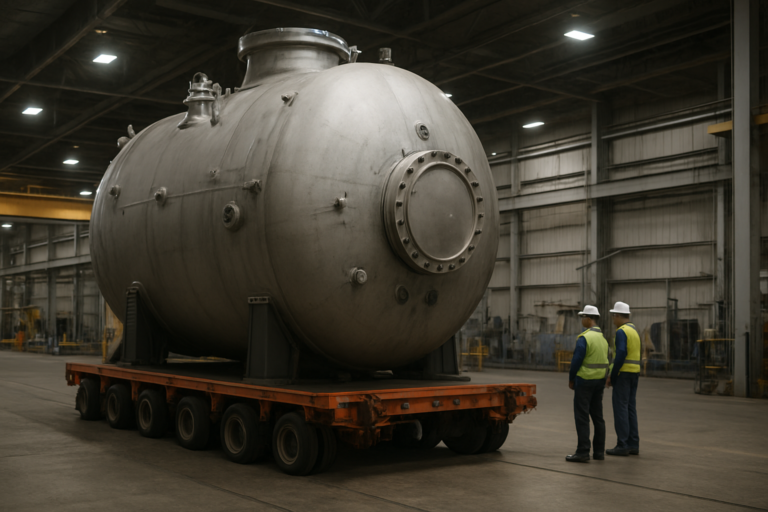
Small modular reactors are nuclear fission reactors with an electrical output of typically less than 300 megawatts (MWe) per unit — about one-third the size of a conventional reactor. The word modular is key: SMRs are designed to be mass-produced in controlled factory environments, transported to site, and installed incrementally. A single facility can house multiple modules, allowing capacity to grow as demand rises.
Unlike conventional reactors that require years of custom construction, SMRs rely on standardized components. They use a variety of cooling technologies, including pressurized water, molten salt, and even liquid metal. Some designs can operate for decades without refuelling, making them attractive for remote communities, mining operations and military bases that currently depend on diesel generators.
Why SMRs Matter for Carbon Neutrality
Reaching net zero requires large amounts of clean electricity that is available around the clock. Solar and wind are now the cheapest sources of new power, but they are variable. SMRs offer firm, low-carbon power that can complement renewables and keep grids stable.
- Replacing coal plants – SMRs can be built on retiring coal sites, reusing grid connections, cooling water and skilled local workforces.
- Industrial heat – Many designs produce high-temperature heat for chemicals, refining and hydrogen production, sectors that are hard to decarbonise.
- Data centres – Technology companies are signing agreements with SMR developers to secure 24/7 carbon-free power for AI and cloud computing.
- Load following – Some SMRs can adjust output to balance fluctuations from renewables.
Key Advantages Over Traditional Nuclear
- Lower upfront cost – Smaller units mean smaller investment per project and lower financial risk.
- Factory construction – Building modules in factories improves quality control and can shorten construction time.
- Passive safety – Many designs rely on natural circulation and gravity to cool the reactor without pumps or operator action.
- Flexible siting – A smaller footprint and emergency planning zone allow placement closer to users.
Projects to Watch
Several SMR programmes are moving from paper to concrete. Canada’s Ontario Power Generation is building a BWRX-300 at the Darlington site; the United States has multiple projects under licensing, including designs from NuScale, TerraPower and X-energy; China has connected its Linglong One demonstration and a high-temperature gas-cooled reactor; and the UK, Poland and India are among countries evaluating SMRs for their energy plans.
Challenges Ahead
- Cost of first-of-a-kind units – Early projects are expensive; savings depend on building many identical units.
- Licensing – Regulators must adapt frameworks designed for large reactors.
- Fuel supply – Some advanced designs need HALEU fuel, whose supply chain is still being built.
- Waste and public acceptance – Long-term waste management and community trust remain essential.
Conclusion
Small modular reactors will not replace renewables, but they can be a powerful partner to them—providing reliable, carbon-free electricity and heat where it is hardest to decarbonise. If the first wave of projects proves that SMRs can be delivered on time and on budget, modular nuclear could become one of the key building blocks of a carbon-neutral world.