
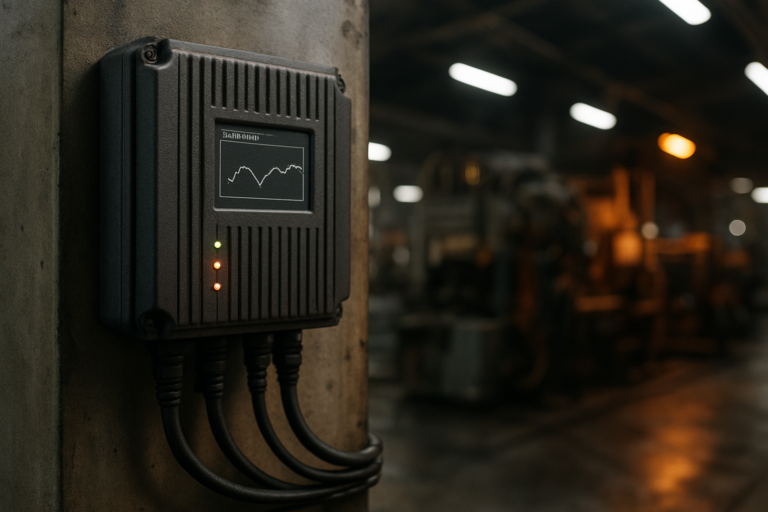
In the race to build smarter factories, autonomous vehicles, and responsive energy grids, a fundamental shift is taking place: data processing is moving away from centralized cloud servers and toward the very edge of the network. This paradigm, known as edge intelligence, is not just a buzzword — it’s a practical response to the limitations of latency, bandwidth, and reliability in industrial environments. When milliseconds can mean the difference between a perfect weld and a scrap part, or between a safe shutdown and a catastrophic failure, processing data at the source becomes a necessity.
Edge intelligence refers to the deployment of computational resources — including machine learning models, data analytics, and control logic — directly on devices or local gateways near where data is generated. Instead of sending every sensor reading to a distant cloud and waiting for a response, edge nodes analyze and act on data in real time. This decentralized approach is transforming industries from manufacturing to oil and gas, enabling a new level of automation and efficiency.
Why Centralized Processing Falls Short in Industrial Settings
Traditional cloud computing relies on a hub-and-spoke model: sensors send data to a central server, the server processes it, and then commands are sent back. This works well for latency-tolerant applications like email or web browsing, but industrial control systems demand near-instantaneous responses. Consider a robotic arm on an assembly line that must adjust its grip based on a pressure sensor reading. A round-trip to a cloud data center hundreds of miles away introduces delays of 50–200 milliseconds — far too slow for precise motion control.
Beyond latency, bandwidth is a major constraint. A single factory can generate terabytes of raw sensor data per day. Uploading all that to the cloud is expensive and often unnecessary. Edge intelligence filters and aggregates data locally, sending only relevant insights upstream. This reduces network congestion and lowers cloud storage costs.
Reliability is another factor. Industrial environments are harsh — temperature extremes, vibration, electromagnetic interference — and network connectivity can be intermittent. Edge nodes continue to operate even when cloud connectivity is lost, ensuring critical processes stay online.
The Core Components of an Edge Intelligence Architecture
Building an edge intelligence system requires a careful blend of hardware, software, and networking. Here are the key elements:
- Edge Devices: Ruggedized computers, programmable logic controllers (PLCs), or specialized AI accelerators installed near machinery. These devices run lightweight operating systems and inference engines.
- Local Data Storage: Solid-state drives or industrial-grade memory that buffers data before processing or forwarding.
- Edge Analytics Software: Algorithms that perform tasks like anomaly detection, predictive maintenance, or quality inspection without cloud dependency.
- Communication Protocols: Low-latency protocols such as MQTT, OPC-UA, or Time-Sensitive Networking (TSN) that ensure reliable data exchange between edge nodes and actuators.
- Orchestration Layer: A management platform that deploys, updates, and monitors edge applications remotely, often using containerization (e.g., Docker, Kubernetes at the edge).
Real-World Applications: Where Edge Intelligence Excels
Edge intelligence is already delivering measurable benefits across industries. Here are three compelling examples:
1. Predictive Maintenance in Manufacturing
A stamping press in an automotive plant generates vibration, temperature, and pressure data every millisecond. By running a machine learning model on an edge device attached to the press, the system can detect subtle deviations that precede bearing failure. The model triggers an alert within 5 milliseconds — fast enough to stop the press before catastrophic damage occurs. According to a 2023 report by McKinsey, predictive maintenance powered by edge computing can reduce unplanned downtime by 30–50% and lower maintenance costs by 10–40%.
2. Real-Time Quality Inspection
In electronics assembly, cameras capture images of circuit boards at high speed. An edge-based computer vision model inspects each board for solder defects, missing components, or misalignments. The inference happens in under 10 milliseconds, allowing defective boards to be rejected immediately without slowing the production line. A study by Deloitte found that edge-enabled visual inspection systems improve defect detection rates by up to 90% compared to manual inspection.
3. Autonomous Material Handling
Warehouses and distribution centers use autonomous guided vehicles (AGVs) that navigate using lidar and cameras. Edge intelligence processes sensor data on the vehicle itself, enabling real-time obstacle avoidance and path planning. This eliminates the need for constant cloud communication, making the fleet more responsive and safer. For example, Amazon’s robotic drive units in fulfillment centers operate entirely on edge processors, coordinating with a central system only for high-level task assignments.
Challenges to Overcome
Despite its promise, edge intelligence is not a plug-and-play solution. Organizations must address several hurdles:
- Hardware Constraints: Edge devices have limited processing power, memory, and battery life compared to cloud servers. Running complex AI models requires efficient model compression and quantization.
- Security Surface: Decentralizing computation increases the number of attack points. Each edge node must be hardened against physical tampering and cyber threats. Zero-trust architectures and hardware security modules are essential.
- Model Management: Updating machine learning models across hundreds or thousands of edge devices is complex. Over-the-air (OTA) update mechanisms and version control systems are needed to avoid inconsistencies.
- Data Governance: With data processed at the edge, organizations must ensure compliance with regulations regarding data sovereignty and privacy, especially in cross-border industrial operations.
The Future: From Edge Intelligence to Swarm Intelligence
As edge computing matures, the next evolution is swarm intelligence — where multiple edge nodes collaborate without a central orchestrator. In a smart factory, for example, a group of robots could share local sensor data to optimize their collective movement, adjusting to each other’s positions in real time. This distributed decision-making mimics biological swarms and promises even greater resilience and efficiency.
According to Gartner, by 2026, over 50% of industrial IoT data will be processed at the edge, up from less than 20% in 2023. This shift is being driven by the falling cost of edge hardware, the maturation of AI at the edge, and the increasing demands of Industry 4.0.
Edge intelligence is not about replacing the cloud — it’s about complementing it. By moving compute to where data lives, industries can achieve the speed, reliability, and autonomy needed for the next generation of automated control. The factories of the future