
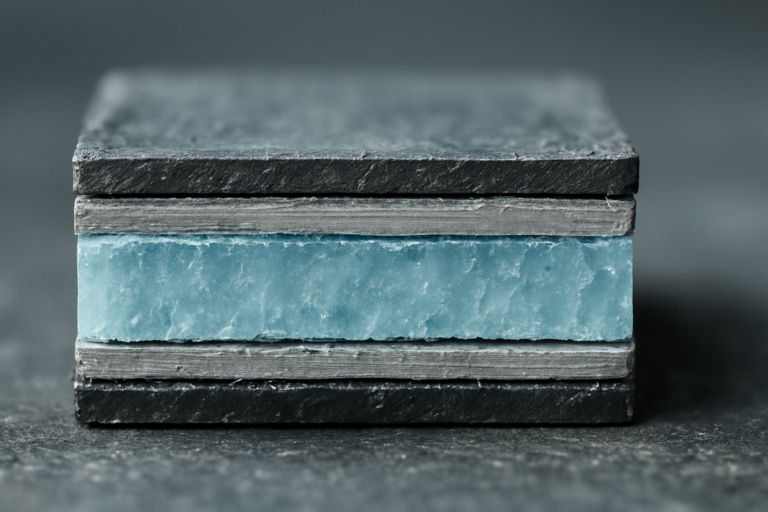
The lithium-ion battery has been the silent backbone of modern technology, powering everything from smartphones to electric vehicles. But as we push the boundaries of energy density, charging speed, and safety, this decades-old chemistry is beginning to show its limits. Enter solid-state batteries—a paradigm shift in energy storage that promises to redefine what’s possible for long-range applications. By replacing the liquid electrolyte with a solid material, these batteries offer a leap in performance and safety that could unlock the next generation of electric vehicles, portable electronics, and grid storage.
At its core, the solid-state battery replaces the flammable liquid electrolyte found in lithium-ion cells with a solid electrolyte—typically a ceramic, glass, or polymer material. This simple swap has profound implications. Solid electrolytes are inherently non-flammable, drastically reducing the risk of thermal runaway and fires that have plagued lithium-ion batteries. This safety advantage alone is a game-changer for applications where battery failure is catastrophic, such as in electric aircraft or medical implants.
But the real prize is energy density. Solid electrolytes allow for the use of a pure lithium metal anode instead of the graphite or silicon anodes used in conventional lithium-ion cells. Lithium metal has a much higher theoretical capacity, meaning more energy can be stored in the same volume. According to a 2023 study published in Nature Energy, solid-state batteries can achieve energy densities exceeding 500 Wh/kg—nearly double that of the best lithium-ion batteries on the market today. For electric vehicles, this translates to ranges of over 500 miles on a single charge, eliminating range anxiety for most drivers.
Another critical advantage is the suppression of dendrite formation. In lithium-ion batteries, tiny needle-like structures called dendrites can grow from the anode during charging, eventually piercing the separator and causing short circuits. Solid electrolytes are mechanically robust enough to block dendrite growth, significantly improving cycle life and safety. Researchers at the University of California, San Diego demonstrated in 2022 that a solid-state cell could retain over 80% capacity after 1,000 charge cycles—compared to typical lithium-ion cells that degrade significantly after 500 cycles.
The implications for long-range applications are vast. Electric vehicles are the most obvious beneficiary. Current lithium-ion batteries in EVs typically offer 250–350 miles of range, requiring heavy battery packs that add weight and cost. Solid-state batteries can deliver the same range with a pack that is 30–50% lighter and smaller, freeing up space for passengers and cargo. Toyota, a leader in solid-state research, aims to commercialize a solid-state EV battery by 2027, promising a range of 745 miles and a charging time of just 10 minutes.
Beyond EVs, solid-state technology is poised to transform consumer electronics. Smartphones and laptops could run for days on a single charge without increasing device thickness. Wearable devices like smartwatches and medical sensors would benefit from thinner, safer batteries that conform to the body. In the aerospace industry, solid-state batteries could enable electric vertical takeoff and landing (eVTOL) aircraft to achieve flight times of 30 minutes or more, making urban air mobility feasible.
Grid storage is another promising frontier. As renewable energy sources like solar and wind become more prevalent, the need for large-scale, long-duration energy storage grows. Solid-state batteries offer higher round-trip efficiency and longer cycle life than current lithium-ion systems, making them ideal for stabilizing the grid. A 2024 report from the International Energy Agency highlighted that solid-state storage could reduce the levelized cost of energy storage by up to 40% by 2030.
Despite these advantages, solid-state batteries are not without challenges. Manufacturing at scale remains a significant hurdle. Solid electrolytes are brittle and difficult to produce in thin, uniform layers without defects. Interfaces between the solid electrolyte and electrodes can also create resistance, reducing power output. Companies like QuantumScape and Solid Power are working on proprietary manufacturing processes, but commercial production is still several years away.
Cost is another barrier. Currently, solid-state batteries cost an estimated $400–600 per kWh, compared to $120–150 per kWh for lithium-ion. However, as production scales and new materials are developed, costs are expected to fall rapidly. Analysts at BloombergNEF predict that solid-state batteries could reach cost parity with lithium-ion by 2030.
The road ahead is paved with innovation. Researchers are exploring sulfide-based solid electrolytes for their high ionic conductivity, while oxide-based materials offer better stability. Hybrid designs that combine solid and liquid electrolytes are also being developed as a bridge to full solid-state technology. Each approach has trade-offs, but the direction is clear: solid-state is the future.
For consumers, the transition will be gradual. The first solid-state batteries will likely appear in premium electric vehicles and high-end electronics before trickling down to mass-market products. But when they arrive, the impact will be transformative. Longer ranges, faster charging, and greater safety will not only improve existing devices but enable entirely new applications—from long-haul electric trucks to autonomous drones that can fly for hours.
The evolution beyond lithium-ion is not just about incremental improvement; it’s about rethinking what energy storage can achieve. Solid-state batteries represent a fundamental shift in chemistry and engineering, one that brings us closer to a world where energy is abundant, safe, and truly portable. As research accelerates and manufacturing matures, the solid-state revolution is poised to power the next era of human innovation.