
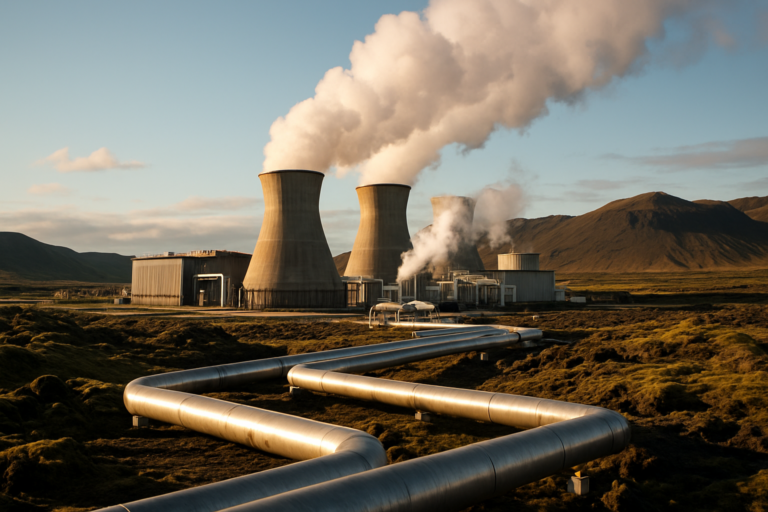
When we talk about renewable energy, the conversation almost always starts with solar and wind. They’re everywhere, they’re getting cheaper, and they’re absolutely essential. But there’s a stubborn problem: the sun sets, and the wind stops blowing. For all their brilliance, solar and wind are intermittent. That’s why the quiet workhorse of the clean energy transition might just be hiding beneath our feet. Deep geothermal energy—specifically enhanced geothermal systems (EGS)—offers something solar and wind can’t: consistent, carbon-free baseload power that runs 24/7. And thanks to recent breakthroughs in drilling and reservoir engineering, we’re finally learning how to tap into the Earth’s core energy at scale.
What Exactly Is Deep Geothermal?
Most people picture geothermal energy as a hot spring or a geyser—like the famous Old Faithful. That’s the classic hydrothermal system, where hot water or steam naturally rises through fractures in the Earth’s crust. But these systems are rare and geographically limited. They only exist where there’s a perfect combination of heat, water, and rock permeability.
Deep geothermal, on the other hand, is a different beast. It doesn’t rely on natural fractures or underground water reservoirs. Instead, it drills deep into hot, dry rock—typically 3 to 10 kilometers down—and then engineers the reservoir by injecting water at high pressure to create fractures. This is called an Enhanced Geothermal System (EGS). The water circulates through these fractures, picks up heat from the surrounding rock, and returns to the surface to drive turbines and generate electricity.
The potential is staggering. According to the U.S. Department of Energy, EGS could provide over 100 gigawatts of clean, baseload power in the United States alone—enough to power 100 million homes. And that’s just the accessible potential with today’s drilling technology. As we get better at drilling deeper and hotter, that number could multiply.
How Enhanced Geothermal Systems Work
If you’re new to EGS, here’s a simple breakdown of the process:
- Drilling: A well is drilled several kilometers deep into hot, crystalline basement rock. This is the hardest part—temperatures can exceed 200°C, and the rock is hard as granite.
- Stimulation: High-pressure water is injected into the well to create or open fractures in the rock. This step is sometimes called “fracking” in the geothermal context, though it’s different from oil and gas fracking.
- Circulation: Water is pumped down the injection well, percolates through the fractured rock, absorbs heat, and rises up through a production well.
- Power Generation: The hot water (or steam) drives a turbine connected to a generator. The cooled water is then recirculated back into the reservoir.
The beauty of this system is that it’s completely closed-loop. The water never touches the surface environment, and there are no direct carbon emissions. It’s a self-contained, underground heat exchanger.
Why Baseload Power Matters
Here’s the thing about modern electricity grids: they need a constant, reliable supply of power to meet demand. When you flip a switch, you expect the lights to come on—no matter if it’s a calm, cloudy afternoon or a stormy winter night. Renewable sources like solar and wind are growing fast, but they still need backup from natural gas or batteries when conditions aren’t ideal.
Deep geothermal flips that script. It runs at a steady output, day and night, rain or shine. It’s not dependent on weather patterns or time of day. That makes it a perfect complement to intermittent renewables. Instead of building massive battery storage to cover the gaps, we could use geothermal as the backbone, with solar and wind layering on top.
The numbers back this up. A study from the Massachusetts Institute of Technology (MIT) estimated that EGS could supply 10% of U.S. electricity by 2050 with a modest investment in R&D. And unlike solar and wind, which require vast tracts of land, a single geothermal plant can produce 24/7 baseload power from a footprint of just a few acres.
The Challenges Holding EGS Back
Of course, if EGS were easy, we’d already be doing it at scale. There are three major hurdles:
1. Drilling Costs
Drilling deep wells is expensive. A single EGS well can cost anywhere from $5 million to $10 million, and you need at least two