
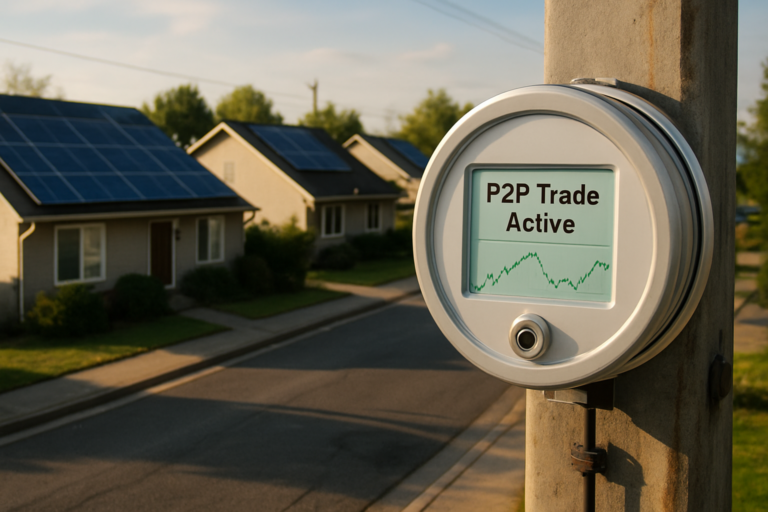
Imagine a cul-de-sac where every other roof glitters with solar panels. On a sunny Tuesday, one household generates twice the electricity it needs. Another, a few doors down, is running two air conditioners and a home bakery, burning through power. Instead of selling that surplus back to a utility at wholesale rates, the first homeowner directly sells it to their neighbor at a price they both agree on. No middleman, no grid bottleneck, just a clean, instant transaction recorded on a blockchain. This isn’t science fiction—it’s peer-to-peer (P2P) energy trading, and it’s already being piloted from Brooklyn to Western Australia.
Decentralized energy markets flip the traditional one-way flow of electricity on its head. They use distributed ledger technology—the same innovation behind cryptocurrencies—to track exactly who produced what energy, who consumed it, and who owes whom. The result is a more resilient, efficient, and democratic power grid, one where households become “prosumers” (producers + consumers) and engage in micro-commerce with their neighbors.
What Is Peer-to-Peer Energy Trading?
At its core, P2P energy trading allows individuals and small businesses with renewable generation assets—usually rooftop solar, but also wind or battery storage—to sell surplus electricity directly to other local consumers. This is fundamentally different from net metering, where extra power is fed into the central grid and credited at a regulated rate. In a P2P market, the transaction happens locally, often within the same street or neighborhood, and pricing is dynamic.
The mechanics are deceptively simple:
- Metering: Smart meters track generation and consumption in near real-time.
- Matching: A digital marketplace matches sellers with buyers based on price, distance, and preferences.
- Trading: The transaction is executed automatically via smart contracts on a blockchain.
- Settlement: The ledger records trade data and triggers payment—often in fiat currency or energy tokens.
What makes this possible is a combination of affordable solar storage, smart grid infrastructure, and blockchain’s ability to create trust without a central authority.
The Role of Blockchain in Energy Markets
Blockchain is the backbone of modern P2P energy platforms. Why? Because energy trading involves many small, fast, and fragmented transactions—exactly what distributed ledgers handle well. Every trade is encrypted, timestamped, and appended to a tamper-proof record. This solves several critical problems:
- Trust: Buyers and sellers don’t need to know or trust each other; the ledger is the honest broker.
- Transparency: All participants see the same verified data, from generation to consumption.
- Automation: Smart contracts execute trades automatically when conditions are met (