
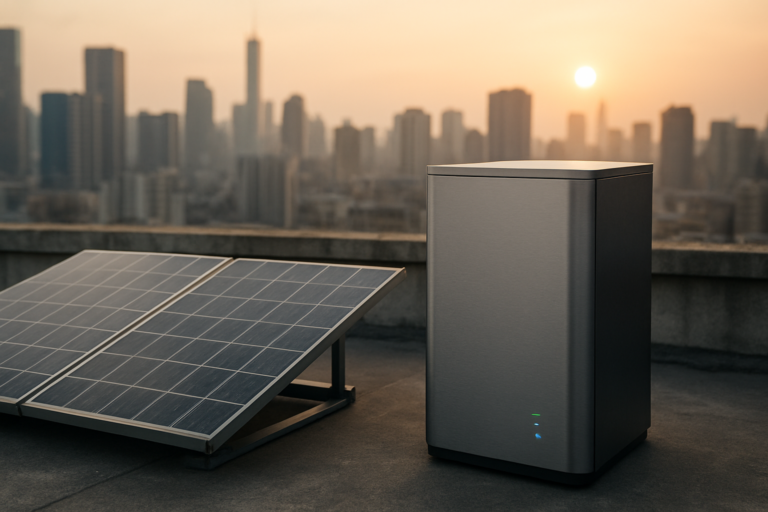
When the central power grid falters—whether due to extreme weather, cyberattacks, or infrastructure aging—entire neighborhoods plunge into darkness. Hospitals switch to backup generators, businesses halt operations, and communication networks falter. But in a growing number of communities, this vulnerability is being neutralized by a quietly revolutionary concept: microgrid resilience. These localized, autonomous power systems are designed not just to supplement the main grid but to operate entirely independently when needed. They represent a shift from centralized dependency to distributed empowerment, and their adoption is accelerating as climate risks and grid instability increase.
Microgrids are not a single technology but a coordinated ecosystem of energy generation, storage, and intelligent control. They typically combine renewable sources like solar panels or wind turbines with battery banks and advanced software that manages power distribution in real time. The key is their ability to “island”—to disconnect from the main grid and continue supplying electricity to a defined area, such as a campus, a neighborhood, or an industrial facility. This self-sufficiency is what makes microgrids a cornerstone of energy resilience.
Why Resilience Matters Now
The global electricity grid is under unprecedented stress. According to the U.S. Energy Information Administration, the average number of major power outages in the United States has more than doubled from the 2000s to the early 2020s. Wildfires, hurricanes, ice storms, and heatwaves are straining infrastructure that was built decades ago. Meanwhile, the rise of electric vehicles and data centers adds new demand. A centralized grid failure can cascade across regions, leaving millions without power for days. Microgrids offer a countermeasure: they can keep critical services running—police stations, water pumps, grocery stores, and even homes—while the main grid is repaired.
Beyond disaster response, microgrids also provide economic benefits. For businesses, downtime during an outage can cost thousands of dollars per hour. For utilities, distributed microgrids reduce congestion on transmission lines and defer expensive upgrades. For communities, they enable local control over energy sources, often integrating cheaper renewable power that lowers long-term costs.
How Autonomous Microgrids Operate
The intelligence of a microgrid lies in its controller—a software-driven brain that balances generation, storage, and load. During normal grid operation, the microgrid may buy or sell power to the main grid. But when a disturbance is detected (voltage drop, frequency shift, or an external signal), the controller instantly isolates the microgrid using fast-acting switches. Inside the island, it must maintain voltage and frequency stability using local sources.
Modern microgrids use real-time monitoring and predictive analytics to anticipate demand and solar generation curves. Some deploy machine learning to optimize battery charging and discharging based on weather forecasts and usage patterns. They can also prioritize loads—keeping life-support equipment online while temporarily cutting non-essential circuits. This level of autonomy reduces the need for human intervention and speeds up response during emergencies.
Key Components of a Resilient Microgrid
To achieve true energy resilience, a microgrid must include several critical elements:
- Diverse Generation Sources: Relying on a single source (e.g., only solar) creates vulnerability to nighttime or cloudy conditions. Combining solar with wind, small hydro, or natural gas generators ensures continuous power.
- Energy Storage: Batteries are the heart of islanding capability. Lithium-ion systems are common, but flow batteries and even hydrogen storage are emerging for longer duration.
- Intelligent Control Software: This is the brain that coordinates switches, inverters, and load management. It must be cyber-secure and capable of seamless transition.
- Physical Infrastructure: Robust wiring, protective relays, and inverter systems that can handle both grid-connected and island mode.
- Backup Fuel and Maintenance: For microgrids using generators, on-site fuel storage and regular maintenance are essential for extended outages.
Real-World Examples of Microgrid Resilience
Several projects demonstrate the effectiveness of microgrids in maintaining power during outages.
Santa Rita Jail in Dublin, California operates one of the largest microgrids in the United States. It combines 1.2 MW of solar panels, a 2 MW fuel cell, and 2 MW of battery storage. The system allowed the jail to remain operational, run its water treatment, and support emergency vehicles during a major grid blackout in San Francisco Bay Area in 2019. The facility saved over $100,000 in annual energy costs and reduced its carbon footprint.
Borrego Springs, California, a remote desert town, installed a community microgrid after suffering frequent outages due to high winds and heat. The system, funded by the U.S. Department of Energy, uses solar arrays, battery storage, and a backup diesel generator. During a 2021 heatwave, the microgrid isolated and provided power to 400 homes and businesses for three days while the main grid was down. Residents reported minimal disruption.
Puerto Rico’s Community Microgrids after Hurricane Maria: Non-profit organizations like Honnold Foundation have helped install rooftop solar-plus-battery microgrids at community centers and medical clinics across the island. These systems have kept lights on and refrigerators running during subsequent hurricanes, proving vital for disaster recovery.
The Role of Policy and Economics
Widespread adoption of microgrids faces barriers. Permitting, interconnection standards, and upfront costs can be high. However, policy changes are encouraging growth. The U.S. Department of Energy’s Microgrid Program provides grants and technical assistance. Some states, like California and New York, offer incentives for resilience-focused microgrids in fire-prone areas. Utilities are also exploring “virtual power plants” that aggregate multiple microgrids to provide services to the main grid.
According to a report by Guidehouse Insights, the global microgrid market is projected to grow from $30 billion in 2023 to over $60 billion by 2030, driven by resilience demand and renewable energy integration. As costs for solar and batteries continue to fall, the economic case strengthens.
Challenges and Future Outlook
While microgrids offer enormous potential, they are not a silver bullet. Designing an autonomous system that can reliably island for days requires careful planning and redundancy. Cybersecurity is a growing concern—if a controller is compromised, the entire microgrid could be disabled. Additionally, regulatory frameworks often lag behind technology, creating legal gray areas for energy trading and grid disconnect.
Nevertheless, innovation continues. Transactive energy concepts allow microgrids to automatically buy and sell power with neighbors during emergencies. Blockchain-based energy trading is being piloted to enable peer-to-peer transactions within microgrids. Advanced AI controllers are being trained on historical data to predict power usage and weather events with increasing accuracy.
For homeowners, businesses, and communities, microgrids are becoming a practical way to take control of energy destiny. They turn passive consumers into active participants in resilience. As climate pressures intensify, the question is not whether microgrids will become mainstream, but how quickly they will spread from select projects to standard infrastructure.
The Bottom Line
Microgrid resilience is about more than backup power—it’s about designing a modern, decentralized energy system that can withstand shocks without collapsing. By combining local generation, storage, and smart control,