
Every time you flip a light switch, charge a phone, or power up a laptop, a fraction of the electricity that made that possible was wasted before it ever reached you. This invisible loss, called resistive heating, is the silent tax on our modern energy grid. For over a century, we accepted it as an unavoidable cost of doing business. But now, a quiet revolution in materials science is promising to change everything: high-temperature superconductors. These remarkable materials can carry electrical current with zero resistance, offering the tantalizing prospect of a truly lossless power grid.
The Invisible Leak: Understanding Grid Losses
Before we dive into the solution, it’s crucial to understand the scale of the problem. Today’s electrical grid relies on conductors like copper and aluminum. As electrons move through these metals, they bump into atoms, losing energy as heat. This is why power lines hum and transformers get warm.
- Significant Waste: According to the U.S. Energy Information Administration, total transmission and distribution losses in the United States average around 5% of the electricity transmitted. While this sounds small, it represents billions of kilowatt-hours annually—enough to power millions of homes.
- The Long-Distance Problem: The further electricity travels, the more is lost. This forces power plants to be built closer to cities, or requires massive, unsightly infrastructure like high-voltage transmission lines.
- Environmental Cost: This wasted energy translates directly into more fuel burned at power plants, increasing carbon emissions and operational costs.
What is a Superconductor?
Superconductivity is a quantum mechanical phenomenon where a material can conduct electricity without any resistance. Discovered in 1911 in mercury cooled to near absolute zero (-273°C), the first generation of superconductors required extremely expensive liquid helium cooling, making them impractical for widespread power grids.
The game-changer arrived in 1986 with the discovery of high-temperature superconductors (HTS) . These materials, typically complex ceramics like yttrium barium copper oxide (YBCO), become superconducting at temperatures above the boiling point of liquid nitrogen (-196°C). Liquid nitrogen is cheap, abundant, and far easier to handle than liquid helium. This economic shift opened the door for real-world applications.
How HTS Cables Work in the Grid
An HTS power cable isn’t a simple wire. It’s a sophisticated piece of engineering.
- The Core: The heart of the cable is a thin ribbon or tape of the HTS material, often deposited on a flexible metal substrate.
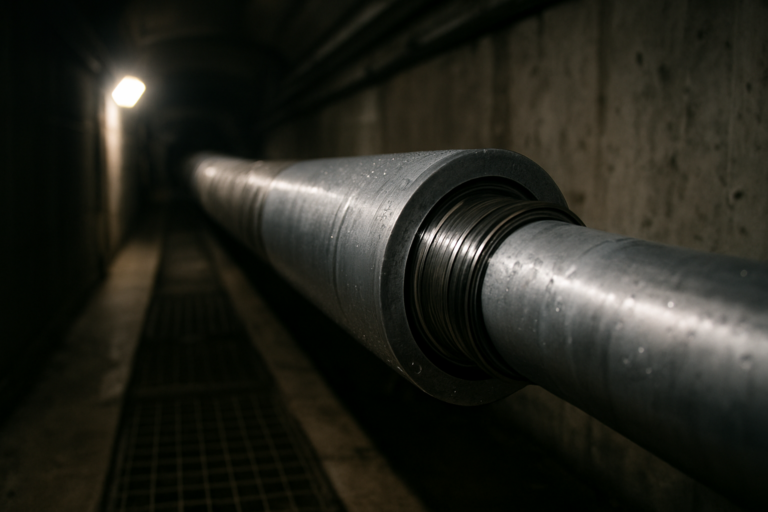
- Cryogenic Cooling: This tape is housed inside a cryostat—a vacuum-insulated pipe that is constantly cooled by circulating liquid nitrogen.
- Electrical Insulation: Surrounding the core are layers of conventional electrical insulation.
- The Shield: A final layer of HTS material acts as a magnetic shield, preventing the cable from generating external electromagnetic fields.
The result is a compact cable that can carry 3 to 5 times more power than a conventional copper cable of the same physical size, with zero resistive losses. The only energy required is for the cooling system, which is a tiny fraction of the energy saved.
Real-World Applications and Pilot Projects
HTS technology is no longer just a lab curiosity. Several major pilot projects have demonstrated its viability:
- Project Hydra (New York): A collaboration between the Department of Energy and private companies, this project demonstrated an HTS cable in the Con Edison grid. It showed that the technology could handle the dynamic load of a major city.
- AmpaCity (Germany): This project in Essen successfully replaced a 1-kilometer section of conventional copper cable with an HTS system, proving its reliability in an urban environment.
- LIPA Grid (Long Island): One of the earliest and most ambitious projects, it installed a 600-meter HTS cable to power a residential area, operating for years without a single outage.
These projects have demonstrated that HTS cables are not only feasible but also offer significant advantages in terms of power density, reliability, and reduced footprint.
Beyond Cables: Other Superconducting Grid Technologies
The potential of superconductors extends beyond just transmission lines.
- Superconducting Fault Current Limiters (SFCLs): These devices act like a smart surge protector for the grid. They instantly and automatically limit the flow of a fault current (like from a lightning strike) without needing a mechanical switch. This protects expensive equipment and prevents cascading blackouts.
- Superconducting Magnetic Energy Storage (SMES): SMES systems store energy in the magnetic field created by a direct current flowing through a superconducting coil. They can discharge massive amounts of power almost instantaneously, making them ideal for stabilizing grid frequency fluctuations caused by renewable sources like solar and wind.
The Economic and Environmental Payoff
The transition to a superconducting grid is not just a technical upgrade; it’s a strategic investment. The initial costs for HTS cables and cooling systems are higher than traditional copper. However, the long-term benefits are compelling.
- Zero Transmission Losses: Eliminating the 5% loss on long-distance lines would save billions of dollars and prevent millions of tons of CO2 emissions annually.
- Right-of-Way Efficiency: An HTS cable can carry the same power as a massive high-voltage tower line in a trench just a few feet wide. This is a game-changer in congested urban areas where acquiring new rights-of-way is prohibitively expensive.
- Enabling Renewable Energy: The best locations for solar and wind farms are often far from cities. An efficient, lossless transmission system makes these remote energy sources economically viable, accelerating the transition to a clean energy grid.
- Grid Resilience: The inherent properties of HTS cables and SFCLs make the grid more robust against faults and cyber-attacks, providing a more stable and secure energy supply.
Challenges on the Path to Widespread Adoption
Despite its immense promise, the road to a fully superconducting grid is not without obstacles.
- Cost of Cooling: While liquid nitrogen is cheap, the cryogenic cooling systems themselves are still expensive and require specialized maintenance.
- Material Manufacturing: Producing long, uniform lengths of HTS tape is a complex process. While costs have dropped dramatically, they need to fall further to compete with copper on a large scale.
- Infrastructure Integration: Retrofitting an aging 20th-century grid with 21st-century superconducting technology requires careful planning and significant upfront capital.
The Future is Cool
Superconductors are poised to be the backbone of a 21st-century energy system. They are not a distant fantasy but a proven technology on the cusp of commercialization. As manufacturing scales up and costs continue to fall, we will likely see HTS cables become the standard for high-density urban power corridors and critical long-distance links. The era of the invisible leak is coming to an end. The future of power transmission is not just efficient—it is, quite literally, supercool.