
The rapid expansion of the Internet of Things (IoT) and the explosion of data generated at the network’s periphery have exposed a fundamental weakness in the traditional cloud-centric model: latency. When a self-driving car needs to react to a pedestrian or a factory robot must halt a production line, sending data hundreds or thousands of miles to a cloud server and waiting for a response is simply too slow. This bottleneck has given rise to a transformative paradigm known as edge intelligence, or edge AI. This approach moves data processing and machine learning inference away from centralized data centers and directly onto local devices—sensors, gateways, routers, or dedicated edge servers—where the data originates.
Edge intelligence is not about replacing the cloud; it’s about augmenting it. The core value proposition lies in dramatically reducing the round-trip time for data transmission, enabling real-time decision-making with minimal delay. Consider a smart surveillance camera: instead of streaming hours of high-definition video to the cloud for analysis, an edge-enabled camera runs a local AI model to detect anomalies—like an intruder or a package theft—in milliseconds. It then sends only the relevant metadata (a short clip or a timestamp) to the cloud, slashing bandwidth usage by over 90%.
This shift addresses a critical pain point for enterprises. According to Gartner, by 2025, 75% of enterprise-generated data will be created and processed outside a traditional centralized data center. The sheer volume of data produced by billions of IoT sensors, industrial machines, and autonomous systems would overwhelm existing network infrastructure if everything were sent to the cloud. Edge intelligence offers a pragmatic solution: process data at the source, extract meaningful insights, and transmit only the essentials.
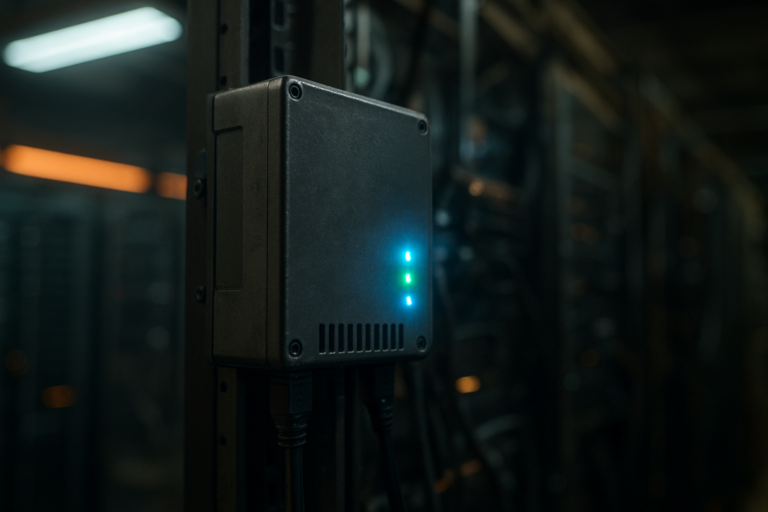
The architecture of edge intelligence is diverse. At one end, we have simple microcontroller units (MCUs) embedded in low-power sensors that can execute pre-trained models for basic anomaly detection. Think of a temperature sensor in a cold storage warehouse that can flag a sudden rise in temperature without needing cloud connectivity. At the more powerful end, we have edge servers or gateway devices equipped with specialized AI accelerators—GPUs, FPGAs, or neural processing units (NPUs)—capable of running complex computer vision or natural language processing models in real time.
One of the most compelling use cases for edge intelligence is in autonomous vehicles. A modern car generates terabytes of sensor data per hour from cameras, LiDAR, radar, and ultrasonic sensors. Transmitting all that data to the cloud for processing is not only impractical but dangerous. Edge processing allows the car’s onboard AI to make split-second decisions—like emergency braking or steering adjustments—without any network dependency. This is a textbook example of latency-critical application where every millisecond counts.
Industrial automation is another fertile ground. Smart factories use edge intelligence for predictive maintenance. A vibration sensor on a motor, when combined with a local AI model, can detect subtle frequency changes that indicate imminent bearing failure. Instead of sending raw vibration data to the cloud, the edge device triggers an alert instantly, allowing maintenance teams to replace the part before a costly shutdown occurs. Industry 4.0 initiatives heavily rely on this real-time, localized processing to optimize production lines and reduce downtime.
Healthcare is also experiencing a quiet revolution with edge AI. Wearable devices like smartwatches now monitor heart rhythms and can detect atrial fibrillation in real time. These devices run small neural networks on the device itself, enabling immediate alerts without needing a constant smartphone connection. Similarly, portable diagnostic tools in remote clinics can analyze ultrasound images or ECG readings locally, providing instant results even in low-bandwidth environments. This democratizes access to advanced diagnostics without relying on stable internet.
However, deploying edge intelligence introduces unique challenges. The primary hurdle is resource constraint: edge devices often have limited power, memory, and compute capabilities compared to cloud servers. Running full-fledged deep learning models on a tiny microcontroller is not trivial. This has spurred innovation in model compression techniques like quantization, pruning, and knowledge distillation. Researchers are building smaller, more efficient models that retain accuracy while fitting within the constraints of edge hardware.
Security and privacy are also paramount. Processing data locally reduces the risk of exposure during transmission, but it also means that sensitive data is stored and processed on more dispersed, potentially less secure devices. A compromised edge node could be an entry point into a larger network. Therefore, edge intelligence deployments require robust security measures, including hardware-based encryption, secure boot, and regular firmware updates. Federated learning, a technique that trains machine learning models across multiple decentralized devices without sharing raw data, adds another layer of privacy preservation.
The market for edge intelligence hardware is growing rapidly. Major chipmakers are producing specialized processors designed for edge inference. NVIDIA’s Jetson series, Intel’s Movidius, and Google’s Coral TPU are just a few examples. These are purpose-built to handle AI workloads at low power, enabling real-time processing in a compact form factor. On the software side, platforms like AWS IoT Greengrass, Azure IoT Edge, and Google’s Edge TPU enable developers to seamlessly deploy models to edge devices.
Edge intelligence also plays a critical role in 5G networks. The low latency promised by 5G—often under 10 milliseconds—is achieved in part through multi-access edge computing (MEC), which places compute resources at the base stations or network edges. This allows applications like augmented reality (AR) for remote assistance and ultra-reliable low-latency communications (URLLC) for industrial control systems to function without jitter.
Looking ahead, the future of edge intelligence is deeply intertwined with the concept of the distributed cloud. Rather than thinking of the cloud as a single, remote location, we will see it as a continuum spanning hyperscale data centers, regional facilities, and edge nodes. Workloads will be intelligently orchestrated across this spectrum based on latency, bandwidth, and compute requirements. A video analytics application might use a local edge server for real-time tracking and upload aggregated logs to the cloud weekly.
The benefits extend beyond latency reduction. Edge intelligence drastically cuts bandwidth costs by minimizing the amount of data sent over the network. It also improves reliability—if the internet connection drops, edge devices can continue to function autonomously. For remote operations in oil rigs, mining sites, or agricultural fields, this resilience is invaluable. Furthermore, processing data locally reduces the carbon footprint associated with constant data transmission and cloud compute, aligning with sustainability goals.
Despite the promise, edge intelligence is not a one-size-fits-all answer. Simple alert-based systems may run perfectly on a microcontroller, while complex model training still belongs in the cloud. The key is a thoughtful architectural decision that balances cost, latency, power consumption, and accuracy. Organizations that successfully marry edge intelligence with cloud capabilities will unlock new levels of operational efficiency, real-time responsiveness, and customer experience.
In summary, edge intelligence is fundamentally reshaping where and how data is processed. By situating AI workloads at the source of data generation, it enables real-time decision-making, reduces bandwidth dependency, and enhances privacy. As devices become more powerful and model compression techniques advance, we will see edge intelligence move from niche applications into mainstream infrastructure. The edge is no longer just a point of data collection—it is becoming an intelligent node in a global, distributed computing fabric. For businesses willing to embrace this shift, the competitive advantage is clear: speed, resilience, and insights delivered where they matter most.