
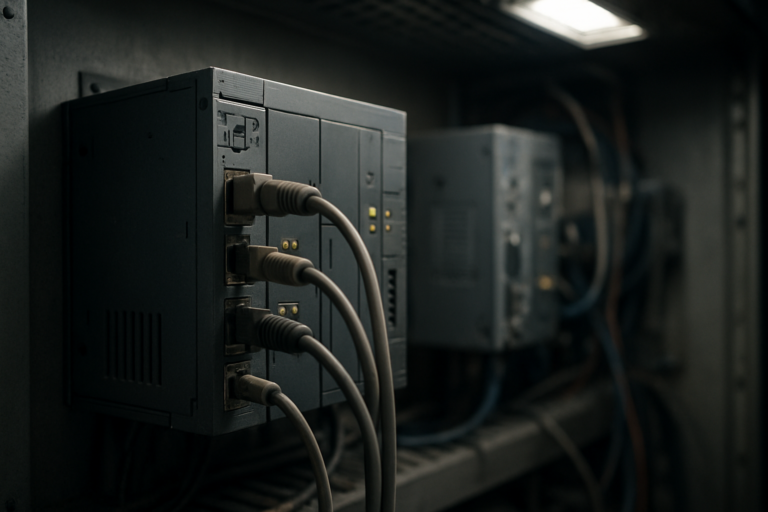
The modern world runs on a silent partnership between code and steel. From the automated assembly lines that build our cars to the smart grids that deliver electricity to our homes, cyber-physical systems (CPS) are the invisible backbone of modern civilization. These systems seamlessly integrate computational logic with physical processes, enabling real-time monitoring, control, and automation. But this convergence also creates a dangerous attack surface—one where a digital breach can cause real-world destruction.
As industries race toward Industry 4.0 and the Industrial Internet of Things (IIoT), securing cyber-physical systems has become one of the most urgent challenges of our time. Unlike traditional IT security, where the worst-case scenario is data loss or financial theft, a compromised CPS can lead to physical damage, environmental disasters, or even loss of life. This blog explores the unique vulnerabilities of CPS, the evolving threat landscape, and how organizations can build a robust systemic defense.
Understanding Cyber-Physical Systems and Their Attack Surface
A cyber-physical system is any system that integrates computation, networking, and physical processes. Examples include:
- SCADA systems in power plants and water treatment facilities
- Industrial control systems (ICS) in manufacturing
- Smart building management systems (HVAC, lighting, elevators)
- Autonomous vehicles and drone swarms
- Medical devices like insulin pumps and MRI machines
- Smart grid infrastructure for energy distribution
What makes CPS uniquely vulnerable is the direct link between the digital and physical realms. In a typical IT system, an attacker might steal data or encrypt files. In a CPS, an attacker can override safety limits, open valves, stop motors, or cause explosions. The infamous Stuxnet worm (2010) demonstrated this chillingly—it physically destroyed centrifuges in Iran’s nuclear program by altering their rotational speeds while feeding false sensor data to operators.
The Expanding Attack Surface
The number of connected industrial devices is exploding. According to a 2023 report from Gartner, over 25 billion IoT devices are expected to be in use by 2025, with a significant portion in industrial environments. Each connected sensor, actuator, or controller becomes a potential entry point. Many of these devices were designed decades ago, long before cybersecurity was a concern, and they often run on legacy protocols like Modbus or DNP3 that lack authentication or encryption.
Key Vulnerabilities in Cyber-Physical Systems
1. Legacy Hardware and Software
Industrial equipment often has a lifespan of 15–30 years. These systems were built for reliability and uptime, not security. Patching is difficult because it requires downtime, and many industrial processes run 24/7. As a result, unpatched vulnerabilities remain open for years.
2. Convergence of IT and OT
Historically, operational technology (OT) networks were air-gapped—physically isolated from the internet and corporate IT. But the push for data-driven optimization has blurred that boundary. Now, OT networks are connected to enterprise networks, cloud platforms, and even remote access tools. This convergence exposes OT to IT-style attacks like phishing, ransomware, and lateral movement.
3. Insecure Protocols
Many CPS communicate using legacy protocols that were never designed with security in mind. Modbus, for example, has no built-in authentication or encryption. An attacker who gains access to the network can send arbitrary commands to controllers with ease.
4. Lack of Visibility
Organizations often have limited visibility into their OT assets. A 2022 survey by Dragos found that 60% of industrial organizations did not have a complete inventory of their connected devices. Without knowing what’s on the network, you can’t protect it.
5. Safety vs. Security Trade-offs
In CPS, safety is paramount. Security measures that introduce latency or require reboots can compromise safety. For example, a firewall that blocks a critical control command during an emergency could cause more harm than the attack itself.
The Threat Landscape: From Hacktivists to Nation-States
Cyber-physical attacks are no longer theoretical. In 2021, a hacker gained access to a Florida water treatment plant and attempted to poison the water supply by increasing sodium hydroxide levels. The attack was thwarted only because an operator noticed the cursor moving on its own. In 2022, the Colonial Pipeline ransomware attack disrupted fuel supply across the U.S. East Coast, highlighting the fragility of critical infrastructure.
Nation-state actors are the most sophisticated threat. Groups like APT33 (linked to Iran) and Sandworm (linked to Russia) have targeted energy, manufacturing, and transportation sectors. Their goals range from espionage to sabotage. According to IBM X-Force’s 2023 Threat Intelligence Index, attacks on industrial control systems increased by 40% year-over-year.
Building a Systemic Defense: Strategies for Securing CPS
Securing cyber-physical systems requires a holistic approach that goes beyond traditional IT security. Here are the core pillars of a robust defense strategy.
1. Asset Discovery and Inventory
You can’t protect what you don’t know. Deploy passive and active scanning tools designed for OT environments to identify every device, protocol, and firmware version. Solutions like Nozomi Networks or Claroty can provide continuous visibility without disrupting operations.
2. Network Segmentation
Isolate OT networks from corporate IT and the internet using firewalls, one-way data diodes, and VLANs. Use the Purdue model for industrial control systems to create security zones and enforce strict traffic rules between levels.
3. Zero-Trust Architecture for OT
Apply zero-trust principles to industrial environments: never trust, always verify. Implement micro-segmentation, multifactor authentication for remote access, and continuous monitoring of all communications. Even within the OT network, devices should only be able to communicate with authorized peers.
4. Secure Remote Access
Many CPS require remote maintenance by vendors or engineers. Use jump hosts with session recording, time-limited access, and VPNs with strong encryption. Never expose PLCs or RTUs directly to the internet.
5. Anomaly Detection and Behavioral Analytics
Traditional signature-based detection fails against novel attacks. Deploy machine learning models that learn the normal behavior of industrial processes—expected temperatures, pressures, motor speeds—and alert on deviations. This can detect attacks that manipulate physical parameters.
6. Patching and Lifecycle Management
Work with vendors to establish a