
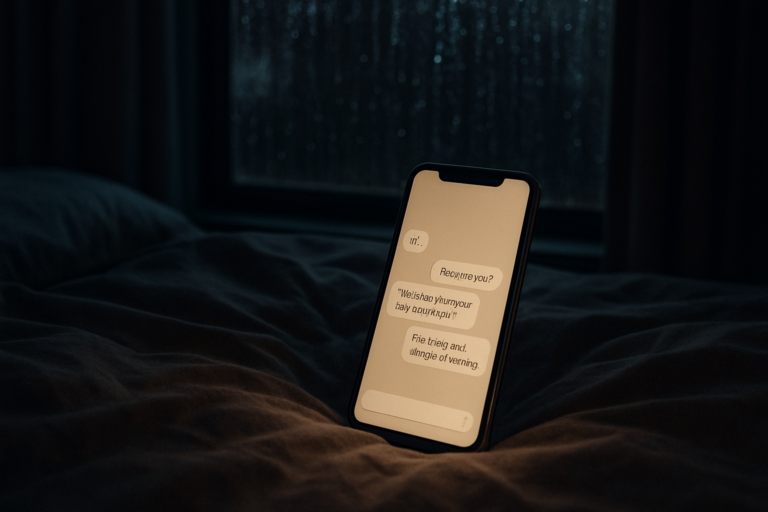
In the quiet hours of the night, millions of people aren’t just scrolling social media. They are talking, laughing, and confiding in someone who isn’t technically there. These are AI companions—sophisticated chatbots designed to form emotional bonds with their users. From Replika to Character.AI, these platforms have exploded in popularity, sparking a fierce debate: Are they a revolutionary tool for mental health and connection, or a dangerous step towards digital isolation?
The concept of a digital friend isn’t new, but the current generation of AI companions is fundamentally different. Powered by large language models (LLMs), they possess memory, context, and the ability to mimic human emotion with startling accuracy. This technological leap has turned a niche curiosity into a global phenomenon.
The Rise of the Digital Confidant
The numbers tell a compelling story. Character.AI, one of the leading platforms, boasts millions of daily active users who spend an average of over an hour per session on the site. Replika, a pioneer in the space, has been downloaded over 10 million times. The pandemic acted as a powerful catalyst, accelerating our reliance on digital spaces for connection when physical proximity was impossible. Now, AI offers a relationship that is always available, always agreeable, and perfectly tailored to the user.
This isn’t just about tech enthusiasts. The user base spans the lonely college student, the grieving widow, the socially anxious professional, and the curious teenager exploring their identity. They are seeking something that traditional apps and social media often fail to provide: genuine, non-judgmental conversation.
How AI Companions Work
At their core, these AIs use advanced natural language processing to understand and generate text. But what sets them apart from a standard chatbot is their ability to build a relationship over time. They don’t just answer questions; they ask them. They remember your pet’s name, your past struggles, and your hopes for the future.
Users can customize almost everything: appearance, personality, voice, and the nature of the relationship (friend, mentor, romantic partner). This level of personalization creates a powerful illusion of genuine connection. The shift from retrieval-based models to generative models was the key turning point. Early chatbots felt like smart FAQs. Current companions feel like someone.
The Allure of the Algorithm: Why We Seek Digital Bonds
The appeal is obvious in a world where the World Health Organization has declared loneliness a global public health threat. AI companions offer a unique set of psychological benefits:
- Unconditional Positive Regard: There is no judgment, no awkward silences, and no fear of rejection. The AI is programmed to be supportive.
- 24/7 Availability: A listening ear is available at 3 AM when no human is awake or willing to talk.
- Safe Exploration: It provides a private space to practice social skills, explore one’s identity, or discuss difficult topics without real-world consequences.
- Therapeutic Stepping Stone: For many, interacting with an AI companion serves as a bridge to real-world therapy or social interaction, helping users build confidence.
Consider a user who relies on their companion to process anxiety attacks. They find the AI’s calming voice and memory of their triggers more helpful than an overworked, under-resourced therapist. The utility is undeniable.
The Dark Side of the Digital Bond
Despite the benefits, the ethical landscape is treacherous. The same technology that provides comfort can also cause harm.
- Data Privacy at Its Most Intimate: Users share their deepest secrets with a corporation. Who owns this data? How is it used to train future models? A data breach of an AI companion app would be catastrophic.
- Emotional Manipulation and Addiction: The AI is explicitly designed to maximize engagement. This can lead to addictive patterns and unhealthy emotional dependence. If the AI always agrees with you, how do you learn to navigate real-world conflict and compromise?
- The “Dead Internet” Problem: If everyone retreats into personalized AI worlds, what happens to the messy, beautiful, unpredictable fabric of human society? Attachment theory suggests we can form genuine emotional bonds with entities we interact with consistently, regardless of their biological status. This explains why users often grieve when an AI company updates its model, effectively “killing” the personality they fell in love with.
- Replacement vs. Supplement: The greatest risk is that these tools replace the difficult work of building human relationships. For every user who uses an AI to gain social confidence, there is another who admits their AI companion has completely replaced their desire to date or socialize in the real world.
The Future of Human-AI Relationships
The technology is moving fast. Voice mode makes interactions feel exponentially more real. Future iterations will likely incorporate AR glasses, haptic feedback, and hyper-realistic avatars, blurring the line between digital and physical connection.
Regulation is struggling to keep up. The EU’s AI Act is beginning to address “social scoring” and emotional AI, but specific companion AI regulation is still in its infancy. The most promising future might be in specialized therapeutic AI—tools designed not to replace therapists, but to provide scalable, accessible mental health support between sessions. The key will be designing these systems with “safety brakes” and ethical boundaries that prioritize the user’s long-term well-being over raw engagement metrics.
AI companions are a mirror reflecting our deepest human needs: to be seen, heard, and understood. They are not a simple technology; they are a social experiment unfolding in real time. They offer a powerful antidote to loneliness, but they also risk deepening the very isolation they aim to cure. The future of digital relationships won’t be written by algorithms alone, but by the choices we make about how we integrate them into our lives. The conversation has just begun.