
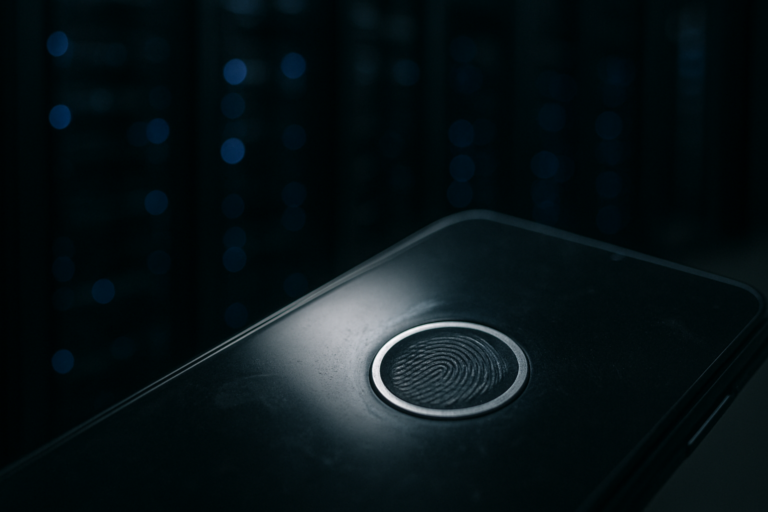
In a world where unlocking your phone with a glance or paying with a touch has become second nature, biometric security has woven itself into the fabric of daily life. From fingerprint scanners on smartphones to facial recognition at airport gates, these systems promise unparalleled convenience. But as we trade passwords for fingerprints and PINs for iris scans, a pressing question emerges: are we sacrificing our privacy for a few seconds of ease?
Biometric authentication—using unique physical or behavioral traits to verify identity—is not new. Fingerprints have been used for over a century in law enforcement. However, the digital age has supercharged its adoption. According to a 2023 report by Grand View Research, the global biometric system market is expected to reach $82.9 billion by 2027, growing at a compound annual growth rate (CAGR) of 19.5%. This explosive growth is driven by the promise of seamless security, but it also raises critical questions about data protection, consent, and the long-term implications of storing our most personal identifiers.
The Allure of Biometrics: Why We Embrace It
The primary appeal of biometric authentication is its simplicity. Unlike passwords, which can be forgotten, stolen, or hacked, your fingerprint or iris is uniquely yours and always with you. This convenience is a powerful driver. A 2022 survey by Visa found that 86% of consumers are interested in using biometrics for identity verification, citing speed and ease of use as top reasons.
Biometrics also offer a perceived higher level of security. While a password can be guessed or phished, replicating a fingerprint or iris pattern is significantly more difficult. This has led to widespread adoption across sectors:
- Smartphones and Laptops: Face ID and Touch ID have become standard features, with over 1 billion devices using facial recognition as of 2023.
- Banking and Finance: Many banks now allow fingerprint or voice authentication for transactions, reducing fraud by up to 30% in some cases.
- Healthcare: Hospitals use palm vein scanners to ensure patient identity and access medical records securely.
- Border Control: Airports in over 50 countries use biometric e-gates to speed up immigration processing.
The convenience is undeniable. No more forgotten passwords, no more typing on tiny screens. But this seamless experience comes with a hidden cost: the permanent surrender of your most personal data.
The Unchangeable Nature of Biometric Data
Unlike a password, which you can change if compromised, your biometric identifiers are permanent. A fingerprint is for life. Your iris pattern remains constant. Once stolen, there is no reset button. This fundamental difference makes biometric data a high-value target for cybercriminals.
In 2019, a major biometric database breach exposed the fingerprints and facial recognition data of over 1 million people. Unlike a credit card number, which can be canceled and reissued, a compromised fingerprint cannot be replaced. You cannot get a new set of fingers. This permanence creates a unique vulnerability: if your biometric data is stolen, you are locked out of that authentication method forever.
How Biometric Systems Actually Work
To understand the privacy risks, it helps to know how biometric systems function. Most systems follow a three-step process:
- Enrollment: Your biometric trait (fingerprint, face, iris) is scanned and converted into a mathematical template—a digital representation, not an actual image.
- Storage: This template is stored either on the device (local) or on a remote server (cloud).
- Matching: When you attempt to authenticate, the system scans your trait again, creates a new template, and compares it to the stored one.
The critical distinction lies in where the template is stored. On-device storage, like Apple’s Secure Enclave, keeps your data local and encrypted. Cloud-based storage, however, introduces risks of mass surveillance and data breaches. In 2021, a breach of a biometric database used by thousands of companies exposed over 28 million records, including fingerprints and facial scans.
The Surveillance Dilemma: Facial Recognition in Public Spaces
Perhaps the most controversial application of biometrics is facial recognition in public spaces. Cities like London, Moscow, and Shanghai have deployed thousands of cameras that can identify individuals in real time. While proponents argue this helps catch criminals and prevent terrorism, critics warn of a slippery slope toward mass surveillance.
A 2022 study by the AI Now Institute found that facial recognition systems misidentify people of color at disproportionately higher rates, with error rates for Black individuals up to 100 times higher than for white individuals. This raises serious concerns about bias and wrongful accusations. In the United States, several cities, including San Francisco and Boston, have banned government use of facial recognition technology due to these risks.
The technology also enables tracking without consent. Your face can be scanned in a shopping mall, at a protest, or even while walking down the street, often without your knowledge. This creates a digital trail of your movements, which could be accessed by governments, corporations, or hackers.
The Data Storage Problem: Where Does Your Biometric Data Go?
When you enroll in a biometric system, your data must be stored somewhere. The security of that storage is paramount. Unfortunately, not all systems are created equal. Some companies store biometric templates in centralized databases, which become honeypots for attackers.
Consider the 2015 Office of Personnel Management (OPM) breach in the United States, where 5.6 million fingerprints were stolen. The stolen data could potentially be used to impersonate government employees for decades. More recently, in 2023, a biometric security company suffered a breach that exposed the facial recognition data of thousands of users, including children.
The problem is compounded by the fact that biometric data is often stored in unencrypted or poorly secured formats. A 2022 study by the University of Cambridge found that 40% of biometric systems tested had vulnerabilities that could allow attackers to bypass authentication using simple techniques like printed photos or silicone molds.
The Legal and Ethical Landscape
Regulation of biometric data is fragmented and often lagging behind technology. The European Union’s General Data Protection Regulation (GDPR) classifies biometric data as “special category” data, requiring explicit consent and strict safeguards. In contrast, the United States has no federal biometric privacy law, leaving a patchwork of state regulations. Illinois’ Biometric Information Privacy Act (BIPA) is the most stringent, requiring companies to obtain written consent before collecting biometric data and allowing individuals to sue for violations.
However, enforcement is inconsistent. A 2023 investigation by the Electronic Frontier Foundation found that many companies still collect biometric data without clear disclosure, often buried in lengthy terms of service agreements. The ethical dilemma is stark: users are asked to trade a permanent identifier for temporary convenience, often without fully understanding the risks.
The Rise of Deepfakes and Spoofing Attacks
As biometric systems become more common, so do attempts to fool them. Deepfake technology has advanced to the point where realistic videos and images can be used to bypass facial recognition systems. In 2022, researchers demonstrated that a deepfake could fool a leading facial recognition system with a 99% success rate.
Similarly, fingerprint scanners can be spoofed using high-resolution prints lifted from surfaces. A 2020 study by Cisco Talos found that 80% of fingerprint sensors tested could be bypassed using a simple silicone mold. Iris scanners, once considered foolproof, have also been tricked using high-quality contact lenses.
These vulnerabilities highlight a fundamental flaw: biometric systems are not infallible. When they fail, the consequences are severe because the compromised data cannot be replaced.
The Convenience-Privacy Trade-Off: Is It Worth It?
The central question is whether the convenience of biometrics justifies the privacy risks. For many, the answer is yes. Unlocking a phone in under a second or paying without a wallet feels like a small miracle. But the trade-off is real.
Consider the following scenarios:
- Workplace Surveillance: Some companies use biometric scanners to track employee attendance and even monitor productivity. This can lead to a culture of constant surveillance, where workers feel their every move is watched.
- Smart Home Devices: Voice assistants like Amazon Alexa and Google Assistant record voice commands, which are stored on cloud servers. In 2023, a class-action lawsuit alleged that Amazon stored voice recordings indefinitely without user consent.
- Social Media Tagging: Facebook’s facial recognition system, which automatically tagged users in photos, was shut down in 2021 after a $650 million class-action settlement over privacy violations.
Each of these examples illustrates how biometric data can be repurposed beyond its original intent. What starts as a convenience feature can become a tool for surveillance, profiling, or discrimination.
##