
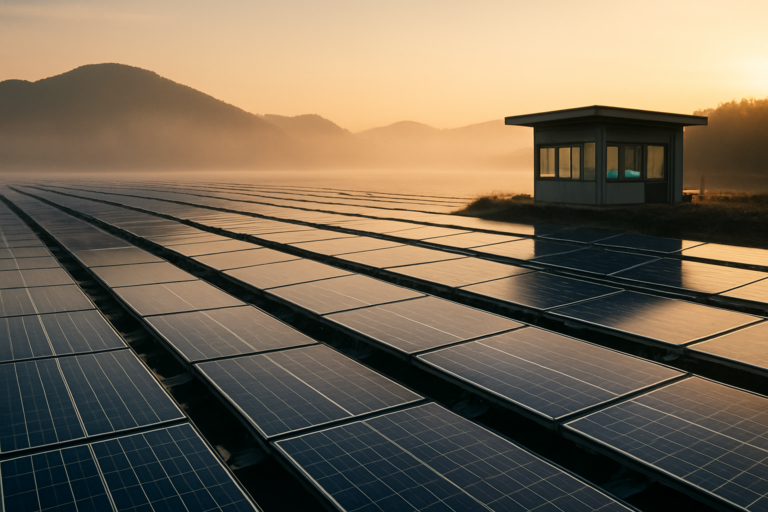
Solar power has moved from niche rooftops to the forefront of the global energy conversation, but the next wave of breakthroughs promises to turn sunlight into a truly universal utility. From materials that harvest more photons to clever ways of deploying panels on water, the coming decade could see solar energy not just supplementing the grid but redefining how we generate, store, and consume power. This article dives into the most promising solar innovations, examines their potential impact, and highlights the challenges that still need to be solved.
Why Solar Needs a New Generation of Technologies
Even though solar PV capacity has more than doubled every five years, three structural limits still curb its full potential:
- Efficiency ceiling – Conventional silicon cells hover around 20‑22 % conversion efficiency, leaving roughly 80 % of sunlight untapped.
- Land availability – Utility‑scale farms require vast tracts of land, often competing with agriculture or natural habitats.
- Intermittency – Solar output drops at night and during cloudy periods, demanding smarter storage and grid integration.
Addressing these constraints is where innovation shines. The following sections outline the technologies that could lift those limits.
1. Perovskite Solar Cells – The Efficiency Game‑Changer
Perovskite materials, first reported in 2009, have surged to the research spotlight because they can be processed in thin films and achieve rapid efficiency gains.
Key Advantages
- High theoretical efficiency – Up to 30 % under standard test conditions, rivaling multi‑junction silicon cells.
- Low‑cost manufacturing – Solution‑processing and roll‑to‑roll printing could slash production costs to <$0.20 per watt.
- Flexibility – Can be applied to curved surfaces, enabling solar skins for vehicles, drones, and building façades.
Recent Milestones
- In 2023, a tandem perovskite/silicon cell reached 32.5 % efficiency, setting a new world record.
- A pilot plant in South Korea began low‑temperature deposition on glass substrates, demonstrating scalability.
Remaining Hurdles
- Stability – Perovskites degrade under moisture and UV exposure; encapsulation techniques are improving but add cost.
- Lead content – Many formulations contain lead; researchers are developing lead‑free alternatives, though performance lags slightly.
2. Bifacial Panels and Albedo Optimization
Traditional panels capture light only on their front side. Bifacial modules harvest reflected light from the ground or surrounding surfaces, boosting output by 5‑15 % without extra material.
Real‑World Deployments
- A 500 MW solar farm in Spain uses white gravel as a high‑albedo ground cover, achieving a 12 % energy gain versus a monofacial counterpart.
- Agricultural “agrivoltaic” projects in the U.S. combine crops with bifacial panels mounted higher, allowing sunlight to bounce off the soil back onto the rear side.
Design Considerations
- Mounting height – Higher racks increase rear‑side irradiance but raise structural costs.
- Ground treatment – Light‑colored sand, glass beads, or even water surfaces can amplify albedo.
3. Floating Solar (Floatovoltaics) – Power on Water
Installing panels on reservoirs, lakes, and even offshore ponds solves land‑use conflicts while providing cooling benefits that improve panel efficiency by up to 10 %.
Benefits at a Glance
| Benefit | Impact |
|---|---|
| Land sparing | Frees up agricultural or natural habitats |
| Water evaporation reduction | Lowers reservoir loss by 30‑50 % |
| Higher efficiency | Cooler panels generate more power |
| Grid proximity | Often co‑located with hydro plants for hybrid operation |
Notable Projects
- Huainan, China: 150 MW floating farm on a coal‑water reservoir, delivering 300 GWh annually.
- Lake Ontario, Canada: 100 MW pilot using modular floating platforms, integrated with a real‑time AI optimizer for tilt and cleaning cycles.
Challenges
- Anchoring systems – Must withstand storms and fluctuating water levels.
- Environmental impact – Potential effects on aquatic ecosystems require thorough studies.
4. Solar‑Powered Hydrogen Production (Solar‑Electrolysis)
Hydrogen is emerging as a clean energy carrier, but its carbon‑free production hinges on cheap, renewable electricity. Coupling solar PV directly with electrolyzers can create “green hydrogen” at competitive costs.
Technological Advances
- High‑temperature solid‑oxide electrolyzers – Operate efficiently at 700‑800 °C, ideal when paired with concentrated solar thermal (CST) mirrors.
- Modular PEM electrolyzers – Scalable, quick‑startup units that can be powered by intermittent PV arrays, using AI to balance load.
Economic Outlook
The International Renewable Energy Agency (IRENA) projects that green hydrogen could fall below $2 /kg by 2030 if solar‑electrolysis costs drop 30 % through scale and efficiency gains.
5. AI‑Driven Solar Grid Management
Even the most efficient panels need smart orchestration. AI algorithms now forecast irradiance, optimize inverter settings, and coordinate storage dispatch in real time.
Core Functions
- Predictive maintenance – Computer vision inspects panel cleanliness and detects micro‑cracks, scheduling cleaning only when needed.
- Dynamic tilting – Motorized trackers adjust angles based on AI‑predicted sun paths, squeezing out an extra 2‑4 % energy.
- Hybrid dispatch – AI balances solar output with battery, demand‑response, and ancillary services, reducing curtailment.
Case Study
A utility in Texas deployed an AI platform across 1 GW of solar assets, cutting curtailment from 7 % to 2 % and shaving $15 M in O&M costs over two years.
6. Integrated Solar Storage – Beyond Batteries
While lithium‑ion batteries dominate today, new storage concepts aim to keep solar power on-site with minimal losses.
Emerging Options
- Thermal‑chemical storage – Uses solar heat to drive reversible chemical reactions (e.g., magnesium hydroxide), releasing energy on demand.
- Solid‑state flow batteries – Combine the scalability of flow systems with solid electrolytes, offering longer life cycles and safer operation.
- Gravity‑based storage – Solar‑powered cranes lift heavy blocks; releasing them drives generators, a low‑tech yet effective method demonstrated in pilot projects in Europe.
7. Solar‑Enabled Microgrids for Remote Communities
Off‑grid regions often rely on diesel generators. Deploying compact solar‑microgrid kits—solar panels, a small battery, and an AI controller—can provide reliable, clean power.
Success Stories
- Rural Kenya: A 50 kW solar‑microgrid supplies electricity to 200 households, reducing diesel use by 85 % and cutting CO₂ emissions by 1,200 t per year.
- Indigenous Australian communities: Portable solar pods with integrated water purification have improved health outcomes while fostering energy independence.
8. Transparent Solar Windows – Turning Buildings into Power Plants
Researchers are embedding photovoltaic materials into glass, allowing windows to generate electricity while preserving transparency.
Current Performance
- Commercially available transparent PV films achieve 5‑8 % efficiency, sufficient for building‑integrated applications such as office towers and skyscrapers.
- In 2024, a pilot in Singapore installed 10 % efficient tandem transparent cells on a 12‑story office, generating 120 kWh per day.
Future Potential
When combined with smart glazing that adjusts tint based on sunlight, these windows could simultaneously regulate indoor temperature and feed excess power back to the grid.
9. Solar‑Driven Desalination
Water scarcity is a growing global threat. Solar thermal or PV‑powered desalination plants can produce fresh water without fossil fuels.
Technology Snapshot
- Solar stills – Low‑tech, low‑cost, suitable for small villages.
- Membrane distillation powered by CSP – High‑efficiency, scalable for coastal cities.
- PV‑electrolysis for brine splitting – Converts salty waste into hydrogen and fresh water.
A 2023 study in Saudi Arabia showed that a 5 MW solar‑thermal desalination plant could supply 30 ML of water daily, cutting energy consumption by 40 % compared to conventional methods.
10. Policy, Investment, and the Road Ahead
Technology alone won’t rewrite the energy landscape; supportive policies and capital flows are essential.
- Tax incentives – The U.S. Inflation Reduction Act (IRA) offers up to 30 % tax credits for domestic solar manufacturing, accelerating supply‑chain localization.
- Green bonds – Global green bond issuance reached $600 bn in 2023, with a sizable share earmarked for solar projects.
- International collaboration – The International Solar Alliance (ISA) now counts 120 member countries, fostering technology transfer and joint research.
Outlook
- Cost trajectory: The levelized cost of electricity (LCOE) for utility‑scale solar fell to $0.028/kWh in 2023, a 65 % decline from 2010. Continued efficiency gains could push it below $0.02/kWh by 2030.
- Capacity growth: The International Energy Agency (IEA) projects solar PV capacity to reach 4 TW globally by 2030, representing roughly 30 % of total electricity generation.
Conclusion
Solar innovation is entering a phase where the technology is no longer just about panels on rooftops. Perovskite breakthroughs, floating farms, AI‑driven grid management, and integrated storage are converging to make solar a versatile, high‑output, and resilient cornerstone of the global energy system. When paired with supportive policy frameworks and smart investment, these advances could slash carbon emissions, democratize access to electricity, and fuel a new era of sustainable development. The sun is already shining on the horizon—our job is to capture it smarter, cleaner, and more creatively than ever before.