
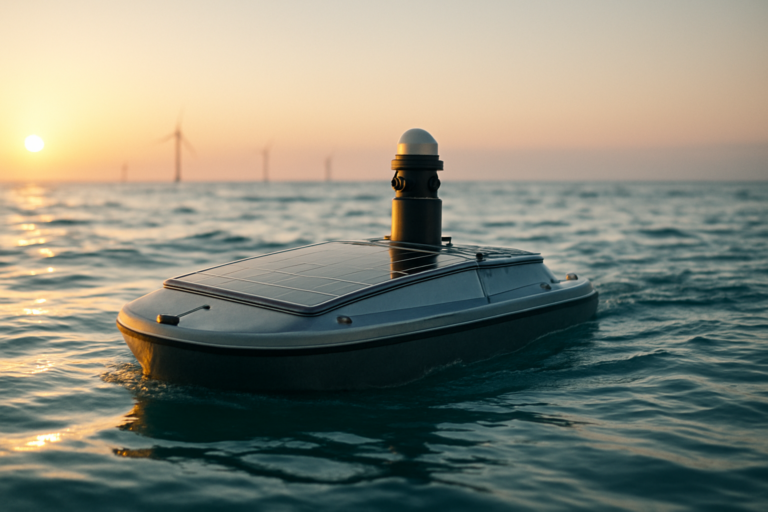
The world’s oceans are drowning in plastic—an estimated 8 million metric tons enter the seas each year, forming massive garbage patches that threaten marine life, human health, and economies. Traditional cleanup methods, such as shoreline collection and large‑scale trawling, are labor‑intensive, costly, and often harm ecosystems. Enter a new wave of marine robotics: autonomous surface vessels, AI‑driven drones, and underwater collectors designed to locate, capture, and process debris with minimal human intervention. This blog dives into the technology powering these ocean‑cleaning robots, examines real‑world deployments, and assesses the ripple effects on broader innovation and sustainability.
Why Robots Are the Game‑Changer for Ocean Cleanup
Scale and Persistence
- Vast Coverage – The Pacific Garbage Patch spans over 1.6 million square kilometers, a region no human crew can patrol continuously. Autonomous robots can operate 24/7, covering thousands of square kilometers per mission.
- Weather Resilience – Modern vessels are built to withstand storms, high waves, and UV exposure, allowing them to stay on station longer than manned ships.
Precision and Minimal Environmental Impact
- Targeted Collection – AI‑enabled vision systems differentiate plastic from marine organisms, reducing by‑catch.
- Low‑Footprint Power – Solar panels and fuel‑cell hybrids keep emissions near zero, aligning cleanup with climate goals.
Data Generation for Policy and Research
- Real‑Time Mapping – Sensors capture debris density, composition, and location, feeding open‑source databases that inform policymakers and scientists.
- Predictive Modeling – Machine‑learning algorithms analyze trends, helping anticipate future hotspots and optimize deployment routes.
Core Technologies Behind the Robots
1. Autonomous Surface Vessels (ASVs)
Companies such as The Ocean Cleanup and ClearBlue Sea field ASVs equipped with:
- Lidar and Radar Scanners – Create 3‑D maps of surface debris.
- Conveyor‑Belt Collection Systems – Funnel floating plastic into onboard storage bins.
- Hybrid Propulsion – Solar arrays combined with low‑emission diesel generators for extended missions.
Example: The “Interceptor”
The Interceptor, a semi‑submerged, solar‑powered barge, can extract up to 50,000 kg of plastic per day from river mouths before debris reaches the ocean. Its modular design allows retrofitting with AI vision modules for enhanced sorting.
2. AI‑Powered Drones (Aerial & Underwater)
- Aerial Drones – Deploy high‑resolution multispectral cameras to locate surface slicks and guide ASVs.
- Underwater Drones (ROVs) – Use sonar and machine‑vision to locate submerged micro‑plastics, especially in coastal mangroves and coral reefs.
Notable Project: “SeaVision”
A collaborative EU project uses swarms of autonomous quadcopter drones that relay live video to a central AI hub, which then triangulates debris coordinates for rapid ASV response.
3. Advanced Sorting & Recycling Modules
Robots now integrate AI‑driven sorting arms capable of separating polyethylene terephthalate (PET) from polypropylene (PP) using hyperspectral imaging. Sorted plastics are compacted into reusable pellets on‑board, dramatically reducing transport costs.
4. Energy Harvesting Innovations
- Solar‑Tracking Panels – Maximize energy capture throughout the day.
- Wave Energy Converters – Small oscillating devices attached to hulls convert wave motion into electricity, extending mission endurance by up to 30 %.
Real‑World Deployments and Impact
| Project | Region | Robot Type | Daily Capacity | Operational Since |
|---|---|---|---|---|
| The Ocean Cleanup “System 002” | Pacific Gyre | Large ASV with conveyor belt | 100 tons | 2022 |
| ClearBlue “Manta” | Mediterranean | Hybrid ASV + AI drone swarm | 30 tons | 2021 |
| Interceptor 3.0 | Ganges River (India) | River‑mouth barge | 50 tons (river) | 2023 |
| SeaVision Swarm | Baltic Sea | Aerial + underwater drones | N/A (mapping) | 2024 (pilot) |
According to a 2024 report by the World Economic Forum, these deployments collectively removed over 1.2 million kg of plastic in the first 18 months, a 22 % increase compared with traditional coastal cleanups.
Challenges Still Ahead
Technical Hurdles
- Battery Degradation – Long‑duration missions still strain energy storage; research into solid‑state batteries is ongoing.
- Biofouling – Marine growth on sensors reduces accuracy; anti‑fouling coatings are being tested with mixed success.
Economic Barriers
- High Up‑Front Costs – An Interceptor unit costs roughly $2 million, limiting adoption by developing nations.
- Funding Gaps – While philanthropy and corporate sponsorship fund pilots, sustained operation requires reliable revenue streams, such as selling reclaimed plastics.
Regulatory & Social Considerations
- Maritime Law – Autonomous vessels must comply with the International Regulations for Preventing Collisions at Sea (COLREGs); integrating AI decision‑making with legal frameworks is complex.
- Community Acceptance – Coastal communities sometimes view robotic fleets as intrusive; transparent communication and local partnership programs are essential.
The Ripple Effect: How Ocean‑Cleanup Tech Fuels Broader Innovation
- Cross‑Industry Battery Advances – Energy‑dense batteries developed for marine robots are being adapted for electric ferries and offshore wind turbines.
- AI Edge Computing – Real‑time debris detection drives improvements in low‑power AI chips, benefiting autonomous cars and remote IoT sensors.
- Circular Economy Models – On‑board recycling modules inspire similar concepts in landfill mining and e‑waste processing plants.
- Policy Shifts – Data from robot fleets informs stricter plastic‑production regulations, encouraging biodegradable alternatives and redesign of packaging.
Future Outlook: Toward a Fully Automated Blue Economy
- Swarm Intelligence – Next‑generation fleets will coordinate via mesh networks, allowing hundreds of ASVs and drones to act as a single adaptive organism, dynamically reallocating resources based on live debris maps.
- Hybrid Ocean‑Land Systems – Integration with coastal waste‑collection infrastructure (e.g., smart trash bins) will create a closed‑loop system where river‑borne plastic is intercepted before reaching open water.
- Deep‑Learning Material Identification – Advanced neural networks will soon differentiate not only plastic types but also hazardous chemicals, enabling targeted removal of toxin‑laden debris.
If current trends continue, the combined global capacity of autonomous marine cleaners could exceed 5 million tons per year by 2035, potentially reversing the growth curve of oceanic plastic pollution.
Key Takeaways
- Autonomous robots provide the scale, precision, and persistence that human‑only cleanup cannot achieve.
- AI, advanced sensing, and renewable energy converge to create self‑sustaining, data‑rich platforms.
- Real‑world pilots already demonstrate measurable impact, but challenges in cost, regulation, and biofouling remain.
- The technology’s spillover benefits—better batteries, edge AI, circular‑economy practices—extend far beyond marine environments, shaping a more sustainable future across sectors.
The seas may be vast, but with intelligent machines patrolling their surface and depths, humanity finally has a fighting chance to restore the blue heart of our planet.