
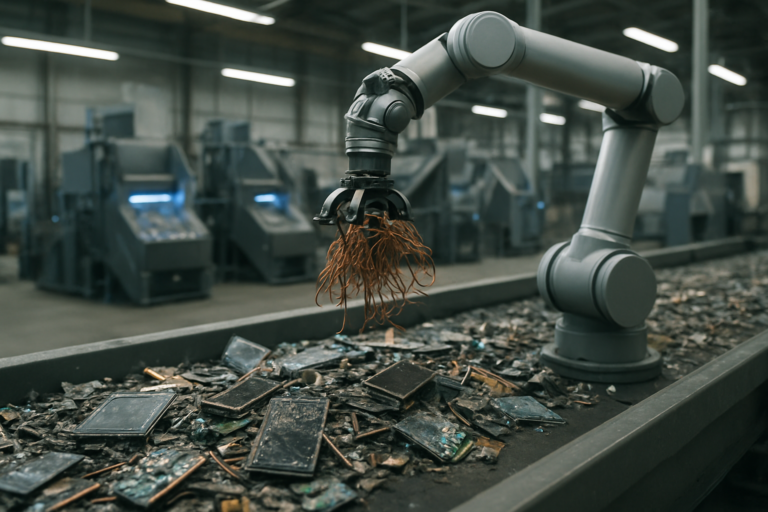
Electronic waste—commonly called e‑waste—has exploded into one of the fastest‑growing waste streams on the planet. The United Nations estimates that the world generated 53.6 million metric tons of e‑waste in 2022, a figure projected to surpass 74 million tons by 2030 if current trends continue. Much of this trash ends up in landfills or is informally processed, releasing hazardous substances like lead, mercury, and brominated flame retardants into soil and water.
Amid the looming crisis, a new wave of startups is emerging with a clear mission: turn the tech trash mountain into a source of raw materials, jobs, and innovation. These companies are not just collecting discarded gadgets; they are deploying cutting‑edge technologies—robotic disassembly, AI‑driven sorting, and advanced material recovery—to create closed‑loop supply chains for the electronics industry. This article dives into the most compelling startup models, the tech they employ, market dynamics, and the broader impact on sustainability and innovation.
Why E‑Waste Matters for the Tech Ecosystem
Environmental stakes
- Toxic leakage: Improper disposal releases heavy metals, contributing to water contamination and health risks for nearby communities.
- Resource loss: Only 17.4% of global e‑waste was formally recycled in 2022, meaning the majority of valuable metals (gold, silver, palladium) and rare earth elements are lost.
- Carbon footprint: Mining virgin minerals for electronics accounts for roughly 4% of global CO₂ emissions. Recycling can cut that by up to 30% per ton of material recovered.
Economic incentives
- Valuable metals: A ton of printed circuit boards (PCBs) can contain up to 300 grams of gold and 1,200 grams of copper, worth several thousand dollars on the commodities market.
- Regulatory pressure: The EU’s WEEE Directive and similar legislation in the U.S. and India impose strict collection and recycling targets, creating a compliance market for service providers.
- Consumer demand: A 2023 Deloitte survey found 68% of tech‑savvy consumers prefer products from companies with transparent e‑waste programs, influencing brand loyalty.
Startup Playbooks: How New Companies Are Redefining Recycling
1. AI‑Powered Sorting Platforms
Example: GreenCircuit AI (US)
- Technology: Uses computer vision and deep‑learning models to identify component types on a moving conveyor belt in real time.
- Process: Cameras capture high‑resolution images of each item; the AI classifies chips, batteries, plastics, and metals with 95% accuracy.
- Outcome: Increases material recovery rates by 20% compared to manual sorting, reducing labor costs and contamination.
2. Robotic Disassembly Lines
Example: ReLoop Robotics (Germany)
- Technology: Collaborative robots equipped with force‑feedback sensors gently pry open casings, extract batteries, and separate soldered components without damaging recoverable materials.
- Innovation: Adaptive gripping tools switch automatically between suction, magnetic, and mechanical grips based on component geometry.
- Impact: Achieves up to 30% higher yield of rare earth elements from smartphones compared with traditional shredders.
3. Chemical‑Leaching as a Service
Example: EcoMetal Labs (India)
- Technology: Deploys proprietary, low‑temperature leaching solutions that dissolve gold, silver, and palladium from PCBs without generating toxic cyanide waste.
- Scalability: Modular reactors can be installed at municipal collection points, turning local e‑waste streams into on‑site metal recovery hubs.
- Environmental benefit: Reduces hazardous effluent by 80% versus conventional acid leaching.
4. Marketplace Platforms for Secondary Materials
Example: LoopSupply (Singapore)
- Model: Connects certified recyclers with manufacturers seeking recycled-grade plastics, aluminum, and rare earths.
- Features: Blockchain‑based traceability ensures each batch meets quality standards and compliance certifications.
- Result: Shortens supply chain lead times by 40%, encouraging OEMs to substitute virgin inputs with recycled equivalents.
5. Consumer‑Facing Collection Apps
Example: TrashTech (Brazil)
- Approach: Mobile app gamifies e‑waste drop‑off by awarding points redeemable for discounts on new devices.
- Data insight: Aggregated drop‑off locations help municipalities optimize collection routes, cutting fuel consumption by 15%.
- Social impact: Engages over 1.2 million users within the first year, boosting formal recycling rates in underserved regions.
Market Landscape: Size, Growth, and Funding
- Global e‑waste recycling market: Valued at USD 57.5 billion in 2023, projected to reach USD 84.3 billion by 2028 (CAGR ≈ 8%).
- Startup funding: In 2023, venture capital poured $1.4 billion into 42 e‑waste‑focused startups worldwide, a 62% increase from 2021.
- Key investors: Clean‑tech funds, impact‑focused VCs, and large electronics manufacturers (e.g., Samsung Ventures, Dell Capital) are leading the capital influx.
These numbers illustrate a rapidly maturing ecosystem where capital, policy, and consumer sentiment converge to accelerate innovation.
Technical Challenges and How Startups Overcome Them
| Challenge | Traditional Limitation | Startup Solution |
|---|---|---|
| Component heterogeneity | Manual disassembly is labor‑intensive and error‑prone. | AI vision systems that instantly categorize mixed streams. |
| Battery safety | Lithium‑ion cells can ignite if mishandled. | Automated detection and isolation stations with inert gas enclosures. |
| Material contamination | Shredded mix often contains cross‑contaminated plastics, reducing recyclability. | Precise robotic separation before shredding, preserving material purity. |
| Chemical waste | Conventional leaching uses cyanide or strong acids. | Low‑temperature, biodegradable leaching agents that can be reclaimed. |
| Traceability | Lack of data on material provenance hampers certification. | Blockchain ledgers linking each batch to its source and processing steps. |
By tackling these pain points, startups are not merely cleaning up waste—they are building the technical backbone for a circular electronics economy.
The Ripple Effect: Innovation Beyond Recycling
- Design for Disassembly (DfD)
- Startups collaborate with OEMs to embed DfD principles, such as modular battery packs and standardized screw types, making future recycling easier.
- New Material Development
- Recovered rare earths feed into research on green magnets and high‑efficiency solar cells, reducing dependence on mined supplies.
- Job Creation
- The Global E‑Waste Monitor projects 2.5 million new jobs globally by 2030 in collection, processing, and technology development.
- Policy Influence
- Successful pilot programs (e.g., ReLoop’s robot lines in EU testbeds) inform stricter extended‑producer‑responsibility (EPR) regulations, creating a feedback loop between industry and lawmakers.
Looking Ahead: What the Next 5 Years Could Hold
- Fully automated “smart” recycling plants where IoT sensors monitor throughput, energy usage, and emissions in real time, optimizing operations without human intervention.
- Integration of renewable energy: Solar‑powered shredders and battery‑charging stations to make the recycling loop carbon‑negative.
- Standardized global e‑waste certification powered by blockchain, enabling manufacturers to claim verified recycled content on product labels worldwide.
- Consumer‑level “home recycling kits” that safely extract batteries and valuable metals, feeding small‑scale material streams back to local facilities.
If these trends materialize, the tech industry could shift from a linear “take‑make‑dispose” model to a regenerative cycle where every smartphone, laptop, or IoT sensor is designed to return to the supply chain at the end of its life.
Conclusion
E‑waste is more than an environmental headache; it is a hidden reservoir of high‑value materials and a catalyst for technological advancement. Startups at the intersection of AI, robotics, chemistry, and marketplace design are unlocking that potential, turning discarded gadgets into raw inputs for the next generation of devices. Their innovations not only improve recycling efficiency but also reshape product design, influence policy, and generate new economic opportunities.
As the global community tightens regulations and consumer awareness sharpens, the momentum behind these ventures is set to accelerate. The tech trash problem is no longer a looming disaster—it is rapidly becoming a springboard for sustainable innovation and a greener future for the entire technology ecosystem.