
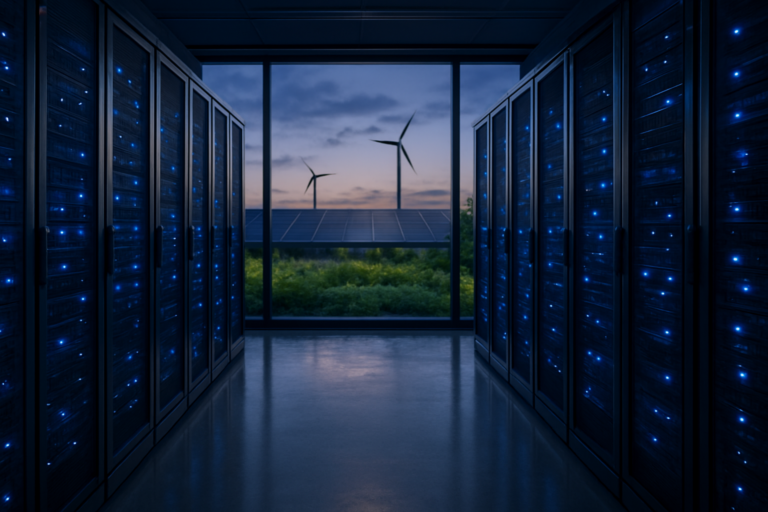
The world’s digital appetite is exploding—from streaming video to AI‑driven analytics, every click, swipe, and transaction is processed in massive server farms. Yet the energy guzzling nature of traditional data centers has become a glaring environmental concern. Enter green data centers: purpose‑built facilities that marry high‑performance computing with sustainable design. In this deep dive we’ll explore the core technologies, economic incentives, and real‑world examples that illustrate why green data centers are not just a nice‑to‑have, but a strategic imperative for the future of tech.
Why Sustainability Matters in the Data‑Center Landscape
- Rising Energy Consumption: According to the International Energy Agency, data centers accounted for about 1 % of global electricity use in 2023—a figure projected to rise to 3 % by 2030 if current trends continue.
- Carbon Footprint: The average data center emits roughly 0.5 kg of CO₂ per kWh of electricity consumed. With many facilities still powered by fossil‑fuel grids, the cumulative emissions are substantial.
- Corporate ESG Pressure: Investors and regulators increasingly demand transparent ESG (Environmental, Social, Governance) reporting. Companies that host their workloads in green facilities can more easily meet carbon‑reduction targets.
Core Pillars of a Green Data Center
1. Renewable Energy Integration
| Renewable Source | Typical Implementation | Benefits |
|---|---|---|
| Solar Photovoltaic (PV) | Rooftop arrays or nearby solar farms feeding directly into the data‑center’s power distribution unit (PDU) | Reduces reliance on grid, lowers operating cost, provides visible sustainability branding |
| Wind Power | On‑site turbines or power purchase agreements (PPAs) with wind farms | High capacity factor in windy regions, stable long‑term pricing |
| Hydro & Geothermal | Often sourced via regional utilities with green tariffs | Provides baseload power with minimal emissions |
2. Advanced Cooling Techniques
Traditional air‑conditioning consumes up to 40 % of a data center’s power. Green designs replace or augment it with:
- Free Cooling: Leveraging ambient outside air when temperature and humidity are within safe ranges.
- Liquid Immersion Cooling: Servers are submersed in dielectric fluid, dramatically improving heat transfer efficiency.
- Heat Reuse: Captured waste heat powers district heating systems, greenhouse farms, or even desalination plants.
3. Energy‑Efficient Hardware
- Low‑Power CPUs/GPUs: ARM‑based processors and specialized accelerators (e.g., Google’s TPU) deliver higher performance per watt.
- Dynamic Voltage and Frequency Scaling (DVFS): Real‑time adjustment of power based on workload demand.
- Solid‑State Drives (SSDs): Consume up to 70 % less energy than traditional spinning disks.
4. Intelligent Infrastructure Management
- AI‑Driven Power Management: Machine‑learning models predict workload spikes and dynamically shift resources to under‑utilized servers, cutting idle power draw.
- Digital Twin Simulations: Virtual replicas of the facility allow operators to test cooling configurations and power distribution before physical changes.
- Edge Distribution: Placing smaller, low‑latency nodes closer to users reduces data travel distance and associated energy costs.
5. Circular Economy Practices
- Modular Design: Prefabricated modules can be upgraded or repurposed with minimal waste.
- E‑Waste Recycling: Certified e‑waste partners ensure end‑of‑life components are reclaimed responsibly.
- Water Conservation: Closed‑loop cooling systems recycle water, limiting consumption in arid locations.
Economic Upside: Cost Savings Beyond Green Credibility
- Lower Energy Bills: Renewable power contracts often lock in lower rates than volatile grid pricing.
- Tax Incentives: Many governments offer tax credits for renewable installations and energy‑efficient upgrades.
- Reduced CAPEX: Modular, prefabricated designs shorten construction time, cutting labor costs.
- Operational Resilience: On‑site generation provides backup power, decreasing downtime risk during grid outages.
A 2022 case study from a European hyperscale operator showed a 30 % reduction in total cost of ownership (TCO) after transitioning to a solar‑plus‑free‑cooling model, while simultaneously achieving a 45 % drop in carbon emissions.
Real‑World Leaders in Green Data Center Deployment
Google – “The Carbon‑Free Future”
Google’s data centers now run on 100 % renewable energy on an annual basis. Their Mountain View campus uses a combination of solar farms, wind PPAs, and advanced evaporative cooling, achieving a Power Usage Effectiveness (PUE) of 1.10—a benchmark of efficiency.
Microsoft – Project Natick
Microsoft submerged servers in a sealed container on the seafloor off the coast of Scotland. The underwater environment provides natural cooling, and the project demonstrated a 30 % energy reduction compared with land‑based equivalents.
Facebook (Meta) – Renewable Campus in Luleå, Sweden
Located in a sub‑arctic climate, the Luleå data center exploits free cooling from the cold ambient air and runs on renewable hydroelectric power, achieving a PUE of 1.07.
Indian Space Economy – Green Satellite Ground Stations
India’s emerging space sector is integrating solar‑powered ground stations that double as edge data hubs, reducing the need for long‑haul data transmission and aligning with national sustainability goals.
Steps for Organizations to Transition Toward Green Data Centers
- Audit Current Energy Profile: Measure PUE, carbon intensity, and cooling efficiency.
- Set Measurable Targets: Define a timeline for renewable integration (e.g., 50 % renewable energy by 2025).
- Select the Right Location: Favor climates conducive to free cooling and proximity to renewable sources.
- Partner with Green Power Providers: Explore PPAs, on‑site solar installations, or utility green tariffs.
- Upgrade to Energy‑Efficient Hardware: Prioritize low‑power CPUs, SSDs, and consider immersion cooling for high‑density racks.
- Implement AI‑Based Management Tools: Deploy workload‑aware orchestration platforms that auto‑scale resources.
- Report Progress Transparently: Use ESG reporting frameworks (e.g., GRI, SASB) to communicate achievements to stakeholders.
Challenges and Mitigation Strategies
- Initial Capital Outlay: While upfront costs can be higher, lifecycle cost analysis often reveals a net positive ROI within 5–7 years.
- Grid Compatibility: In regions with limited renewable infrastructure, PPAs or on‑site generation can bridge the gap.
- Technical Complexity: Immersion cooling and modular designs require specialized expertise; partnering with experienced vendors mitigates risk.
- Regulatory Hurdles: Navigating local zoning and permitting for wind/solar installations may be time‑consuming; early engagement with authorities is crucial.
The Outlook: Green Data Centers as a Cornerstone of Future Tech
As edge computing, AI, and IoT proliferate, the demand for processing power will only intensify. Green data centers offer a scalable, resilient, and financially sound pathway to meet this demand without compromising planetary health. Their evolution—from solar‑roofed warehouses to AI‑optimized, water‑recycling ecosystems—signals a broader shift: sustainability is becoming a core performance metric, not an optional add‑on.
In the next decade, we can expect:
- Zero‑Carbon Certifications becoming a standard requirement for enterprise contracts.
- Hybrid Renewable Grids that dynamically balance solar, wind, and storage to guarantee uninterrupted power.
- Universal Adoption of Low‑PUE Designs, pushing the average industry PUE below 1.2.
- Policy Incentives that reward carbon‑negative data operations, accelerating green investments.
For tech leaders, the message is clear: integrating green principles into data‑center strategy is no longer a niche environmental initiative—it’s a competitive advantage that drives cost efficiency, regulatory compliance, and brand trust. The future of sustainable tech is already being built, rack by rack, in the quiet hum of eco‑focused data centers around the globe.