
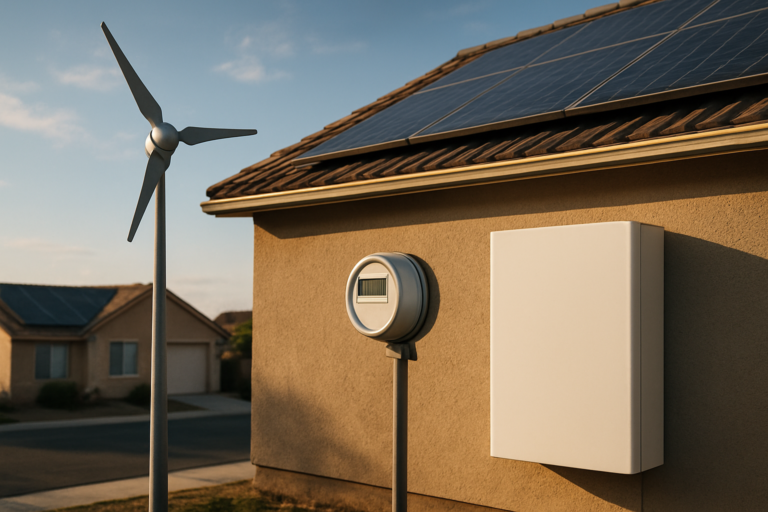
The lights flicker, then go out. For millions of people caught in the path of hurricanes, wildfires, or winter storms, that moment marks the start of a blackout that can last days or even weeks. Centralized power grids, designed for stability in normal conditions, are increasingly vulnerable to extreme weather. But a quiet revolution is unfolding in communities around the world: decentralized microgrids. These localized energy systems are proving that resilience doesn’t have to come from a single, fragile source. Instead, it can be built from the ground up—neighborhood by neighborhood, rooftop by rooftop.
What Exactly Is a Microgrid?
A microgrid is a small-scale, localized power system that can operate independently from the main grid. It generates electricity from sources like solar panels, wind turbines, or natural gas generators, and stores excess energy in batteries. When the central grid fails—whether due to a storm, cyberattack, or equipment failure—a microgrid can “island” itself and continue supplying power to its connected buildings.
Think of it as a self-sufficient energy bubble. It doesn’t replace the main grid; it complements it. During normal times, it may exchange energy with the larger system. But when the grid goes down, the microgrid keeps the lights on for critical facilities like hospitals, emergency shelters, and even entire neighborhoods.
Why Decentralization Matters Now
Extreme weather events are becoming more frequent and intense. According to the National Oceanic and Atmospheric Administration, the United States experienced 28 billion-dollar weather disasters in 2023 alone. The aging centralized grid, with its long transmission lines and single points of failure, is ill-equipped to handle these shocks. A single fallen tree can knock out power for hundreds of miles.
Decentralized microgrids offer a different philosophy: distribute generation and storage close to where energy is used. This reduces transmission losses, improves reliability, and allows communities to keep functioning even when the main grid is offline. The U.S. Department of Energy reports that microgrid installations have grown by over 15% annually in recent years, driven by falling battery costs and increasing climate concerns.
Real-World Examples of Microgrid Resilience
1. Blue Lake Rancheria, California
During the 2019 public safety power shutoffs, the Blue Lake Rancheria microgrid kept a tribal government building, a hotel, and a gas station operational for 72 hours. The system, powered by solar and battery storage, provided electricity to first responders and community members when the surrounding region was dark. This single microgrid prevented an estimated $1.5 million in economic losses.
2. Borough of Sayreville, New Jersey
After Hurricane Sandy flooded critical infrastructure, Sayreville installed a microgrid that powers a police station, firehouse, and emergency operations center. The system uses natural gas generators and solar panels, ensuring that emergency services never lose power during storms. The microgrid has already proven its worth during subsequent nor’easters.
3. Grenada, Mississippi
In the aftermath of tornadoes, a community microgrid powered by solar and battery storage provided electricity to a shelter and a water treatment plant. The system was designed in partnership with local utilities and demonstrates how rural areas can benefit from decentralized energy.
Key Components of a Decentralized Microgrid
- Distributed Generation: Solar panels, small wind turbines, or combined heat and power units.
- Energy Storage: Lithium-ion batteries or flow batteries to store surplus energy.
- Smart Controls: Software that manages energy flow, decides when to island, and optimizes usage.
- Point of Common Coupling: The connection to the main grid, with switches that can isolate the microgrid.
- Load Management: Systems that prioritize critical loads (e.g., refrigeration, medical equipment) over non-essential ones.
The Role of Renewable Energy
Most modern microgrids lean heavily on renewables. Solar power is the most common because it’s modular, quiet, and increasingly cheap. Pairing solar with battery storage allows a microgrid to provide 24/7 power, even at night. Wind can also be integrated, especially in coastal or plains regions.
According to the International Renewable Energy Agency, the levelized cost of solar-plus-storage has dropped by 70% since 2015. That economic shift makes microgrids viable not just for wealthy communities, but for rural and underserved areas as well.
Challenges to Widespread Adoption
Despite the benefits, decentralized microgrids face hurdles:
- High upfront costs: Even with falling prices, installing a microgrid requires significant capital.
- Regulatory barriers: Many states have outdated rules that make it difficult for microgrids to sell excess power or operate independently.
- Technical complexity: Integrating multiple generation sources and storage with smart controls requires expertise.
- Cybersecurity concerns: As microgrids become more digital, they become potential targets for cyberattacks.
Yet these challenges are being addressed. Federal grants, state-level incentives, and public-private partnerships are accelerating deployment. The Department of Energy’s Grid Modernization Initiative, for example, has funded dozens of microgrid pilot projects.
How Communities Can Start Building Resilience
For a neighborhood or town considering a microgrid, the first step is an energy audit. Identify critical facilities—hospitals, fire stations, water pumps, grocery stores—and assess their current backup power. Next, evaluate local renewable resources. A solar microgrid makes sense in sunny regions; wind or biogas might work elsewhere.
Community engagement is crucial. Microgrids work best when residents, businesses, and local government collaborate on funding, siting, and governance. Some communities have formed energy cooperatives to share ownership and benefits.
The Future: From Microgrids to Virtual Power Plants
As more microgrids come online, they can be aggregated into virtual power plants (VPPs). A VPP uses software to coordinate dozens or hundreds of distributed energy resources, effectively acting as a single power plant. During peak demand, a VPP can send power back to the grid, reducing the need for fossil fuel peaker plants.
This vision is already taking shape. In Vermont