
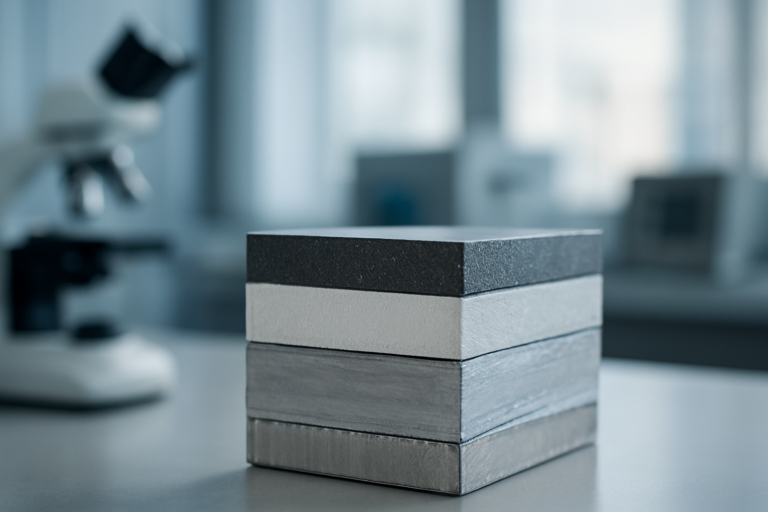
The hum of an electric motor is quiet, but the race to power it is deafening. For over three decades, lithium-ion batteries have been the undisputed workhorses of our portable lives, powering everything from smartphones to Teslas. Yet, as we push the boundaries of electric vehicles and grid storage, the limitations of this aging chemistry are becoming increasingly apparent. Range anxiety, charging times, and the occasional dramatic thermal runaway event are constant reminders that we may be reaching the ceiling of current technology. Enter the solid-state battery—a technology that promises not just a step forward, but a generational leap in how we store and use energy.
The concept is elegantly simple: replace the flammable liquid electrolyte inside a battery with a solid material. But this simple swap unlocks a cascade of benefits that could redefine the electric vehicle landscape. We are not talking about a minor spec-sheet improvement; we are talking about a fundamental shift in energy density, safety, and charging speed that could finally make the internal combustion engine obsolete.
The Core Difference: Liquid vs. Solid
To understand the hype, we have to look under the hood of a conventional lithium-ion battery. Inside, lithium ions travel between the anode and cathode through a liquid electrolyte—typically a lithium salt dissolved in an organic solvent. This liquid is volatile and flammable. If the battery is punctured, overcharged, or has an internal short circuit, it can trigger a chain reaction known as thermal runaway, leading to fires that are notoriously difficult to extinguish.
Solid-state batteries, as the name suggests, replace this liquid with a solid electrolyte. This material can be a ceramic, a glass, a sulfide, or a polymer. This single change eliminates the primary fire hazard, allowing manufacturers to pack cells more densely without the need for heavy cooling and safety systems. But the safety benefit is just the beginning.
The Game-Changing Benefits
The shift to a solid electrolyte is not merely a safety upgrade; it is a performance catalyst.
- Unprecedented Energy Density: Because solid electrolytes are more stable, they allow the use of a pure lithium metal anode, which has a theoretical energy density ten times greater than the graphite anodes used today. This means a solid-state battery can store significantly more energy in the same physical space. Industry analysts estimate that solid-state cells could offer a 50% to 100% increase in energy density over current lithium-ion cells. For an EV, this translates directly to a longer range—potentially 600 to 800 miles on a single charge.
- Radically Faster Charging: Liquid electrolytes can suffer from concentration polarization, which limits how fast lithium ions can move. Solid electrolytes, particularly ceramic types, can facilitate faster ion transport, especially at higher temperatures. This enables “extreme fast charging” (XFC), where an EV could potentially go from 10% to 80% charge in under 10 minutes—a time comparable to filling a gas tank.
- Superior Temperature Tolerance: Conventional batteries struggle in extreme cold, losing capacity and charging efficiency. Solid electrolytes are generally more stable across a wider temperature range. This means solid-state batteries could operate reliably in freezing climates without the need for energy-draining battery heaters, and they can withstand higher operating temperatures without degradation.
- Longer Lifespan: The solid electrolyte acts as a physical barrier against dendrite growth—tiny, needle-like lithium structures that can pierce the separator and cause short circuits. By suppressing dendrites, solid-state batteries can endure thousands of charge cycles with minimal capacity loss, potentially outlasting the vehicle itself.
The Players and the Progress
This isn’t a science project confined to university labs; billions of dollars are being poured into commercializing this technology. The race is on, and the players are a mix of automotive giants, chemical companies, and ambitious startups.
- QuantumScape: Perhaps the most famous player, backed by Volkswagen, has been developing a solid-state cell with a ceramic separator. They have reported impressive data on their single-layer and multi-layer cells, achieving over 800 cycles with 95% capacity retention. The company is working on scaling up production, though they have faced challenges in moving from prototype to mass manufacturing.
- Toyota: The Japanese automaker has been a pioneer in solid-state research for years, holding over 1,000 patents. They have recently announced a breakthrough in manufacturing that they claim will make solid-state batteries commercially viable by 2027-2028. Their approach uses a sulfide-based electrolyte, which is highly conductive but requires strict moisture control during manufacturing.
- Solid Power: This company, backed by BMW and Ford, is focused on sulfide-based solid-state cells and is taking a slightly different approach by producing cells that can be integrated into existing lithium-ion manufacturing lines, easing the transition for automakers.
- CATL and Samsung SDI: The Chinese and Korean battery behemoths are also investing heavily, with CATL planning to achieve a small-scale production of condensed matter batteries, a hybrid approach, by 2024.
Despite the progress, the path to mass production is littered with engineering hurdles. Manufacturing solid electrolytes at scale is expensive and challenging. The materials are often brittle, making them difficult to handle in a roll-to-roll process. Furthermore, maintaining intimate contact between the solid electrolyte and the electrodes as the battery expands and contracts during charge and discharge cycles is a significant mechanical challenge.
The Road Ahead: From Lab to Highway
The timeline for solid-state batteries hitting the mainstream is a topic of intense debate. Conservative estimates suggest we will see them in premium EVs by 2027, with mass adoption in the early 2030s. The transition will likely be incremental. The first commercial applications may be in smaller devices like wearables and medical implants, where the higher cost is less of a barrier. In the automotive sector, we might see hybrid cells first—batteries that use a solid electrolyte in one electrode and a liquid in the other—before moving to fully solid-state systems.
The impact extends beyond cars. Solid-state technology could revolutionize grid-scale energy storage, enabling the efficient storage of intermittent renewable energy from solar and wind. It could also power next-generation electric aviation, where the high energy density is crucial for making short-haul flights viable. In fact, a 2023 report by McKinsey estimates that the solid-state battery market could be worth over $200 billion by 2030.
The Uncomfortable Truth
However, it is crucial to temper the excitement with a dose of realism. The industry has a history of overpromising and underdelivering on battery breakthroughs. The jump from a lab-scale cell to a mass-produced, defect-free battery is a monumental engineering feat. The cost of solid-state cells is currently estimated to be several times higher than lithium-ion, and achieving cost parity will require innovations in materials sourcing and manufacturing processes. Furthermore, lithium itself remains a critical resource, and the environmental and geopolitical concerns surrounding its extraction will not disappear with a new electrolyte.
The solid-state battery is not a magic bullet, but it is the most promising path forward. It represents a fundamental re-architecting of the technology that powers our modern world. While we wait for the first production vehicles to hit the road, the progress being made in labs and pilot plants across the globe is a testament to human ingenuity. The promise is clear: a future where our devices charge in minutes, our cars drive for a thousand miles on a single charge, and the fear of battery fires is a distant memory. The leap is coming, and it is going to be electrifying.