
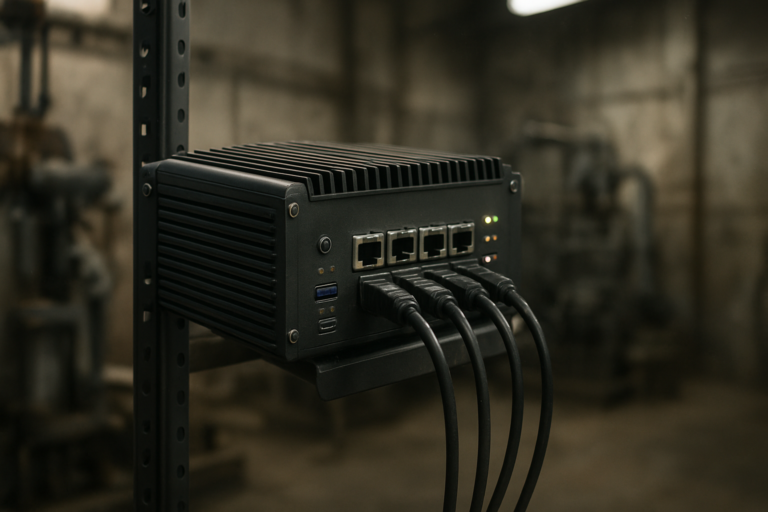
The era of centralized cloud computing, where every piece of data travels miles to a distant server for processing, is being challenged by a more efficient paradigm: edge computing. As the Internet of Things (IoT) explodes with billions of connected devices—from smart sensors in factories to autonomous vehicles on roads—the limitations of sending all data to the cloud become painfully clear. Latency, bandwidth costs, and security vulnerabilities create a bottleneck that edge computing is designed to solve. By moving processing power closer to where data is generated, edge computing enables real-time decisions, reduces network strain, and unlocks new possibilities for industry and everyday life.
What Exactly Is Edge Computing?
At its core, edge computing is a distributed computing model that brings data processing and storage closer to the source of data generation—the “edge” of the network. Instead of relying solely on a central cloud data center, edge devices like gateways, routers, or specialized servers handle computation locally. This proximity dramatically cuts down the time it takes for data to travel, known as latency, which is critical for applications requiring instant responses.
Consider a self-driving car: it must process sensor data and make split-second decisions to avoid obstacles. Sending that data to a cloud server and waiting for a response could be fatal. Edge computing allows the car to process data locally, ensuring safety and reliability. Similarly, in a smart factory, edge devices can analyze machine performance in real-time, triggering maintenance alerts before a breakdown occurs.
Why Is Edge Computing Critical for IoT?
The explosive growth of IoT devices—projected to reach over 29 billion by 2030—generates an unprecedented volume of data. Traditional cloud architectures struggle to handle this flood efficiently. Here are the key reasons edge computing is becoming indispensable:
1. Ultra-Low Latency for Real-Time Applications
Many IoT applications demand near-instantaneous responses. For example, in industrial automation, a robot arm must react to sensor input in milliseconds. Edge computing achieves latency as low as a few milliseconds, compared to the 50-100 milliseconds or more typical of cloud-based processing. This speed is non-negotiable for applications like autonomous vehicles, remote surgery, and augmented reality.
2. Bandwidth Optimization and Cost Reduction
Transmitting massive amounts of raw data from thousands of sensors to the cloud consumes significant bandwidth and incurs high costs. Edge computing filters and processes data locally, sending only relevant insights or summaries to the cloud. This reduces network traffic by up to 90% in some cases, saving money and freeing up bandwidth for other critical tasks.
3. Enhanced Security and Privacy
Sensitive data, such as healthcare records or industrial trade secrets, becomes vulnerable during transmission to the cloud. By processing data at the edge, organizations can keep sensitive information local, reducing exposure to cyberattacks. Edge devices can also implement local encryption and access controls, providing an additional layer of security. A 2023 study by Gartner found that 75% of enterprise-generated data will be processed outside of traditional centralized data centers by 2025, driven partly by security concerns.
4. Reliability and Offline Operation
Cloud-dependent systems fail when internet connectivity is lost. Edge computing enables devices to continue operating and processing data locally, even without a stable connection. This resilience is vital for remote locations like oil rigs, ships, or agricultural fields, where internet access is unreliable.
Key Use Cases Across Industries
Edge computing is not a theoretical concept; it is already transforming industries today.
- Manufacturing: Smart factories use edge devices to monitor equipment health, predict failures, and optimize production lines. A single edge server can process data from hundreds of sensors, enabling predictive maintenance that reduces downtime by 30-50%.
- Healthcare: Wearable health monitors and medical imaging devices process data at the edge, providing real-time alerts for critical conditions without needing constant cloud connectivity. This is particularly valuable for remote patient monitoring.
- Retail: Edge computing powers smart shelves that track inventory, analyze customer behavior, and enable personalized promotions in real-time, improving the shopping experience and operational efficiency.
- Autonomous Vehicles: As mentioned, self-driving cars rely on edge processing for navigation, obstacle detection, and decision-making, with cloud connectivity used only for map updates and analytics.
- Smart Cities: Traffic lights, surveillance cameras, and environmental sensors use edge computing to manage traffic flow, detect incidents, and reduce energy consumption without overwhelming central servers.
Edge vs. Cloud: A Complementary Relationship
It is important to note that edge computing does not replace the cloud; rather, it complements it. The edge handles time-sensitive, localized tasks, while the cloud remains ideal for large-scale data storage, complex analytics, and machine learning model training. A hybrid model, often called “fog computing,” uses a tiered architecture where edge devices process immediate data, and cloud servers handle deeper analysis. This synergy optimizes performance, cost, and scalability.
Challenges and Considerations
Despite its benefits, edge computing introduces new challenges. Managing thousands of distributed devices requires robust orchestration tools and security protocols. Edge devices often have limited compute power and storage compared to cloud servers, requiring careful application design. Additionally, ensuring consistent software updates and security patches across a distributed network can be complex. However, advancements in edge hardware and management platforms are rapidly addressing these issues.
The Future Is at the Edge
As IoT continues to expand, edge computing will become a foundational technology for the next wave of digital transformation. According to IDC, global spending on edge computing is expected to reach $350 billion by 2027. From enabling autonomous systems to powering smart infrastructure, the shift toward localized processing is not just a trend—it is a necessity. By moving computation closer to the source, businesses can unlock faster, more secure, and more efficient operations, paving the way for innovations we have yet to imagine.