
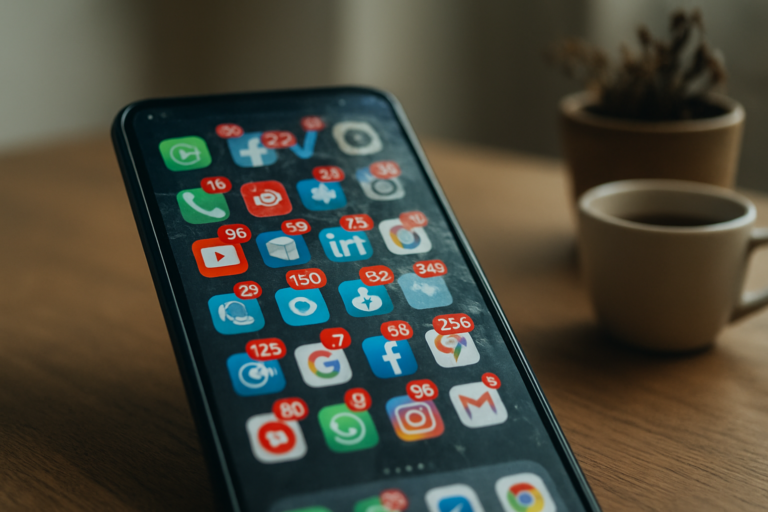
The ping of a new email. The buzz of a Slack message. The red badge on a social media app demanding attention. For millions of professionals and consumers alike, this is the soundtrack of modern life. We are living in an era of unprecedented connectivity, where the line between being reachable and being overwhelmed has blurred into invisibility. The concept of a “digital detox” has moved from a fringe wellness trend to a mainstream topic of conversation. But is tech overload a real, measurable phenomenon, or is it merely a cultural narrative fueled by nostalgia for a simpler time? The evidence suggests it is very real, with profound implications for our mental health, productivity, and even the future of technological innovation.
The term “tech overload” isn’t just a catchy phrase; it describes a physiological and psychological state. At its core, it is the result of constant, fragmented attention. Our brains are not wired to process the firehose of information that a modern smartphone delivers. According to a 2022 study by RescueTime, the average knowledge worker checks their email or messaging apps every six minutes. That constant task-switching, even if only for a few seconds, fragments focus and depletes cognitive resources. The result is a feeling of being perpetually busy but rarely productive. This is the paradox of the digital age: more tools designed to save time often leave us feeling like we have less of it.
The statistics paint a stark picture. A 2023 report from the American Psychological Association found that 74% of adults feel stressed about the amount of time they spend on their devices. Furthermore, research from the University of California, Irvine, indicates that it takes an average of 23 minutes and 15 seconds to refocus after a single interruption. When you multiply that by the dozens of interruptions a day, the cumulative loss of productive time is staggering. This isn’t just about feeling distracted; it is a measurable drag on economic output and personal well-being.
The Science of Digital Burnout
The mechanism behind tech overload is rooted in our brain’s reward system. Every notification, like, or message triggers a small release of dopamine, the neurotransmitter associated with pleasure and reward. This creates a feedback loop that keeps us coming back for more, much like a slot machine. Over time, this constant stimulation can lead to a state of chronic low-grade stress. The brain remains in a state of “fight or flight,” waiting for the next ping, which can lead to elevated cortisol levels, poor sleep, and increased anxiety.
This isn’t a moral failing; it’s a design feature. Technology companies engineer their products to be addictive. The “infinite scroll,” the pull-to-refresh mechanism, and the variable rewards of social media are all designed to maximize engagement. The result is a digital environment that is optimized for capturing attention, not for fostering well-being.
The Productivity Paradox
One of the most significant impacts of tech overload is the erosion of deep work. Deep work, a term popularized by author Cal Newport, refers to the ability to focus without distraction on a cognitively demanding task. It is the state where true innovation and complex problem-solving occur. However, constant connectivity actively sabotages this state. When your attention is perpetually fragmented, you are operating in a shallow mode, bouncing from task to task without ever achieving the flow necessary for breakthroughs.
This has direct consequences for innovation. A team that is constantly reacting to emails and instant messages is less likely to generate novel ideas or solve complex problems. The culture of “always-on” responsiveness can actually stifle creativity. True innovation requires periods of boredom, reflection, and uninterrupted thought—luxuries that are increasingly rare in a hyperconnected workplace.
The Case for Digital Detox
So, is a digital detox the answer? The term can be misleading. A complete, prolonged disconnection from technology is often impractical for most people, especially those whose livelihoods depend on digital tools. Instead, a more realistic approach is a digital diet or a practice of intentional technology use. This involves setting boundaries to regain control over your attention.
Practical strategies include:
- Scheduled Unplugging: Designate specific times of the day or week as “no-screen” periods.
- Notification Management: Turn off all non-essential notifications. The phone should serve you, not the other way around.
- Single-Tasking: Dedicate focused blocks of time to a single task, turning off email and messaging apps during that period.
- Digital Minimalism: Audit your apps and services. Delete those that add little value to your life.
The goal is not to reject technology but to use it as a tool rather than a master. It is about reclaiming your attention and directing it towards what matters most.
The Innovation Connection
Ironically, the push for digital detox is not anti-technology. In fact, it may be essential for the next wave of innovation. As AI and automation take over routine tasks, the uniquely human skills of creativity, critical thinking, and deep problem-solving become more valuable. These skills cannot flourish in an environment of constant distraction. By consciously disconnecting, we create the mental space needed for the kind of insight that drives progress.
Companies are beginning to recognize this. Some are implementing “no meeting” days, encouraging employees to turn off notifications, and redesigning workflows to prioritize deep work. This is not about slowing down progress; it is about making progress more meaningful and sustainable.
A Balanced Future
The reality of tech overload is undeniable. It is a byproduct of an ecosystem designed to capture our attention. But recognizing the problem is the first step toward a solution. The future of technology and innovation does not have to be one of endless burnout. By embracing the principles of digital detox—intentionality, boundaries, and focus—we can harness the power of technology without being consumed by it. The goal is not to disconnect from the world, but to reconnect with ourselves, our work, and the ideas that truly matter. The path forward is not about less technology, but about better, more mindful technology use.