
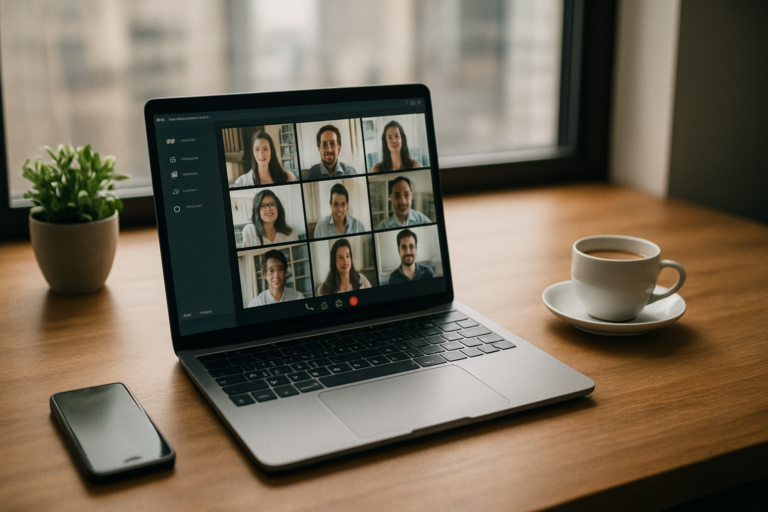
The shift to remote work 2.0 is far more than a pandemic-era pivot; it is a fundamental reimagining of how teams collaborate across continents, time zones, and cultures. While early remote work relied on email and basic video calls, today’s ecosystem is powered by a sophisticated stack of technologies that make real-time, seamless global cooperation not just possible but productive. From cloud infrastructure to artificial intelligence, the tools behind remote work 2.0 are rewriting the rules of business.
The Evolution from 1.0 to 2.0
Remote work 1.0 was about survival—keeping employees connected through VPNs, static documents, and clunky conference bridges. It worked, but it was far from efficient. Remote work 2.0, by contrast, is designed for agility. It leverages always-on collaboration platforms, intelligent automation, and high-speed connectivity to create a digital workplace that rivals, and often surpasses, the physical office.
From Email to Real-Time Collaboration
The biggest leap has been the move from asynchronous communication to real-time, context-rich interaction. Tools like Slack, Microsoft Teams, and Notion have replaced long email threads with instant messaging, shared workspaces, and integrated project management. Video conferencing platforms such as Zoom and Google Meet now offer breakout rooms, live captions, and virtual whiteboards, making meetings more interactive than ever. According to a 2023 report by Buffer, 98% of remote workers want to continue working remotely at least some of the time, and 91% say they are more productive when working from home—a testament to how well these tools have matured.
Core Technologies Driving Remote Work 2.0
The modern remote stack is built on several key technologies that work together to eliminate friction and foster collaboration.
- Cloud Computing: The backbone of remote work. Services like AWS, Microsoft Azure, and Google Cloud provide scalable storage, computing power, and applications accessible from anywhere. The global cloud computing market is projected to reach $1.2 trillion by 2028, driven largely by the demand for distributed work.
- High-Speed Internet & 5G: Low latency and high bandwidth are non-negotiable. 5G networks are enabling real-time collaboration in high-definition, even in areas where fiber is unavailable.
- Collaboration Platforms: From project management (Asana, Trello) to document co-editing (Google Docs, Notion) and design (Figma), these tools allow multiple people to work on the same asset simultaneously, regardless of location.
- Cybersecurity: With endpoints spread across the globe, zero-trust architectures, VPNs, and multi-factor authentication are essential. Cyberattacks on remote workers increased by 238% in 2020, making security a top priority.
- Artificial Intelligence: AI is automating routine tasks, transcribing meetings, and even suggesting replies. Tools like Otter.ai and Grammarly boost productivity and reduce cognitive load.
- Virtual and Augmented Reality: While still emerging, VR meeting spaces like Spatial and Microsoft Mesh offer immersive collaboration experiences that mimic physical presence.
The Role of Cloud Infrastructure
Cloud infrastructure is the unsung hero of remote work 2.0. Without it, the entire ecosystem collapses. Cloud services enable employees to access company data, run applications, and collaborate in real time from any device. The shift to Infrastructure as a Service (IaaS) and Platform as a Service (PaaS) has allowed companies to scale their IT resources on demand, without the need for on-premises hardware.
For example, a global design team can use Figma (cloud-based) to iterate on a product interface while a developer in India pushes code to a shared repository on GitHub. The cloud handles the version control, storage, and computing power behind the scenes. According to Gartner, 85% of organizations will adopt a cloud-first principle by 2025, further cementing its role in remote collaboration.
Cybersecurity in a Distributed World
With great flexibility comes great risk. Remote work expands the attack surface, as employees log in from home networks, public Wi-Fi, and personal devices. Cybersecurity strategies have evolved to meet this challenge. Zero-trust architecture assumes that no user or device is trustworthy by default, requiring continuous verification. Endpoint detection and response (EDR) systems monitor devices for suspicious activity, while secure access service edge (SASE) combines networking and security into a single cloud-delivered service.
A 2022 study by IBM found that the average cost of a data breach in a remote work environment was $1.07 million higher than in a traditional office. This has led companies to invest heavily in employee training, VPNs, and encrypted communication tools. Platforms like Zoom now offer end-to-end encryption by default, and Microsoft Teams integrates with advanced threat protection to safeguard sensitive conversations.
The Impact of AI on Remote Productivity
Artificial intelligence is quietly transforming how remote teams work. AI-powered assistants schedule meetings, summarize emails, and prioritize tasks. Natural language processing (NLP) enables real-time translation in video calls, breaking down language barriers. For instance, Microsoft Teams’ live captions and translation features allow a Japanese engineer to follow a presentation given in English without missing a beat.
AI also enhances project management. Tools like Monday.com and Asana use machine learning to predict project timelines, flag bottlenecks, and suggest resource allocation. In a 2023 survey by McKinsey, 56% of remote workers said AI tools helped them save at least an hour each day, which adds up to significant productivity gains across a distributed team.
The Future: Hybrid and Beyond
Remote work 2.0 is not a temporary trend—it is the foundation of the future workplace. Hybrid models, where employees split time between home and office, are becoming the norm. But the technology will continue to evolve. Expect deeper integration of VR and AR for virtual meetings that feel more natural, AI that anticipates team needs, and edge computing that reduces latency for real-time collaboration in emerging markets.
According to a report by Upwork, 36.2 million Americans will be working remotely by 2025, an 87% increase from pre-pandemic levels. This growth will drive further innovation in collaboration tools, cybersecurity, and cloud infrastructure. Companies that invest in these technologies today will be better positioned to attract top talent from anywhere in the world.
Remote work 2.0 is not just about where we work—it’s about how we work. By leveraging the right technology stack, organizations can build a global, collaborative culture that is more inclusive, efficient, and resilient than ever before. The tools are ready. The future is distributed.