
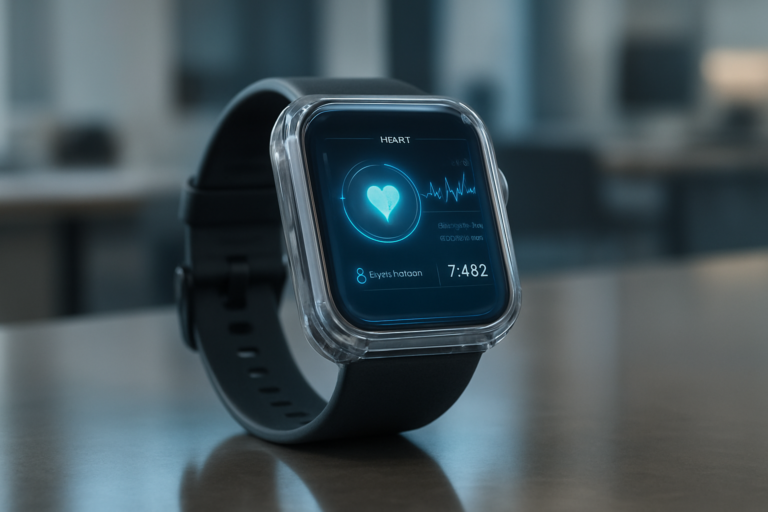
The future of wearables is no longer about telling time or tracking steps; it’s about seamlessly integrating health insights, AI intelligence, and edge computing into a tiny, wrist‑sized device. As manufacturers push the boundaries of battery life, sensor accuracy, and data privacy, the next generation of smartwatches is poised to become an indispensable extension of our digital lives.
Redefining Health Monitoring with Advanced Biometric Sensors
Traditional fitness trackers offered heart rate, sleep stages, and basic activity metrics. The next wave introduces multi‑modal biosensing that captures everything from blood oxygen saturation to blood glucose trends without a finger prick.
- Continuous glucose monitoring (CGM) patches now embed microneedle arrays that sample interstitial fluid, providing real‑time glucose data for diabetics and athletes alike.
- Skin‑based electrodermal activity (EDA) sensors detect stress levels by measuring sweat gland activity, enabling proactive mental health interventions.
- Near‑infrared spectroscopy (NIRS) modules analyze blood flow and oxygenation in the forearm, giving clinicians a portable tool for vascular health assessments.
According to a recent market analysis, the wearable health sensor market is projected to reach USD 7.8 billion by 2027, a CAGR of 12.5% from 2022.
Edge Computing: From Cloud to the Wrist
One of the biggest hurdles for smartwatches has been latency and data privacy. Edge AI chips—specifically designed for ultra‑low power consumption—allow on‑device inference, meaning critical health alerts can trigger within milliseconds without transmitting data to the cloud.
- TensorFlow Lite Micro and Edge TPU variants are now integrated into smartwatch SoCs, handling complex models for gesture recognition, sleep staging, and anomaly detection.
- Secure enclaves protect biometric data, ensuring compliance with GDPR and HIPAA while enabling users to share anonymized metrics with healthcare providers.
This shift not only improves user experience but also reduces bandwidth costs, a crucial factor as global data traffic is expected to exceed 400 exabytes per month by 2025.
AI‑Powered Personal Assistants on the Wrist
Beyond health, the next generation of smartwatches is becoming a conversational hub. Voice assistants are now coupled with contextual AI that understands user habits, calendar events, and physiological states to deliver proactive suggestions.
- Health‑aware reminders adjust medication schedules based on real‑time glucose readings.
- Smart notifications filter out noise, prioritizing messages that align with the user’s current activity and emotional state.
- Augmented reality overlays on the watch face provide instant translations, navigation cues, or fitness coaching—all without pulling up a phone.
These capabilities are made possible by natural language processing (NLP) models optimized for low‑power inference, such as MiniLM and DistilBERT, which run directly on the device.
Battery Life: The Power of Energy Harvesting
Battery constraints have long limited smartwatch functionality. Emerging energy‑harvesting technologies are turning this limitation into an advantage.
- Thermoelectric generators convert body heat into charge, extending battery life by up to 30%.
- Solar‑responsive polymer films embedded in the watch band capture ambient light, providing a steady trickle charge throughout the day.
- Kinetic energy converters harvest motion from wrist movements, especially effective for active users.
A recent prototype by a leading semiconductor firm demonstrated a smartwatch that could run for seven days on a single charge when combined with these harvesting methods, a significant leap from the current industry average of 3–5 days.
Integration with Smart Home and IoT Ecosystems
The wrist is becoming the universal controller for our connected environments. By leveraging Matter and Thread protocols, next‑gen smartwatches can:
- Authenticate and unlock smart doors using biometric credentials.
- Adjust lighting, temperature, and media based on user presence and physiological signals.
- Monitor home energy consumption, providing instant feedback on usage patterns.
This seamless integration reduces friction in daily routines, turning the smartwatch into a central nervous system for the household.
Design and User Experience: Balancing Aesthetics and Functionality
While technology drives innovation, consumer acceptance hinges on design. Manufacturers are adopting:
- Flexible OLED displays that wrap around the wrist, eliminating the “flat” look of current models.
- Ultra‑lightweight alloys and biodegradable polymers to reduce weight and environmental impact.
- Haptic feedback systems that deliver nuanced sensations, from gentle taps for notifications to vibration patterns that mimic natural rhythms.
These design choices not only improve comfort but also enhance accessibility for users with visual or motor impairments.
Privacy and Security: Building Trust in Wearable Data
With more sensitive health data being captured, robust security frameworks are essential. Next‑generation smartwatches incorporate:
- Hardware‑based encryption modules that encrypt data at rest and in transit.
- Zero‑knowledge proof protocols for secure authentication without exposing credentials.
- Federated learning approaches that train AI models locally, ensuring raw data never leaves the device.
Industry reports indicate that 68% of consumers cite data privacy as a primary concern when purchasing wearables, underscoring the importance of these measures.
The Bottom Line: A Wearable Revolution
The next evolution in smartwatches is more than a gadget upgrade; it’s a paradigm shift that blends health, AI, edge computing, and design into a single, unobtrusive platform. As battery life stretches, sensors become more sophisticated, and privacy safeguards tighten, these devices are set to become integral to our health management, productivity, and daily interactions with technology. The wrist is no longer just a timekeeper—it’s becoming the command center of a connected, health‑centric future.