
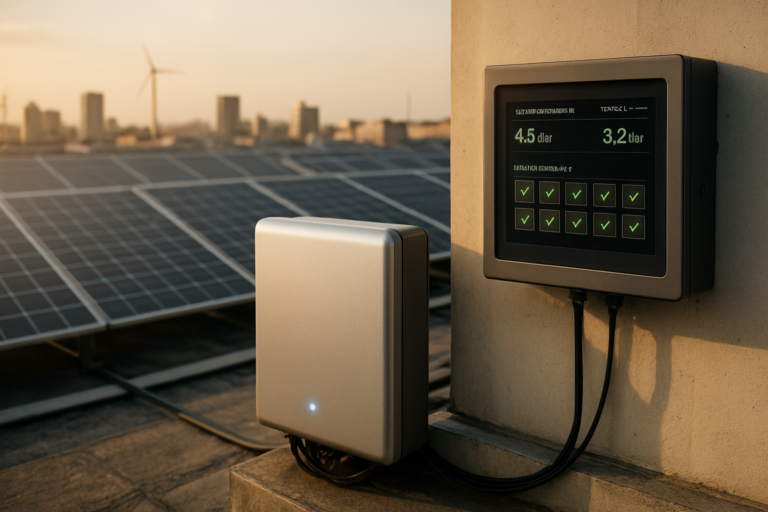
The traditional energy grid, a monument to 20th-century engineering, is a one-way street. Power flows from massive, centralized power plants to passive consumers. But the rise of rooftop solar, home battery storage, and electric vehicles is fundamentally altering this dynamic. We are entering an era of the “prosumer”—an entity that both produces and consumes energy. This shift creates a profound challenge: how do you efficiently manage millions of small, intermittent energy sources? The answer, increasingly, is found in the immutable, trustless architecture of blockchain technology, giving birth to decentralized energy markets.
At its core, a decentralized energy market is a peer-to-peer (P2P) network where prosumers can sell their excess energy directly to their neighbors, bypassing the traditional utility as the sole intermediary. This isn’t a theoretical concept; it’s a rapidly maturing application of distributed ledger technology (DLT). By using blockchain as a transparent and secure transaction layer, these markets automate the complex process of matching local supply with local demand in near real-time.
How the Grid Becomes a Marketplace
The magic happens through smart contracts—self-executing agreements coded directly onto the blockchain. Imagine a neighborhood with several homes equipped with solar panels. A smart contract can be programmed to automatically execute a trade when certain conditions are met.
- Metering and Data: Smart meters track energy production and consumption for each prosumer. This data is cryptographically signed and recorded on the blockchain, creating an auditable and tamper-proof record of energy flow.
- Price Discovery: An algorithm, often running on a decentralized oracle network, determines a fair market price based on local supply and demand. This price can be dynamic, rising during peak generation or falling when demand is low.
- Automated Execution: When Prosumer A has surplus energy and Prosumer B needs it, a smart contract automatically executes the trade at the agreed-upon price. The energy physically flows through the existing grid infrastructure, but the financial transaction—the transfer of a tokenized energy credit—settles on the blockchain in seconds.
- Settlement and Verification: The blockchain provides an immutable record of the transaction. This eliminates the need for a central billing authority and dramatically reduces administrative overhead. The system is trustless; you don’t need to trust your neighbor to pay, as the smart contract enforces the terms.
This process, often called “transactive energy,” turns the electrical grid from a passive delivery system into an active, dynamic marketplace. A 2021 study by the World Economic Forum estimated that such P2P energy trading could reduce household energy bills by up to 30% in some markets, while simultaneously increasing the utilization of local renewable generation.
The Key Benefits of a Decentralized Energy Market
The shift towards a DLT-based energy market is driven by several compelling advantages:
- Increased Efficiency: By matching local supply with local demand, energy losses from long-distance transmission are drastically reduced. The U.S. Energy Information Administration notes that average transmission and distribution losses total about 5% of the electricity transmitted. P2P trading can significantly shrink that number.
- Empowerment of Prosumers: Homeowners and businesses are no longer passive ratepayers. They become active participants in the energy economy, able to monetize their investment in solar panels or battery storage. This creates a powerful economic incentive for further renewable energy adoption.
- Enhanced Grid Resilience: A decentralized grid is inherently more resilient. If a central power plant fails, a traditional grid can collapse. In a P2P network, energy can be rerouted and traded locally, creating microgrids that can island themselves and operate independently during a blackout.
- Transparency and Trust: Every transaction is recorded on a public or permissioned ledger. This provides an unprecedented level of transparency for all participants, fostering trust and allowing for sophisticated auditing of renewable energy certificates (RECs) and carbon credits.
- Lower Barriers to Entry: Smart contracts automate billing and settlement, drastically reducing the administrative cost of managing thousands of small transactions. This makes it economically viable to trade even small amounts of energy, which was previously impossible.
Real-World Deployments and the Road Ahead
This is not a distant future vision. Several pilot projects and commercial deployments are already proving the concept. The Brooklyn Microgrid project was one of the earliest and most famous examples, allowing neighbors to trade solar energy using a blockchain-based platform. In Australia, the Power Ledger platform has enabled P2P trading in multiple housing developments, demonstrating the technology’s viability in a real-world regulatory environment.
In Europe, projects like the Enerchain initiative have focused on wholesale energy trading between large utilities, proving that blockchain can handle high-volume, high-value transactions. These projects are laying the groundwork for a future where energy trading is as seamless and instantaneous as sending a text message.
However, significant hurdles remain. Regulatory frameworks in most countries are still built around the centralized utility model. Net metering policies, for example, often limit the economic value of P2P trading. Scalability is another challenge; public blockchains can struggle with the transaction throughput needed for millions of real-time energy trades. Finally, interoperability between different blockchain platforms and legacy grid management systems is a complex technical problem.
Despite these challenges, the trajectory is clear. The confluence of cheap solar, smart batteries, and sophisticated DLT is creating a new energy paradigm. The future grid will not be a monolith but a vibrant, interconnected network of micro-markets. It will be a system where your solar panels don’t just power your home; they power your community, with every kilowatt-hour tracked, traded, and trusted on a transparent, decentralized ledger. The power, quite literally, is returning to the people.