
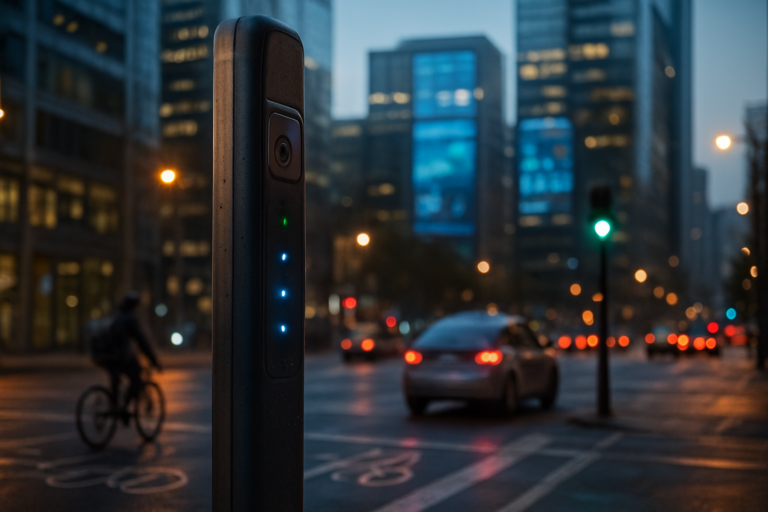
Imagine a city that doesn’t just stand still but breathes, reacts, and adapts. Traffic lights that adjust instantly to congestion, waste bins that signal when they’re full, streetlights that dim when no one is around. This isn’t science fiction—it’s the promise of Urban Operating Systems (UOS). As cities swell with millions of new residents each year, the need for intelligent, responsive infrastructure has never been more urgent. Urban Operating Systems are the invisible digital brains that orchestrate vast sensor networks, making real-time decisions to manage traffic, waste, lighting, and more. They are, quite literally, the backbone of future cities.
What Is an Urban Operating System?
An Urban Operating System is a centralized digital platform that integrates data from thousands of IoT sensors, cameras, and connected devices spread across a city. Think of it as the city’s nervous system—collecting, processing, and acting on information instantly.
Unlike traditional city management, which relies on siloed departments and manual intervention, a UOS provides a unified dashboard. It allows city officials to monitor everything from air quality to energy consumption in real time. More importantly, it uses machine learning and predictive analytics to automate responses. For instance, when sensors detect rising water levels in a flood-prone area, the UOS can automatically redirect traffic and activate drainage pumps.
Key Components of a UOS
- Sensor Networks: Thousands of IoT devices measuring traffic flow, air quality, noise levels, waste bin fill levels, water usage, and more.
- Communication Infrastructure: 5G, LoRaWAN, and fiber optics ensure low-latency data transmission.
- Data Integration Layer: Aggregates data from disparate sources into a common format.
- Analytics Engine: Uses AI to detect patterns, predict anomalies, and recommend actions.
- Actionable Outputs: Direct control over traffic lights, street lighting, waste collection routes, and public transport schedules.
Real-Time Traffic Management: The Most Visible Impact
One of the most tangible applications of UOS is traffic management. In traditional cities, traffic lights operate on fixed timers or simple sensors. With a UOS, traffic lights become adaptive. Sensors embedded in roads detect vehicle density, pedestrian crossings, and even emergency vehicles. The system then adjusts signal timings in real time to minimize congestion.
For example, in Barcelona, an integrated UOS reduced traffic congestion by 21% and cut emergency response times by 30% by prioritizing ambulances and fire trucks at intersections. The system also provides real-time data to navigation apps, helping drivers avoid bottlenecks.
How It Works
- Inductive loop sensors and radar track vehicle speed and count.
- Cameras with computer vision identify traffic jams and accidents.
- The UOS processes this data and sends commands to traffic signal controllers.
- Dynamic speed limits on digital signs are adjusted based on real-time conditions.
Smart Waste Management: Cleaner Streets, Fewer Trucks
Waste collection is another area where UOS delivers measurable savings. Traditional waste management follows fixed schedules—collection trucks drive through every street regardless of whether bins are full. This wastes fuel, labor, and time. With a UOS, waste bins are equipped with ultrasonic sensors that measure fill levels. When a bin reaches a threshold, it sends a signal to the central system. The UOS then optimizes collection routes, sending trucks only to bins that need emptying.
In Seoul, South Korea, smart waste bins equipped with solar-powered compactors and fill-level sensors reduced collection frequency by 50% while keeping streets cleaner. The city also uses the system to monitor illegal dumping via cameras integrated into the bins.
Benefits of Smart Waste Integration
- Reduced fuel consumption and carbon emissions.
- Lower operational costs for municipal budgets.
- Real-time alerts for hazardous waste or overflowing bins.
- Data analytics to predict waste generation patterns.
Intelligent Lighting: Saving Energy Without Sacrificing Safety
Street lighting accounts for up to 40% of a city’s electricity bill. Urban Operating Systems enable smart lighting that adjusts brightness based on presence. Motion sensors detect pedestrians, cyclists, or vehicles and increase light intensity in that area, while dimming to 10% brightness when no one is around. The system can also use ambient light sensors to turn off lights during daylight.
Los Angeles implemented a smart lighting network that saved the city $9 million annually in energy costs. The UOS also allows remote monitoring—if a light fails, the system immediately alerts maintenance crews, reducing repair times from days to hours.
Additional Features
- Color-tunable lights for special events or emergencies.
- Integration with traffic management to illuminate accident sites.
- Solar-powered units for off-grid areas.
The Role of AI and Edge Computing
Urban Operating Systems generate massive amounts of data—terabytes per day. Sending all that data to a central cloud server would cause latency and bandwidth issues. That’s where edge computing comes in. Edge devices process data locally, making split-second decisions without waiting for the cloud. For example, a traffic camera running edge AI can detect a jaywalker and adjust the pedestrian signal immediately, without sending the video to a central server.
AI algorithms also learn from historical data. Over time, a UOS can predict traffic patterns for holidays, weather events, or major concerts. It can preemptively adjust lighting, waste collection, and public transport schedules to handle surges.
Challenges and Privacy Concerns
No system is perfect. Urban Operating Systems raise significant privacy concerns. With thousands of cameras and sensors, cities collect vast amounts of personal data—movement patterns, vehicle license plates, even biometric information. Without strict data governance, this could be misused for surveillance.
Cities like Amsterdam have addressed this by implementing “privacy by design” principles: data is anonymized at the sensor level, and only aggregated insights are stored. Citizens can also access a public dashboard showing what data is being collected and for what purpose.
Another challenge is interoperability. Different vendors use proprietary protocols, making integration difficult. Open standards like MQTT and oneM2M are helping, but legacy infrastructure remains a hurdle.
The Future: Autonomous and Predictive Cities
The next evolution of UOS is predictive and autonomous city management. Imagine a system that not only reacts but anticipates. For example, using weather forecasts and historical accident data, a UOS could preemptively reduce speed limits on slippery roads and dispatch snowplows before a storm hits. Or it could reroute waste collection trucks based on predicted public events.
In Singapore, the Smart Nation initiative already uses a UOS to manage everything from elderly care to public housing maintenance. The system integrates data from over 1 million sensors across the island, creating a digital twin that simulates city operations in real time.
Conclusion
Urban Operating Systems are not a futuristic luxury; they are a necessity for sustainable, livable cities. By orchestrating sensor networks for traffic, waste, and lighting, they reduce costs, improve efficiency, and enhance quality of life. As technology advances and privacy frameworks mature, more cities will adopt these digital brains—turning concrete jungles into intelligent, responsive ecosystems. The backbone of future cities is being built today, one sensor at a time.