
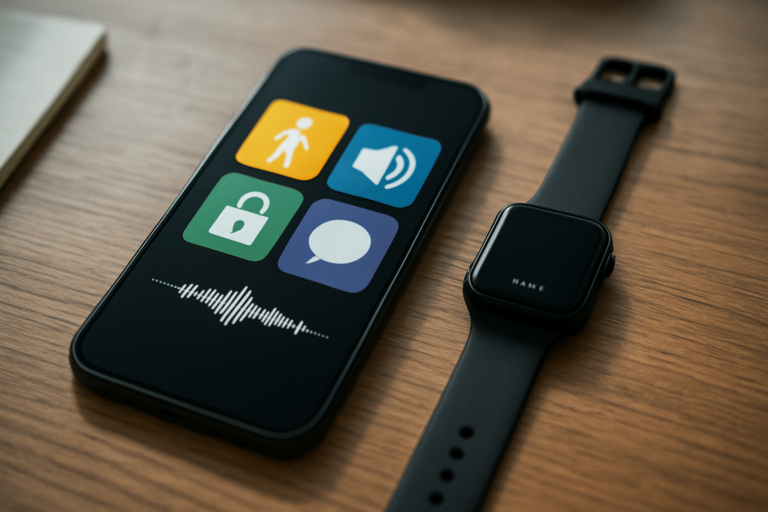
For decades, the digital world was built with a narrow user in mind—someone who could see, hear, touch, and interact without barriers. But technology is finally catching up to the reality that human diversity is the norm, not the exception. Today, a quiet revolution is underway: tech is not just making life easier for the average user; it is actively bridging accessibility gaps that have excluded millions from full participation in society. From voice-controlled smart homes to AI-powered screen readers and haptic wearables, the tools of inclusion are becoming smarter, cheaper, and more ubiquitous.
The numbers are staggering. According to the World Health Organization, over 1 billion people—roughly 15% of the global population—live with some form of disability. Yet, as recently as a decade ago, most digital products were designed without their needs in mind. Now, a combination of regulatory pressure, ethical design movements, and rapid technological advances is flipping that script.
The Rise of AI-Powered Assistive Technologies
Artificial intelligence is arguably the single most transformative force in accessibility. Machine learning models can now interpret speech, recognize objects, describe images, and even predict user intent with remarkable accuracy.
Voice Interfaces as a Gateway
Voice assistants like Google Assistant, Apple’s Siri, and Amazon’s Alexa have become indispensable for individuals with mobility impairments or visual disabilities. What once required a keyboard or touchscreen can now be accomplished with a simple spoken command. But the real breakthrough lies in natural language processing (NLP) improvements. Modern systems understand context, handle accents, and even adapt to speech patterns affected by conditions like cerebral palsy or ALS. For example, Project Euphonia by Google uses AI to train voice models on atypical speech, enabling people with speech impairments to be understood by smart devices.
Computer Vision for the Visually Impaired
Apps like Microsoft Seeing AI and Apple’s Magnifier use computer vision to describe surroundings, read text aloud, and identify objects. A person with low vision can point their phone at a restaurant menu, a sign, or a product label, and have the information spoken back to them. These tools are not just conveniences—they are daily necessities that foster independence. The global assistive technology market is projected to reach $32 billion by 2027, with computer vision apps representing one of the fastest-growing segments.
Smart Wearables: Beyond the Smartwatch
Wearable devices are evolving from fitness trackers to essential accessibility tools. Haptic feedback systems, for instance, can communicate navigation cues to deaf or hard-of-hearing users through vibrations. Smart glasses like the Envision Glasses combine AI with a head-mounted camera to provide real-time scene understanding and text reading. Meanwhile, companies like Apple are embedding accessibility features directly into their hardware—the Apple Watch’s AssistiveTouch allows users with limited limb mobility to control the device through hand gestures detected by built-in sensors.
Haptic Navigation for the Deafblind
One of the most innovative developments is the use of haptic technology for deafblind individuals. Devices like the BuzzClip or the Wayband use ultrasonic sensors to detect obstacles and vibrate accordingly, giving users a form of “touch sonar.” This is a profound leap forward, enabling safe navigation in environments that were previously inaccessible.
Inclusive Design: A Shift in Mindset
Technology alone isn’t enough—it must be designed with inclusion from the ground up. The concept of “universal design” is gaining traction, where products are built to be usable by everyone, regardless of ability. This means:
- High contrast modes and scalable fonts for users with low vision.
- Closed captions and transcripts as standard, not optional, for video content.
- Keyboard navigation for users who cannot use a mouse.
- Customizable gesture controls for users with motor impairments.
Major platforms like Apple, Google, and Microsoft now treat accessibility as a core feature, not a checkbox. For example, Apple’s VoiceOver screen reader is built into every iPhone, while Google’s Live Caption automatically generates captions for any audio on Android devices. These features benefit not only people with permanent disabilities but also those with situational impairments—like a parent holding a baby or a driver needing hands-free operation.
The Role of Web Accessibility Standards
The digital divide is also being addressed through legal and technical standards. The Web Content Accessibility Guidelines (WCAG) provide a global framework for making websites accessible. Despite this, a 2024 study by WebAIM found that 96% of the top million homepages still had detectable accessibility errors. However, the rise of automated auditing tools and AI-driven remediation services is helping developers catch issues faster. Laws like the European Accessibility Act and the Americans with Disabilities Act (ADA) are pushing companies to invest in compliance, but the real driver is user demand. Accessible websites tend to rank higher in search, load faster, and have lower bounce rates—good for business and good for inclusion.
Emerging Frontiers: Brain-Computer Interfaces and More
Looking ahead, technologies like brain-computer interfaces (BCIs) hold extraordinary promise for accessibility. Companies like Neuralink and Synchron are developing implantable devices that allow users to control computers with their thoughts. For individuals with severe paralysis or locked-in syndrome, these systems could restore communication and independence. Similarly, exoskeletons powered by AI are enabling people with spinal cord injuries to walk again, while smart prosthetics now offer fine motor control through machine learning.
The key challenge remains cost and scalability. Many of these cutting-edge solutions are expensive and not yet covered by insurance or public health systems. But as the technology matures and manufacturing scales, prices are expected to drop, similar to the trajectory of hearing aids and cochlear implants.
The Economic and Social Impact
Bridging accessibility gaps is not just a moral imperative—it’s an economic one. The “purple dollar” (the spending power of people with disabilities) is estimated at over $1 trillion globally. Companies that ignore accessibility are leaving money on the table. Moreover, inclusive design often leads to innovations that benefit everyone. Curb cuts, originally designed for wheelchair users, are now used by cyclists, parents with strollers, and delivery workers. Similarly, voice assistants and text-to-speech tools have become mainstream productivity tools.
By investing in accessibility, technology companies are not only doing the right thing but also building more resilient, user-friendly products. The future of tech is not about making people fit into a system—it’s about making systems that fit people. And that future is already here, one adaptive interface, one haptic buzz, and one voice command at a time.