
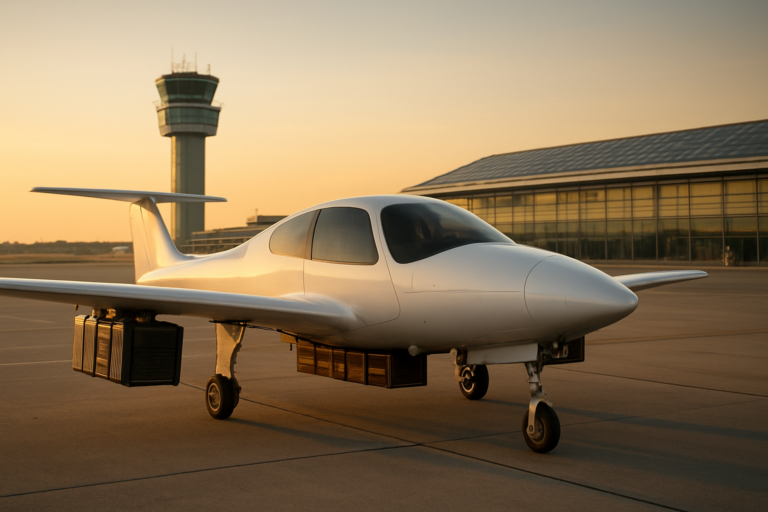
The roar of jet engines has defined commercial flight for more than a century, but a quiet revolution is taking off in the shadows of busy runways. Electric aviation—powered by high‑energy batteries or fuel‑cell systems—promises to eliminate tailpipe emissions, slash operating costs, and reshape the economics of air travel. While the first electric‑propelled aircraft have already logged test flights, the industry is now poised for a transformative leap that could see zero‑emission flights become routine within the next decade.
Why Electric Aviation Matters Now
Climate pressure and regulatory momentum
Aviation accounts for roughly 2–3 % of global CO₂ emissions, a share projected to rise as demand for air travel rebounds post‑pandemic. International bodies such as the International Civil Aviation Organization (ICAO) have set ambitious targets: a 50 % reduction in net CO₂ emissions by 2050 relative to 2005 levels. Governments across Europe, North America, and Asia are introducing carbon‑pricing schemes, stricter emissions standards, and subsidies for clean‑tech research—creating a policy environment that rewards low‑carbon solutions.
Economic incentives
Fuel remains the single largest operating expense for airlines, representing 30–40 % of total costs on short‑haul routes. Electric propulsion can reduce fuel costs to near‑zero and lower maintenance expenses because electric motors have fewer moving parts than turbofan engines. Early adopters stand to gain a competitive edge through lower ticket prices and improved brand perception.
Core Technologies Powering Zero‑Emission Flights
1. Advanced Battery Chemistry
Lithium‑ion cells dominate today’s electric aircraft, but their energy density (≈250 Wh/kg) limits range to 200–300 km for most designs. Researchers are pushing the envelope with lithium‑sulfur (≈500 Wh/kg) and solid‑state batteries (≥600 Wh/kg). In 2024, a consortium led by a European university demonstrated a solid‑state cell delivering 650 Wh/kg in a lab setting, a breakthrough that could double the range of electric commuter planes.
2. Hybrid‑Electric Architectures
Fully electric propulsion may stay out of reach for long‑haul flights, but hybrid‑electric configurations—combining a small turbine generator with electric motors—offer a pragmatic stepping stone. Hybrid systems can provide extra thrust during take‑off and climb, then switch to electric cruise, cutting fuel burn by 30‑40 % on medium‑range routes.
3. Distributed Electric Propulsion (DEP)
DEP replaces a single large fan with multiple smaller electric fans mounted on the wing or fuselage. This arrangement improves aerodynamic efficiency, reduces noise, and offers redundancy. Companies such as Joby Aviation and Lilium are leveraging DEP for vertical‑takeoff‑and‑landing (VTOL) air taxis, demonstrating its potential for both urban mobility and regional transport.
4. Lightweight Composite Structures
To offset battery weight, manufacturers are turning to carbon‑fiber‑reinforced polymers and thermoplastic composites. These materials can achieve 30 % weight savings over traditional aluminum while maintaining structural integrity under high‑stress conditions.
Milestones and Market Players
| Year | Milestone | Company / Institution |
|---|---|---|
| 2022 | First fully electric commercial flight (30‑minute hop) | Eviation Alice |
| 2023 | Certification of hybrid‑electric regional aircraft | Airbus (E-Fan X) – program paused but tech validated) |
| 2024 | Record‑breaking solid‑state battery test | European Battery Research Consortium |
| 2025 (forecast) | Launch of 150‑seat electric airliner prototype | ZeroAvia |
| 2026 (forecast) | First electric‑powered short‑haul airline route (≤500 km) | Regional carrier in Scandinavia |
These milestones illustrate a rapid acceleration from experimental prototypes to near‑commercial readiness.
Infrastructure Challenges and Solutions
Charging and Power Supply
Electric aircraft demand high‑power charging stations comparable to those used for large‑scale industrial equipment. A 150‑seat electric jet could require 5–10 MW for a full recharge, translating to 30–60 minutes at current fast‑charging rates. Airports are responding by installing grid‑connected charging pads and exploring on‑site renewable generation (solar canopies, wind turbines) to offset the load.
Battery Swapping vs. Fast Charging
Some operators favor battery‑swap modules—pre‑charged packs exchanged on the tarmac in under five minutes—mirroring practices in electric bus fleets. This approach reduces turnaround time but adds complexity to logistics and requires standardized pack designs.
Air Traffic Management (ATM) Adaptation
Electric aircraft have distinct performance envelopes (e.g., quieter climb, different climb rates). ATM systems must integrate real‑time data on battery state‑of‑charge and electric motor health to optimize routing and scheduling, especially in congested airspace.
Environmental Impact Beyond Emissions
Noise Reduction
Electric motors generate substantially less acoustic noise than turbofan engines. Studies indicate a 10‑15 dB reduction in overall cabin and external noise, which could enable airport expansions closer to residential zones and improve community acceptance.
Lifecycle Considerations
While operational emissions drop to zero, the production and disposal of batteries raise concerns. Sustainable sourcing of lithium, cobalt, and nickel, as well as second‑life applications for retired aircraft batteries (e.g., grid storage), are crucial to achieving true carbon neutrality.
Business Models Shaping the Market
Airline‑as‑a‑Service (AaaS)
Manufacturers may lease electric aircraft and associated charging infrastructure to airlines, reducing capital expenditure barriers. This model mirrors the aircraft leasing industry but adds a service layer for energy management.
Public‑Private Partnerships
Governments are funding green corridors—designated routes where only zero‑emission aircraft can operate—paired with subsidies for airport upgrades. The European Union’s “Clean Skies” initiative earmarks €1.2 billion for such projects through 2030.
Urban Air Mobility (UAM) Integration
Electric VTOL vehicles, though primarily focused on intra‑city travel, share propulsion technology with larger electric planes. Cross‑industry collaboration can accelerate component standardization and drive economies of scale.
Timeline to Mainstream Adoption
| Horizon | Expected Development |
|---|---|
| 2024‑2025 | Certification of hybrid‑electric regional aircraft; first commercial battery‑swap stations at major hubs |
| 2026‑2028 | Deployment of 50‑seat electric commuter planes on short routes (≤500 km); scaling of fast‑charging infrastructure |
| 2029‑2032 | Introduction of 100‑150‑seat electric airliners for regional networks; integration of renewable‑powered airport grids |
| 2033‑2035 | Viable electric propulsion for medium‑haul (≤1500 km) using next‑gen solid‑state batteries; broader regulatory acceptance worldwide |
While timelines can shift due to technology risk or policy changes, the convergence of battery breakthroughs, regulatory pressure, and market demand suggests that zero‑emission flights will be a commercial reality before 2035.
Potential Risks and Mitigation Strategies
- Battery Safety – High‑energy cells pose thermal runaway risks. Mitigation includes robust cell‑level monitoring, fire‑resistant casing, and redundant cooling systems.
- Supply‑Chain Constraints – Limited lithium and cobalt reserves could inflate costs. Companies are investing in recycling facilities and exploring alternative chemistries (e.g., sodium‑ion).
- Regulatory Lag – Certification standards for electric propulsion are still evolving. Early engagement with authorities (EASA, FAA) and participation in type‑certification working groups can smooth the path.
Conclusion
Electric aviation sits at the intersection of climate urgency, technological innovation, and evolving business models. With batteries gaining energy density, hybrid systems bridging the range gap, and airports preparing for high‑power charging, the industry is moving from experimental flights to scalable, zero‑emission operations. The next decade will likely witness electric commuter planes becoming a common sight on regional routes, while longer‑haul electric travel hinges on solid‑state breakthroughs. For airlines, manufacturers, and policymakers, the message is clear: embracing electric propulsion isn’t just an environmental choice—it’s an economic imperative that will define the future of flight.