
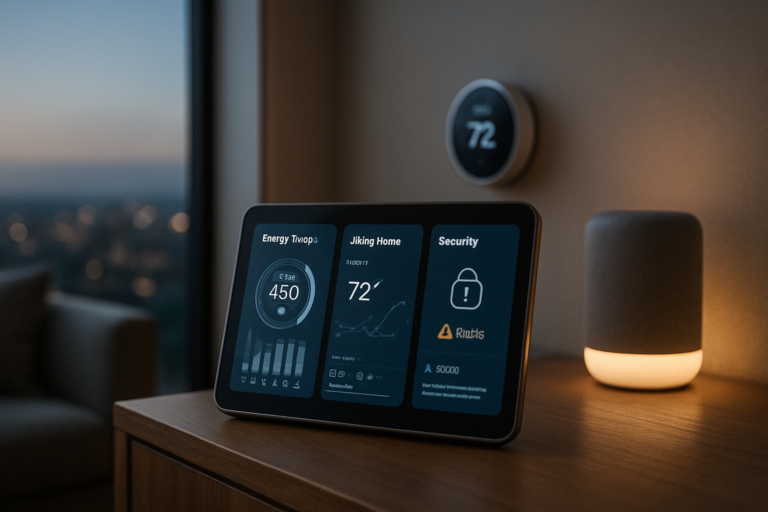
Smart homes have long promised convenience, but the latest wave—often dubbed Smart Homes 2.0—takes that promise to a new level by embedding artificial intelligence directly into the fabric of our living spaces. Gone are the days of simple timers and basic sensors; today’s AI‑driven households learn, predict, and adapt to our needs in real time, creating environments that feel almost…alive.
The Core of Smart Homes 2.0
At the heart of this evolution is predictive analytics. AI models ingest data from temperature sensors, motion detectors, and even wearable devices to anticipate occupant behavior. For example, if a household routinely adjusts the thermostat to 68 °F at 6 pm, the system will pre‑heat or pre‑cool the space minutes before arrival, cutting energy waste by up to 15% according to a 2023 Energy Institute study.
Key Components
- AI‑enabled hubs that serve as central nervous systems, integrating voice assistants, smart appliances, and security cameras.
- Edge computing nodes that process data locally, ensuring low latency and privacy.
- Adaptive lighting that shifts hue and intensity based on circadian rhythms, improving sleep quality.
- Smart kitchens where refrigerators predict grocery needs and suggest recipes.
These elements work symbiotically, creating a closed loop of continuous improvement.
Benefits That Go Beyond Convenience
Energy Efficiency
AI can adjust HVAC, lighting, and appliance usage based on occupancy patterns and weather forecasts. In a recent pilot in Austin, Texas, participants saw a 22% reduction in monthly energy bills after installing an AI‑driven system.
Enhanced Security
Advanced computer vision algorithms can distinguish between family members, pets, and strangers. If an unknown entity is detected, the system automatically locks doors, notifies residents, and streams live footage to their phones—providing peace of mind without constant human oversight.
Health and Well‑Being
Smart sensors monitor air quality, UV exposure, and even subtle changes in heart rate via wall‑mounted wearable integration. The system can trigger ventilation or alert occupants if levels exceed safe thresholds, supporting healthier indoor environments.
Privacy: A Double‑Edged Sword
With great power comes great responsibility. AI‑driven homes collect vast amounts of personal data. Manufacturers are increasingly adopting on‑device processing to mitigate data leakage. Transparency reports and user‑controlled data dashboards are becoming standard, allowing homeowners to see exactly what information is shared and with whom.
Statistically, 68% of consumers surveyed in 2024 feel uneasy about continuous data collection in their homes, yet 74% still opt for AI features that promise cost savings and convenience. Striking the right balance between functionality and privacy is therefore critical for sustained adoption.
Integration Challenges
Interoperability
Despite the hype, many devices still rely on proprietary protocols. Initiatives like Matter aim to unify communication standards, but full adoption takes time. Homeowners often need a “glue” solution—such as a universal hub—that can translate between Zigbee, Z‑Wave, and Wi‑Fi.
User Education
Even the most intuitive interfaces can overwhelm non‑tech savvy users. Simple, guided onboarding tutorials and contextual help menus are essential to prevent frustration and ensure that AI features are fully utilized.
The Road Ahead: What’s Next?
- Contextual AI – Systems will understand not just what we do but why, adjusting responses based on emotional cues captured via cameras or voice tone.
- Zero‑Touch Maintenance – Predictive maintenance will alert homeowners to appliance failures before they happen, extending product lifespan.
- Hybrid Cloud‑Edge Models – Balancing the power of cloud AI with the speed of edge devices will unlock new real‑time applications, such as instant language translation for multilingual households.
Market Outlook
The global smart home market is projected to grow from $80 billion in 2023 to $135 billion by 2030, driven largely by AI integration. Manufacturers that prioritize privacy, interoperability, and user experience will capture the largest share.
Conclusion
Smart Homes 2.0 is more than an upgrade; it’s a paradigm shift. By weaving AI into everyday objects, we’re moving toward living spaces that anticipate needs, conserve resources, and enhance safety—all while respecting privacy. As the technology matures and standards coalesce, the vision of a truly intelligent home will become the norm rather than the exception, reshaping how we live, work, and play.