
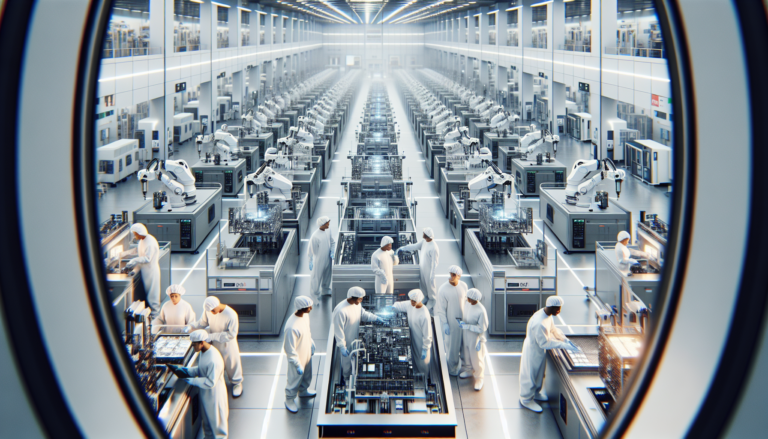
In an increasingly digital world, semiconductors are the silent orchestrators of modern life, powering everything from our smartphones and cars to critical defense systems and artificial intelligence. They are, quite simply, the brains of the digital age. For decades, India, despite its prowess in software and IT services, has largely remained a consumer rather than a producer of these foundational components. This dynamic, however, is undergoing a monumental shift. India is now charting an ambitious course to establish itself as a global semiconductor manufacturing and design hub, a journey fraught with challenges but brimming with transformative potential.
This Techcharcha exclusive takes a deep dive into India’s semiconductor push, exploring the strategic imperatives driving this national mission, the key policies in play, the investments pouring in, and the significant hurdles that lie ahead. It’s a story of national ambition, technological self-reliance, and a concerted effort to reshape India’s position in the global tech landscape.
The Strategic Imperative: Why Now for India?
The global chip shortage of 2020-2022 served as a stark wake-up call, exposing the fragility of global supply chains heavily concentrated in a few geographical regions. This vulnerability, coupled with rising geopolitical tensions and a burgeoning domestic demand for electronics, propelled India’s semiconductor ambitions into the national spotlight. The move is driven by several key factors:
- Economic Growth & Digital India: India’s rapidly expanding digital economy – encompassing everything from 5G deployment to IoT, AI, and electric vehicles – relies heavily on a stable and secure supply of semiconductors. Building domestic capabilities is crucial for sustaining this growth.
- National Security: Dependence on foreign sources for critical components can pose significant national security risks, particularly for defense and strategic sectors. Developing indigenous semiconductor capabilities is a matter of strategic autonomy.
- ‘Make in India‘ and Atmanirbhar Bharat: The semiconductor mission is a cornerstone of Prime Minister Narendra Modi’s vision for an ‘Atmanirbhar Bharat‘ (self-reliant India). It aims not just to assemble but to design, fabricate, and package chips within the country, creating high-value manufacturing jobs and reducing import dependence.
- Geopolitical Rebalancing: As global powers vie for technological supremacy, establishing a robust semiconductor ecosystem can enhance India’s geopolitical leverage and contribute to diversifying global supply chains.
India’s Blueprint: Key Initiatives and Policies
Recognizing the monumental scale of the task, the Indian government has rolled out a comprehensive strategy, underpinned by significant financial commitments. The flagship initiative is the India Semiconductor Mission (ISM), launched in December 2021 with an outlay of ₹76,000 crore (approximately $10 billion USD). ISM acts as a specialized and independent business division within the Digital India Corporation, focusing on:
- Attracting large investments: Offering attractive financial incentives for setting up semiconductor fabs, display fabs, and ATMP (Assembly, Test, Mark, and Pack) units.
- Promoting design-led manufacturing: Encouraging domestic companies to innovate and design chips for various applications.
- Developing a skilled workforce: Investing in R&D, academia-industry partnerships, and skill development programs to nurture talent.
- Creating a supportive ecosystem: Addressing infrastructure, regulatory, and policy challenges to make India an attractive destination for semiconductor investments.
Further bolstering this effort are various Production-Linked Incentive (PLI) schemes for large-scale electronics manufacturing, IT hardware, and telecom and networking products, which indirectly create a downstream market for domestically produced semiconductors. These policies collectively aim to de-risk investments and foster a competitive environment.
Major Players and Investments on the Ground
The government’s proactive approach has begun to yield tangible results, attracting significant interest from global and domestic players.
- Micron Technology’s ATMP Facility: A landmark investment, Micron is setting up a state-of-the-art semiconductor assembly and test facility in Sanand, Gujarat. With a total investment of $2.75 billion, it’s expected to generate 5,000 direct jobs and 15,000 indirect jobs. This project is critical for establishing a foundational piece of the semiconductor value chain in India.
- Tata Electronics: The Tata Group has emerged as a frontrunner, aggressively pursuing opportunities across the semiconductor value chain. They are reportedly planning investments in both ATMP facilities and potentially a full-fledged fabrication plant, leveraging their vast industrial experience.
- HCLTech’s Design Focus: Indian IT giants like HCLTech are expanding their semiconductor design capabilities, contributing to the crucial ‘fabless’ aspect of the ecosystem. This focuses on high-value intellectual property development.
- Others: Several other companies, both Indian and international, are exploring opportunities in various segments, from specialty fabs to packaging and test, leveraging the incentives and growing market. While some initial joint ventures faced changes, the underlying intent and the government’s commitment remain strong, continually refining strategies to attract the right partners.
These investments are not just about setting up factories; they signify a commitment to building an entire ecosystem, fostering local ancillary industries, and integrating India into the global semiconductor supply chain.
Navigating the Hurdles: Challenges and Roadblocks
Despite the enthusiasm, India’s semiconductor journey is formidable. The industry is notoriously capital-intensive, technologically complex, and requires a highly specialized workforce.
- Massive Capital Investment: Building a semiconductor fab can cost anywhere from $5 billion to $20 billion, requiring sustained, long-term investment. While government incentives are substantial, attracting this scale of private capital remains a challenge.
- Skilled Workforce Shortage: India boasts a vast engineering talent pool, but expertise specific to semiconductor manufacturing (process engineers, materials scientists, equipment specialists) is scarce. Bridging this skill gap requires massive investment in specialized education and training.
- Technology Transfer and IP Issues: Accessing cutting-edge technology and intellectual property from leading global players is crucial but often guarded. Navigating complex licensing agreements and partnerships is vital.
- Infrastructure Requirements: Semiconductor fabs require uninterrupted power, ultra-pure water, and a robust logistics network. Ensuring this critical infrastructure is readily available across potential sites is a significant undertaking.
- Long Gestation Periods: Semiconductor projects have long gestation periods, often taking 5-7 years from conception to full-scale production, demanding patience and consistent policy support.
- Global Competition: India is entering a highly competitive global market where established players have decades of experience and massive economies of scale.
The Promise of Tomorrow: Impact and Opportunities
If successful, India’s semiconductor mission promises a ripple effect across its economy and global standing:
- Economic Multiplier Effect: Beyond direct employment, a robust semiconductor sector will spur growth in ancillary industries, logistics, R&D, and services. The electronics manufacturing sector alone is projected to reach $300 billion by 2026, significantly boosted by domestic chip production.
- Job Creation: The high-skill, high-wage jobs created will not only boost employment but also upskill the Indian workforce, fostering innovation and advanced manufacturing capabilities.
- Strengthening Local Electronics Ecosystem: A domestic chip supply will de-risk and accelerate the growth of India’s electronics manufacturing, reducing reliance on imports and fostering local innovation in product development.
- Boosting R&D and Innovation: The push for semiconductor design and manufacturing will naturally lead to greater investment in R&D, positioning India at the forefront of emerging technologies like AI, quantum computing, and advanced materials.
- Enhanced Geopolitical Standing: Becoming a reliable contributor to global semiconductor supply chains will significantly enhance India’s strategic importance and influence on the world stage.
Specific sectors like electric vehicles (EVs), 5G infrastructure, artificial intelligence, and the Internet of Things (IoT) will be direct beneficiaries, reducing their reliance on volatile global markets and enabling localized, innovative product development.
What’s Next? Charting the Course Ahead
India’s semiconductor journey is in its nascent but critical phase. The path forward requires:
- Sustained Government Commitment: The existing policy framework and financial incentives must be consistently implemented and adapted to evolving industry needs.
- Focus on Education and Skill Development: A massive push in specialized university programs, vocational training, and industry apprenticeships is crucial to build the necessary talent pipeline.
- International Collaborations: Strategic partnerships with global semiconductor leaders, both for technology transfer and market access, will be vital.
- Attracting More Global Players: Continued efforts to streamline regulations, ensure ease of doing business, and provide competitive incentives will be essential to draw more investment.
- Balancing Ambition with Practical Execution: A pragmatic approach that prioritizes achievable milestones, such as ATMP and design, while steadily building towards full-scale fabrication, will be key to long-term success.
The vision is clear: to transform India from a significant consumer into a formidable producer and innovator in the semiconductor realm. This isn’t just about economic growth; it’s about securing India’s technological future and cementing its place as a leader in the global digital economy.
Join the Conversation:
What are your thoughts on India’s semiconductor ambitions? Do you believe India can overcome the challenges and emerge as a global chip powerhouse? Share your insights and predictions in the comments below, or connect with us on social media to continue the discussion!