
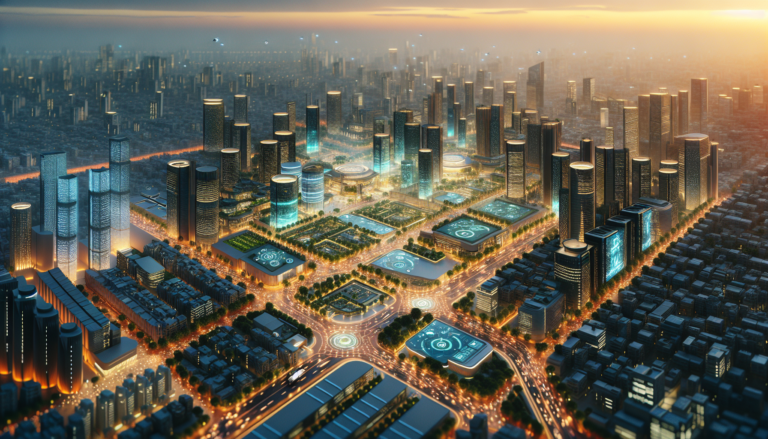
India, a nation in constant evolution, is currently undergoing an unprecedented wave of urbanization. With projections indicating that over 50% of its population will reside in urban areas by 2050, the need for sustainable, efficient, and livable cities has become paramount. This pressing demand has propelled the concept of ‘Smart Cities’ into the national discourse, not just as an idealistic vision but as a practical necessity powered by advanced technology. These aren’t just cities with Wi-Fi; they are urban ecosystems reimagined from the ground up, leveraging cutting-edge innovations to enhance the quality of life for their inhabitants, streamline governance, and foster economic growth.
The Indian government’s ambitious Smart Cities Mission, launched in 2015, aimed to develop 100 smart cities across the country. This initiative underscores a commitment to transforming urban landscapes through integrated technology solutions, focusing on core infrastructure, sanitation, public transport, and citizen participation. The journey so far has laid a robust foundation, and the tech transformations ahead promise to be even more profound, reshaping how millions of Indians will live, work, and interact with their urban environment.
Defining a Smart City in the Indian Context
While the global definition of a smart city often revolves around technological integration, the Indian perspective adds layers of local context, focusing on inclusivity, sustainability, and citizen-centric services. Here, a smart city is not merely about deploying the latest gadgets; it’s about using technology to solve real-world urban problems unique to India, such as traffic congestion, waste management, public safety, and access to essential services.
Key characteristics defining India’s smart cities include:
- Efficient Urban Mobility: Intelligent traffic management systems, smart parking solutions, and integrated public transport.
- Sustainable Environment: Smart waste management, renewable energy sources, water conservation, and pollution monitoring.
- Smart Governance: E-governance platforms, citizen feedback mechanisms, and data-driven policy making.
- Digital Infrastructure: Ubiquitous connectivity, data centers, and secure digital platforms.
- Public Safety & Security: Surveillance systems, emergency response integration, and disaster management.
- Economic Growth: Fostering innovation, creating job opportunities, and attracting investments.
The Technological Pillars Driving Transformation
The roadmap to smart cities in India is heavily paved with technological advancements. Several key innovations are set to be the backbone of this urban revolution.
1. The Internet of Things (IoT)
At the heart of every smart city is a vast network of interconnected devices – the Internet of Things. In India, IoT is being deployed to collect real-time data from various urban elements.
- Smart Traffic Management: Sensors embedded in roads and traffic lights dynamically adjust signal timings based on real-time traffic flow, significantly reducing congestion. Cities like Pune and Bengaluru are already seeing benefits from such systems.
- Environmental Monitoring: IoT sensors continuously monitor air and water quality, noise levels, and weather conditions, providing critical data for pollution control and public health advisories.
- Waste Management: Smart bins with sensors detect fill levels, optimizing collection routes and improving waste disposal efficiency, a crucial step for Indian cities grappling with waste management challenges.
- Smart Utilities: Sensors can monitor water leakage, electricity consumption, and gas pipeline integrity, leading to more efficient resource management and reduced wastage.
2. Artificial Intelligence (AI) and Machine Learning (ML)
The immense datasets generated by IoT devices become truly valuable when processed by AI and ML algorithms. These technologies enable predictive analysis, automation, and intelligent decision-making.
- Predictive Policing: AI can analyze crime patterns, social media data, and environmental factors to predict potential crime hotspots, allowing police forces to allocate resources more effectively.
- Healthcare Optimization: AI-powered platforms can help manage patient flow in hospitals, predict disease outbreaks, and facilitate telemedicine in remote areas, enhancing access to quality healthcare.
- Urban Planning: ML models can analyze demographic shifts, infrastructure usage, and economic indicators to inform future urban development projects, ensuring they meet the evolving needs of citizens.
- Autonomous Systems: While still nascent, AI will drive autonomous public transport, delivery drones, and robotic services, transforming urban logistics and mobility in the coming decades.
3. Advanced Connectivity: 5G and Beyond
Robust, high-speed, and low-latency connectivity is the nervous system of any smart city. India’s rapid rollout of 5G technology is a game-changer.
- Enhanced Data Transfer: 5G facilitates the instantaneous transfer of vast amounts of data from millions of IoT devices, enabling real-time monitoring and control of urban infrastructure.
- New Applications: The low latency of 5G is critical for mission-critical applications like autonomous vehicles, remote surgery, and augmented reality (AR) urban experiences.
- Fiber Optic Networks: Complementing 5G, extensive fiber optic networks are being laid to provide the foundational broadband infrastructure necessary for data centers and high-bandwidth urban services.
4. Big Data Analytics
The sheer volume, velocity, and variety of data generated in a smart city necessitate powerful big data analytics tools.
- Citizen Behaviour Insights: By analyzing anonymized data on public transport usage, shopping patterns, and energy consumption, city planners can gain insights into citizen behavior and preferences, leading to more responsive services.
- Resource Optimization: Data analytics helps optimize resource allocation for everything from emergency services to public utility maintenance, ensuring resources are deployed where and when they are most needed.
- Economic Forefront: For businesses, insights derived from urban data can inform market strategies, identify growth opportunities, and even predict consumer trends.
5. Digital Governance and Citizen Engagement Platforms
Beyond infrastructure, smart cities are about improving the interaction between citizens and the government.
- E-Governance: Online portals for permits, licenses, tax payments, and grievance redressal make government services more accessible and transparent.
- Smart Command and Control Centers: These integrated hubs collect data from various city departments, providing a unified view of urban operations and enabling rapid response to incidents.
- Citizen Apps: Mobile applications allow citizens to report issues, access public services, and participate in urban planning initiatives, fostering a sense of community ownership.
Impact on Innovation and the Economy
The embrace of smart city technologies is not just an infrastructural upgrade; it’s a catalyst for broader socio-economic transformation across India.
- Booming Startup Ecosystem: The demand for innovative urban solutions has fueled a vibrant startup scene. Entrepreneurs are developing cutting-edge solutions in areas like urban mobility, waste-to-energy conversion, smart metering, and public safety tech, attracting significant investment. According to a 2023 report, India is emerging as a major hub for urban tech startups, showcasing immense growth potential.
- Job Creation: The development and maintenance of smart city infrastructure, coupled with the growth of tech companies, are generating a plethora of new job opportunities, ranging from data scientists and AI engineers to urban planners and cybersecurity experts.
- Improved Quality of Life: The ultimate goal of smart cities is to enhance the living experience. Reduced pollution, safer environments, efficient public transport, and streamlined access to services directly translate into better health, increased productivity, and greater civic satisfaction.
- Attracting Investment: Smart cities present an attractive proposition for both domestic and international investors. The promise of well-managed, sustainable, and digitally advanced urban centers makes them ideal locations for businesses looking for long-term growth and stability.
Navigating the Challenges Ahead
While the vision is bright, realizing the full potential of smart cities in India comes with its share of challenges. Data privacy and cybersecurity are paramount concerns, requiring robust frameworks and technologies to protect citizen information. Bridging the digital divide, ensuring equitable access to technology across all socio-economic strata, remains a critical task. Furthermore, securing sustained funding, fostering inter-agency coordination, and encouraging active citizen participation are vital for the long-term success and sustainability of these urban transformations.
The Road to a Smarter India
The concept of smart cities in India is evolving beyond mere technological deployment to embody a holistic vision of urban development – one that is inclusive, sustainable, and citizen-centric. The ongoing tech transformations, from the widespread adoption of IoT and AI to the foundational shift towards advanced connectivity, are not just changing cityscapes but are fundamentally altering the fabric of urban living. As India continues its journey towards becoming a global economic powerhouse, its smart cities will undoubtedly serve as beacons of innovation, efficiency, and a truly enhanced quality of life for millions.
What role do you see yourself playing in India’s smart city evolution? Share your thoughts or explore how you can contribute to creating smarter, more sustainable urban futures.