
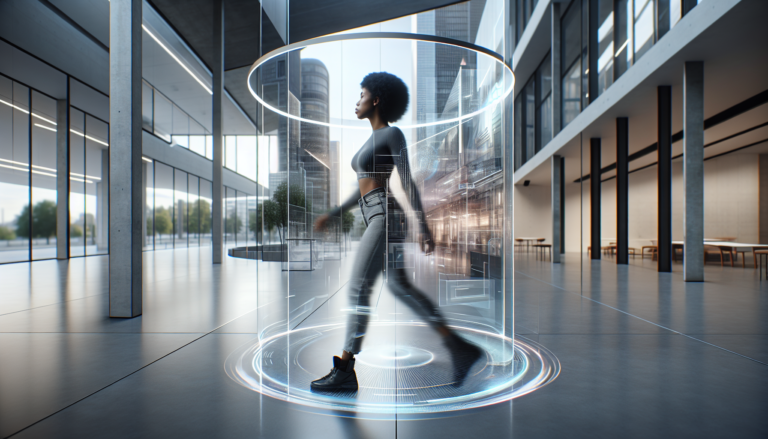
The internet has been a dynamic force, constantly evolving and reshaping how we live, work, and interact. From the static pages of Web1 to the social connectivity of Web2 and the decentralized promises of Web3, each iteration has brought profound changes. Now, whispers of “Web4” are beginning to surface, stirring a new wave of excitement and speculation about the internet’s next frontier. But what exactly is Web4, and is the hype justified?
While still largely conceptual and without a universally agreed-upon definition, Web4 is generally envisioned as the “symbiotic web” or the “ubiquitous web.” It represents a future where the internet is not just an interface we interact with, but an intelligent, proactive, and seamlessly integrated part of our physical reality. Think less about clicking and typing, and more about living within a highly responsive, AI-driven digital ecosystem.
From Web1 to Web3: A Quick Evolution Recap
To truly grasp the potential of Web4, it’s helpful to briefly revisit its predecessors:
- Web1 (The Read-Only Web): From roughly 1990 to 2004, this was the era of static web pages, directories, and limited interaction. Users were primarily consumers of information. Think GeoCities and early Yahoo! directories.
- Web2 (The Social Web): Starting around 2004, Web2 brought interactivity, user-generated content, and social networking to the forefront. Platforms like Facebook, Twitter, and YouTube defined this era, transforming users into both consumers and creators.
- Web3 (The Decentralized Web): This ongoing evolution leverages blockchain technology to decentralize power, give users more control over their data and digital assets, and enable new forms of digital ownership and value exchange. NFTs, DAOs, and dApps are hallmarks of Web3.
Each transition wasn’t just a technological upgrade; it was a fundamental shift in how we perceived and used the internet. Web4, if it materializes as envisioned, promises to be the most profound leap yet.
What Exactly is Web4, Anyway? Defining the Symbiotic Internet
Web4 isn’t merely an incremental upgrade; it’s a paradigm shift towards an internet that is deeply intertwined with artificial intelligence, the Internet of Things (IoT), and highly immersive experiences. The core characteristics often attributed to Web4 include:
- Symbiotic Interaction: This is the defining feature. Web4 aims for a continuous, seamless, and intuitive interaction between humans and machines, where AI agents act as intelligent intermediaries, anticipating needs and proactively delivering services without explicit commands. It’s about collaboration between human intelligence and artificial intelligence.
- Ubiquitous Connectivity: Building on the IoT, Web4 envisions an environment where every device, sensor, and even physical object is interconnected and able to communicate intelligently. The internet permeates every aspect of our surroundings, making digital interaction ambient and invisible.
- Proactive Intelligence: Unlike current AI, which often responds to queries, Web4‘s AI agents would operate with a higher degree of autonomy and foresight. They could manage schedules, optimize energy usage in smart homes, or personalize learning experiences based on real-time understanding of user behavior and context.
- Immersive Experiences: Web4 is expected to fully integrate elements of the metaverse, augmented reality (AR), and virtual reality (VR) into everyday life. The lines between the physical and digital worlds will blur, creating rich, multisensory digital experiences that are almost indistinguishable from reality.
- Decentralized Foundations (from Web3): While adding new layers of intelligence and immersion, Web4 is expected to retain and build upon the decentralized principles of Web3, ensuring greater data privacy, security, and user ownership in this highly integrated digital ecosystem.
The Pillars of Web4: Key Technologies Driving the Vision
The ambitious vision of Web4 relies on the convergence and maturation of several cutting-edge technologies:
- Advanced Artificial Intelligence (AI) & Machine Learning (ML): At the heart of Web4‘s intelligence, these technologies will power the proactive agents, natural language understanding, predictive analytics, and contextual awareness that define the symbiotic web. The global AI market is projected to reach over $1.8 trillion by 2030, underscoring its rapid development.
- Internet of Things (IoT): The proliferation of interconnected devices, from smart home gadgets to industrial sensors, will create the pervasive network necessary for a ubiquitous internet. By 2025, there could be over 27 billion connected IoT devices worldwide, laying the groundwork for Web4‘s integrated environment.
- Blockchain Technology: Providing the decentralized infrastructure inherited from Web3, blockchain will ensure secure transactions, immutable data records, and transparent digital ownership within the Web4 ecosystem, addressing crucial trust and privacy concerns.
- Edge Computing: With massive amounts of data being generated by IoT devices, edge computing will be critical. It processes data closer to the source, reducing latency and enabling real-time decision-making for Web4‘s intelligent agents.
- Spatial Computing & Metaverse Technologies: These are essential for creating the immersive, 3D environments where physical and digital realities merge, offering new modes of interaction and experience.
Impact on Technology and Innovation
The arrival of Web4 would unleash a wave of transformative innovation across virtually every sector:
- Hyper-Personalized Experiences: From education to healthcare, services would be tailored to an unprecedented degree, anticipating individual needs and preferences. Imagine an AI tutor that adapts its teaching style in real-time based on your emotional state and learning pace.
- Automated and Intelligent Services: Daily tasks could be managed autonomously by AI agents – from optimizing your commute based on real-time traffic and calendar events to managing your home’s energy consumption.
- Smart Environments: Cities, homes, and workplaces would become truly “smart,” not just connected. They would adapt dynamically to inhabitants’ needs, optimizing resources and enhancing safety and comfort.
- New Economic Models: The symbiotic nature of Web4 could foster novel business models centered around AI-driven services, automated commerce, and immersive digital economies within the metaverse.
- Enhanced Human-Computer Interaction: Interactions would shift from explicit commands to more intuitive, natural methods, including voice, gestures, and even thought, facilitated by advanced brain-computer interfaces (BCIs) and emotional AI.
Decoding the Hype: Realistic Expectations vs. Grand Visions
While the vision of Web4 is compelling, it’s crucial to decode the hype with a dose of realism. The journey to a fully symbiotic and ubiquitous internet faces significant hurdles:
- Privacy and Security: With so much data being collected and processed by AI agents, ensuring robust privacy safeguards and preventing cyber threats becomes paramount. The potential for surveillance and data misuse is a major concern.
- Ethical AI Development: The autonomy and decision-making capabilities of Web4‘s AI agents raise complex ethical questions. Who is responsible when an AI makes a harmful decision? How do we prevent bias and ensure fairness in algorithms?
- Digital Divide: The advanced infrastructure and access required for Web4 could exacerbate the existing digital divide, leaving many behind if not carefully addressed through inclusive policy and development.
- Computational and Energy Demands: Powering such a vast, intelligent, and interconnected network will require immense computational resources and energy, posing environmental challenges.
- Interoperability and Standardization: Achieving seamless integration across countless devices, platforms, and AI systems will necessitate unprecedented levels of standardization and interoperability.
Despite these challenges, the trajectory of technological advancement suggests that elements of Web4 are already in motion. We see precursors in advanced AI assistants, smart home ecosystems, and early metaverse explorations.
The Road Ahead: Preparing for the Symbiotic Web
Web4 isn’t a singular product or platform that will be “launched.” Rather, it’s an evolving paradigm, a culmination of interconnected technologies and philosophical shifts. Its development will be gradual, iterative, and require immense collaboration between technologists, policymakers, ethicists, and society at large.
The journey toward Web4 will force us to re-evaluate our relationship with technology, prioritizing not just efficiency and innovation, but also human well-being, ethical considerations, and equitable access.
Conclusion
The concept of Web4, the symbiotic and ubiquitous internet, represents a thrilling and perhaps inevitable future for our digital lives. It promises an internet that is not just responsive but proactive, not just connected but intelligent, and not just interactive but immersive. While the hype is certainly understandable given its transformative potential, the real work lies in navigating the complexities, addressing the ethical dilemmas, and building a Web4 that truly serves humanity.
Are you ready to engage with an internet that thinks with you, anticipates your needs, and seamlessly blends into your reality? The conversation around Web4 is just beginning, and your input – as a user, innovator, or critical observer – will shape its ultimate form. Let’s collectively ensure that this next evolution of the web is built on a foundation of empowerment, privacy, and shared prosperity.