
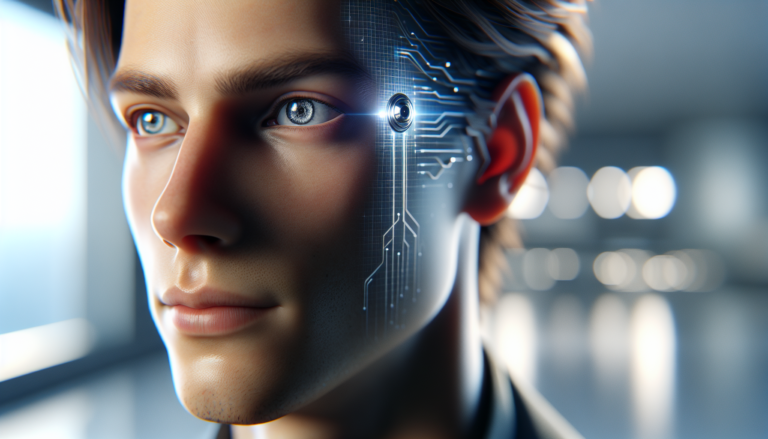
The idea of merging human brains with computers once belonged firmly in the realm of science fiction. Think cyborgs, telepathy, and instantaneous knowledge transfer. Today, however, these concepts are rapidly transitioning from speculative fantasy to tangible reality, largely thanks to pioneering companies like Neuralink. With recent breakthroughs and public demonstrations, the brain-computer future isn’t just on the horizon; it’s actively unfolding before our eyes.
Neuralink, founded by Elon Musk, has been at the forefront of this revolution, aiming to create ultra-high bandwidth brain-computer interfaces (BCIs). Their audacious goal is not only to restore lost functions for individuals with neurological conditions but eventually to unlock new dimensions of human capability. But what exactly has Neuralink been up to, and how close are we to a world where our thoughts can directly control external devices or even communicate with AI?
The Dawn of Direct Brain-Computer Communication
The concept of BCIs dates back decades, with early research exploring how brain signals could control prosthetic limbs or communicate simple commands. However, these systems were often cumbersome, invasive, or limited in their bandwidth. Neuralink entered the scene with a bold vision: to build a fully implantable, cosmetically invisible, wireless BCI that could process vast amounts of neural data.
Their technology centers around a device called the “Link,” a small disc implanted into the skull, which connects to ultra-fine threads (each thinner than a human hair) surgically inserted into the brain’s cortex. These threads contain thousands of electrodes capable of reading neural activity with unprecedented precision. The data is then transmitted wirelessly to an external device, allowing for direct control over digital interfaces.
The primary initial focus for Neuralink, and indeed for most BCI companies, is therapeutic. The potential to restore sight, hearing, speech, and movement for those who have lost these functions due to disease or injury is a monumental undertaking. For millions globally suffering from conditions like paralysis, ALS, Parkinson’s disease, or spinal cord injuries, a functional BCI represents the ultimate hope for regaining independence and quality of life.
Neuralink’s Latest Milestones: A Glimpse into the Future
The past year has marked a pivotal period for Neuralink, moving from animal testing to its first human trials, capturing global attention and sparking both excitement and intense scrutiny.
The PRIME Study and Noland Arbaugh
In January 2024, Neuralink announced a monumental achievement: the successful implantation of its Link device into a human participant as part of its “PRIME Study” (Precise Robotically Implanted Brain-Computer Interface). The individual, Noland Arbaugh, a 29-year-old quadriplegic who was paralyzed below the shoulders after a diving accident, quickly became the public face of this medical breakthrough.
Arbaugh’s journey with the Link has been nothing short of inspiring. Within weeks of the surgery, he was demonstrating remarkable control over a computer cursor using only his thoughts. Viral videos showed him playing online chess, navigating web pages, and even playing video games like Mario Kart, tasks that were previously impossible for him. He described the experience as akin to using “the Force.”
This level of intuitive control represents a significant leap forward in BCI functionality. Previous BCI users often required extensive training and produced somewhat clunky control. Arbaugh’s apparent ease of use suggests Neuralink’s system might offer a more natural, higher-bandwidth interface.
Addressing Challenges and Iterating
The path to innovation is rarely smooth, and Neuralink has faced its share of hurdles. A few weeks after Arbaugh’s initial demonstrations, the company revealed that some of the implant’s ultra-fine threads had retracted from his brain tissue. This led to a decrease in the number of effective electrodes and a corresponding reduction in the system’s performance.
Crucially, Neuralink’s response demonstrated their commitment to continuous improvement. They promptly implemented software adjustments and new calibration methods to improve the data acquisition and analysis, largely restoring Arbaugh’s performance. This transparent approach to problem-solving and rapid iteration is vital in cutting-edge medical technology development. The company continues to monitor Arbaugh and refine its system, preparing for future iterations and additional human trials.
Expanding Horizons
While Arbaugh’s case highlights the potential for restoring motor control, Neuralink’s ambitions extend further. The technology could eventually offer solutions for:
- Communication: Enabling individuals with locked-in syndrome or severe speech impairments to communicate directly via text or even synthesized speech.
- Sensory Restoration: Potentially restoring vision for the blind or hearing for the deaf by bypassing damaged sensory organs and directly stimulating the brain’s visual or auditory cortices.
- Neurological Disorder Management: Modulating neural activity to alleviate symptoms of conditions like epilepsy, Parkinson’s disease, or severe depression, offering a new frontier in personalized neurological therapy.
The global burden of neurological disorders is immense, with millions affected by conditions that severely impact their quality of life. For instance, the World Health Organization estimates that over 55 million people worldwide live with dementia, and approximately 50 million have epilepsy. Innovative solutions like BCIs offer a beacon of hope for these populations.
Beyond Medical Marvels: What Comes Next?
While the medical applications are groundbreaking, Neuralink’s long-term vision extends far beyond therapy. Elon Musk has often spoken about “human augmentation” – enhancing human capabilities to keep pace with advanced artificial intelligence.
Augmentation and Enhancement
Future applications could theoretically include:
- Enhanced Memory: Direct interfaces to digital memory banks, allowing for instant recall or storage of vast amounts of information.
- Telepathic Communication: A direct, thought-to-thought communication without verbal or textual intermediaries.
- Direct Device Control: Seamlessly interacting with all digital devices, from smartphones to autonomous vehicles, purely through intention.
- New Sensory Inputs: Experiencing entirely new senses, such as infrared vision or magnetic field detection, by feeding novel data directly into the brain.
This speculative future raises profound questions about what it means to be human, and how our relationship with technology might evolve.
The Ethical and Societal Landscape
As Neuralink and other BCI companies push the boundaries of what’s possible, the ethical and societal implications become increasingly critical.
- Privacy and Security: How will sensitive brain data be protected? What are the risks of hacking or unauthorized access to our innermost thoughts?
- Equity and Access: Will this advanced technology be accessible to everyone, or will it create a new divide between the “augmented” and the “unaugmented”?
- Autonomy and Identity: If technology directly influences our thoughts or behaviors, what happens to individual autonomy and sense of self?
- Safety and Regulation: Ensuring the long-term safety of implanted devices and developing robust regulatory frameworks is paramount.
These are not trivial concerns and require ongoing dialogue between scientists, ethicists, policymakers, and the public to navigate responsibly.
The Broader BCI Ecosystem: More Than Just Neuralink
It’s important to recognize that Neuralink is not alone in this ambitious pursuit. The broader BCI ecosystem is thriving with innovation from numerous companies and academic institutions globally. Companies like Synchron, which achieved FDA approval for its stentrode BCI (implanted non-invasively via blood vessels), and Blackrock Neurotech, a pioneer in invasive BCI technology for motor control, are also making significant strides.
This competitive yet collaborative environment fuels rapid progress. Each company brings unique approaches and technological solutions, collectively advancing the field towards more sophisticated, reliable, and accessible brain-computer interfaces. The collective investment and research in neurotechnology underscore the significant belief in its transformative potential.
The Road Ahead: Challenges and Opportunities
Despite the recent progress, significant challenges remain on the path to widespread BCI adoption:
- Technological Refinement: Improving the longevity, reliability, and data processing capabilities of implants.
- Minimally Invasive Implantation: Developing less invasive surgical techniques to reduce risks and increase accessibility.
- Regulatory Hurdles: Navigating complex approval processes for novel medical devices.
- Public Acceptance: Building trust and understanding among the general population about the safety and benefits of BCIs.
However, the opportunities far outweigh these challenges. The potential for BCIs to revolutionize healthcare, enhance human capabilities, and fundamentally alter our interaction with the digital world is immense.
The Brain-Computer Future is Here
Neuralink’s recent updates, particularly the progress of its first human participant, Noland Arbaugh, represent a watershed moment in neurotechnology. What was once science fiction is now moving with astonishing speed into the realm of medical reality. While significant ethical and technological hurdles remain, the vision of a brain-computer future — one where thought can directly control technology and physical limitations are overcome — is no longer a distant dream but a tangible goal.
As we continue to witness these remarkable developments, it’s crucial for society to engage actively with the implications. The future of human-computer interaction, and indeed, the future of humanity itself, will be profoundly shaped by these innovations. Stay informed, ask questions, and prepare to witness a transformation unlike any before.
Ready to explore the ethical considerations and potential societal impact of advanced BCIs? Share your thoughts and join the conversation as we navigate this exciting new frontier!