
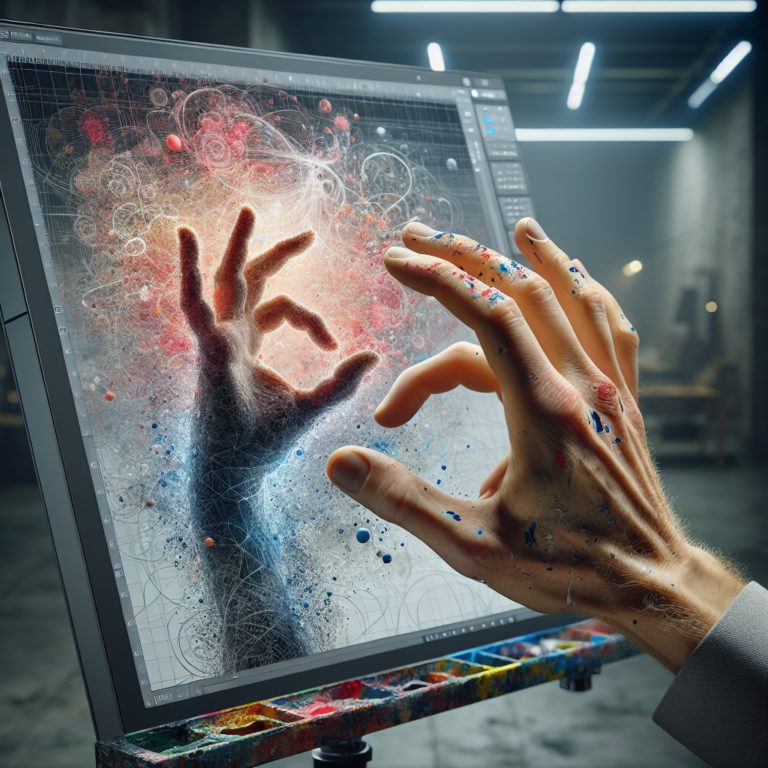
The realm of creativity, once considered the exclusive domain of human consciousness, is experiencing a profound transformation. With advancements in artificial intelligence, particularly generative AI, machines are now capable of producing outputs that mirror, augment, and even challenge our understanding of what it means to be creative. From composing symphonies and painting masterpieces to writing compelling narratives and designing innovative products, AI’s foray into the creative arts begs a fundamental question: where does the line between AI and human creativity truly blur?
This isn’t merely a philosophical exercise; it’s a critical inquiry into technology‘s impact on innovation, our economies, and the very essence of human expression. As AI tools become more sophisticated and accessible, understanding their capabilities and limitations relative to human ingenuity is paramount for navigating the future of work and culture.
Defining Creativity: A Human Lens
Before we can assess AI’s creative prowess, it’s essential to consider what we mean by “creativity” in a human context. Human creativity is often characterized by several key elements:
- Originality and Novelty: The ability to produce ideas or works that are new and unique, not merely reproductions of existing ones.
- Intent and Purpose: A conscious drive to create, often fueled by emotion, a desire to communicate, or to solve a problem.
- Emotional Depth and Empathy: The capacity to infuse work with feeling, connect with an audience on an emotional level, and draw from lived experiences.
- Critical Thinking and Problem-Solving: The iterative process of ideation, evaluation, refinement, and adaptation, often involving overcoming creative blocks.
- Intuition and Serendipity: The “aha!” moments, unexpected insights, or happy accidents that often spark groundbreaking ideas.
Human creativity is deeply intertwined with our consciousness, our unique life experiences, our understanding of context, and our ability to feel and express complex emotions. It’s an inherently subjective and often messy process.
AI’s Creative Forays: Mimicry or Masterpiece?
AI has made astonishing strides in generating creative content. Tools like DALL-E, Midjourney, and Stable Diffusion can generate photorealistic images from text prompts, while AI music composers like Amper Music and AIVA can create original scores in various styles. Large language models such as GPT-4 can write poetry, articles, screenplays, and even entire novels. These applications demonstrate AI’s capacity to:
- Generate Novel Combinations: By analyzing vast datasets of existing human-created works, AI can identify patterns, styles, and themes, then recombine them in novel ways to produce something new.
- Execute with Precision and Speed: AI can generate numerous variations and iterations of a creative concept far faster than any human, offering unprecedented speed in prototyping and exploration.
- Personalize Content at Scale: From personalized advertising copy to custom-generated user interfaces, AI can tailor creative outputs to individual preferences with remarkable accuracy.
A notable example is “The Next Rembrandt,” a project where AI analyzed Rembrandt’s entire oeuvre to generate a new painting in his distinctive style, complete with 3D-printed brushstrokes. While impressive, questions lingered: was it truly a “new” Rembrandt, or merely a sophisticated pastiche?
The Engine Under the Hood: How AI “Creates”
At its core, generative AI doesn’t “think” or “feel” in the human sense. Instead, it operates on algorithms, statistics, and vast datasets. When an AI “creates,” it typically:
- Learns Patterns: Through machine learning, particularly deep learning, AI models are trained on immense amounts of data (images, text, music). They identify underlying patterns, structures, and relationships within this data.
- Generates Outputs: Given a prompt or a set of parameters, the AI leverages these learned patterns to predict and construct new data that aligns with the desired output.
- Iterates and Refines: Advanced models can often refine their outputs based on feedback loops, either from human input or further algorithmic analysis, improving their “creative” quality over time.
This process is fundamentally different from human creation, which often stems from lived experience, emotional impulses, and an intrinsic desire to express. AI operates without consciousness, intention, or personal experience, leading many to argue that its outputs are sophisticated simulations of creativity rather than genuine acts of creation.
Blurring the Lines: Where AI Assists and Inspires
The true blurring of the lines often occurs not when AI acts independently, but when it serves as a powerful co-pilot and collaborator for human creators.
- Idea Generation and Brainstorming: AI can quickly generate diverse concepts, outlines, or visual mock-ups, providing a launchpad for human ideation. For a writer, an AI could suggest plot twists or character profiles. For a designer, it could render multiple logo variations.
- Automating Tedious Tasks: AI can take over repetitive, time-consuming aspects of the creative process, freeing up human artists for more strategic and imaginative work. This could include color correction, background removal, or generating initial drafts.
- Expanding Creative Capabilities: AI tools allow artists to explore new mediums and styles that might otherwise be inaccessible. Musicians can experiment with complex orchestrations, and visual artists can manipulate imagery in unprecedented ways.
- Personalized Experiences: In fields like gaming or interactive media, AI can create dynamic, adaptive content that responds to user input, offering uniquely tailored creative experiences.
- Bridging Skill Gaps: AI lowers the barrier to entry for creative expression. Someone without formal art training can generate stunning visuals, enabling more individuals to participate in the creative economy.
The adoption of AI in creative fields is rapidly increasing. A report by MarketsandMarkets in 2023 projected the generative AI market to grow from USD 10.9 billion in 2023 to USD 51.8 billion by 2028, underscoring its significant integration across industries, including creative ones. This growth indicates a shift towards AI as an indispensable tool rather than a mere novelty.
Beyond the Canvas: The Philosophical Debate
The question of whether AI can truly be creative pushes the boundaries of philosophy. If creativity requires consciousness, emotion, and free will, then AI, as it currently exists, falls short. Its “creations” are statistical extrapolations based on training data. They lack the spark of personal struggle, joy, or heartache that imbues human art with profound meaning.
However, if creativity is defined simply by the generation of novel and valuable outputs, then AI undeniably meets the criterion. The debate highlights the tension between the process and the product. A human may pour their soul into a painting, while an AI generates a visually similar image in seconds. Which one is “more” creative? The answer often depends on what value we place on intention, originality, and the narrative behind the creation.
The Future Landscape: Collaboration Over Competition
The most likely future scenario isn’t a battle between human and AI creativity, but a symbiotic relationship. AI will increasingly serve as an amplifier for human creativity, allowing us to achieve more, experiment faster, and explore previously unimaginable artistic frontiers.
- Augmented Human Creativity: AI will handle the repetitive tasks, offer suggestions, and generate variations, while humans retain control over vision, conceptualization, and emotional resonance.
- New Creative Roles: The rise of AI will likely create new jobs, such as “prompt engineers” who specialize in communicating effectively with AI, or “AI ethicists” ensuring responsible use of generative tools.
- Redefining Originality and Authorship: As AI becomes more sophisticated, questions around copyright, ownership, and the definition of original work will become increasingly complex and require new legal and ethical frameworks.
Ultimately, the unique blend of human intuition, emotional intelligence, and lived experience will remain irreplaceable. AI’s strength lies in its ability to process data and generate possibilities; human strength lies in discerning meaning, imbuing purpose, and connecting with others on a deeply human level.
Challenges and Ethical Considerations
While the potential of AI in creativity is vast, it also presents challenges:
- Bias in Training Data: If AI is trained on biased data, its creative outputs can perpetuate stereotypes or exclude diverse perspectives.
- Copyright and Ownership: Who owns the copyright of AI-generated work? The programmer, the user, or the AI itself? This is a contentious legal area.
- Job Displacement vs. Evolution: While new roles emerge, some traditional creative jobs may be automated, requiring workers to adapt and reskill.
- Authenticity and Value: As AI floods the market with content, discerning genuine human expression from AI-generated simulations will become a growing concern for audiences and consumers.
Conclusion
The line between AI and human creativity is not blurring into a single, indistinguishable entity, but rather evolving into a dynamic, interconnected frontier. AI is not replacing human creativity but rather expanding its definition and potential. It’s a powerful tool that can augment our abilities, accelerate our processes, and inspire us to push the boundaries of what’s possible.
The future of creativity will likely be a tapestry woven by both human ingenuity and algorithmic prowess, where the unique strengths of each complement the other. The challenge lies in harnessing AI responsibly and ethically, ensuring that it empowers human creators to reach new heights, rather than diminishing the intrinsic value and uniqueness of human expression.
Are you ready to explore how AI can elevate your creative projects? Embrace these new tools, experiment with their capabilities, and join the conversation on shaping a future where technology and human imagination create something truly extraordinary.