
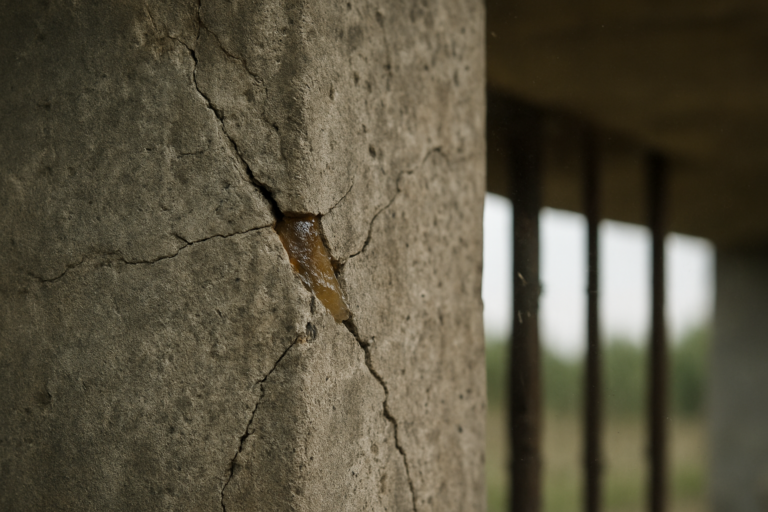
Imagine a world where cracks on a bridge seal themselves overnight—no work crews, no traffic detours, no massive repair bills. This isn’t science fiction; it’s the emerging reality of self-healing infrastructure. By embedding advanced polymers and bacteria-infused concrete into our roads, bridges, and tunnels, engineers are turning passive structures into living systems that detect and repair damage autonomously. For decades, civil engineering has relied on regular inspections and manual patching to keep aging infrastructure safe. But with climate change accelerating wear, and budgets stretched thin, the need for smarter solutions has never been more urgent. Self-healing materials promise to extend the lifespan of critical assets, reduce maintenance costs, and even prevent catastrophic failures. Let’s examine how these technologies work, where they are being deployed, and what it means for the future of our cities.
How Self-Healing Materials Work
Self-healing infrastructure leverages two primary approaches: chemical and biological. Each method imitates natural healing processes, but with engineered precision.
Polymer-Based Healing
In polymer-based self-healing materials, microcapsules or vascular networks filled with a liquid healing agent are embedded within the concrete or structural matrix. When a crack forms, the capsules rupture, releasing the agent into the gap. The agent then reacts with a catalyst or moisture in the environment to form a solid polymer that bonds the crack shut. This process can restore up to 80% of the material’s original strength, depending on the formulation.
- Microcapsule systems: Tiny spheres (10–500 µm) containing a monomer or epoxy are mixed into the concrete. Cracking breaks them, triggering polymerization.
- Vascular networks: Hollow fibers or channels run through the material, similar to blood vessels. They deliver a continuous supply of healing agent to multiple crack sites.
- Intrinsic healing: Some polymers themselves have reversible bonds that re-form after damage when stimulated by heat or light.
Bacteria-Based Healing
Bacteria-infused concrete uses dormant microorganisms—typically Bacillus species—that are mixed with calcium lactate and nutrients. When water enters a crack, the bacteria become active and metabolize the calcium lactate, producing calcium carbonate (limestone) as a byproduct. This precipitate fills the void, effectively “growing” new material.
- Spore survival: Bacterial spores can remain viable for decades inside concrete, only awakening when moisture penetrates.
- Self-repair depth: Cracks up to 0.8 mm wide can be completely sealed in laboratory conditions.
- Oxygen consumption: The bacterial process also consumes oxygen, which reduces internal steel reinforcement corrosion—a double benefit.
Real-World Applications
Self-healing infrastructure has moved beyond the lab into pilot projects and even commercial use. Two high-profile examples illustrate the potential:
Bridges
In the Netherlands, a pedestrian bridge in Delft uses bacteria-infused concrete. The concrete was mixed with bacterial spores and calcium lactate during casting. After four years, researchers observed that small surface cracks had sealed themselves with limestone deposits, preventing water ingress and freeze-thaw damage. The bridge requires far fewer inspections than conventional counterparts.
Tunnels
The London Crossrail project (now the Elizabeth line) tested polymer-based self-healing coatings on tunnel segments. The coating, a polyurethane-based material with microcapsules, was applied to precast concrete linings. When minor cracking occurred during installation, the coating autonomously healed within 24 hours, maintaining watertight integrity. The technology saved weeks of manual repointing work.
Benefits Beyond Repair
Self-healing materials offer advantages that go beyond fixing cracks:
- Extended service life: Structures can last 50–100% longer before requiring major rehabilitation.
- Reduced maintenance costs: The American Society of Civil Engineers estimates that U.S. infrastructure maintenance costs could drop by $20–30 billion annually if self-healing materials were widely adopted.
- Increased safety: Autonomous repair reduces the risk of unnoticed crack propagation leading to sudden failure.
- Lower carbon footprint: Fewer repair visits mean less traffic disruption, less material hauling, and reduced emissions from construction equipment.
- Improved resilience: Self-healing can handle multiple damage events, making bridges and tunnels more robust against earthquakes and extreme weather.
Challenges and Limitations
Despite the promise, self-healing infrastructure is not yet mainstream. Key hurdles include:
- Cost: Bacteria-infused concrete currently costs 20–40% more than traditional concrete. Polymer systems add 10–25% to material costs.
- Scale: Producing and storing live bacterial spores at construction sites requires careful logistics.
- Long-term reliability: How do these healing mechanisms behave after decades of freeze-thaw cycles, UV exposure, and dynamic loading? Longevity data is still sparse.
- Compatibility with existing materials: Retrofitting self-healing properties into old structures is far more complex than embedding them in new builds.
- Standardization: There are no international standards for testing or certifying self-healing performance, which slows industry adoption.
The Road Ahead
Research is accelerating. Scientists are exploring hybrid systems that combine bacterial healing with polymer networks for maximum durability. Smart sensors embedded alongside self-healing materials can wirelessly report cracks as they heal, creating a truly intelligent infrastructure ecosystem. Governments in Japan, Switzerland, and the Netherlands have already funded large-scale demonstration projects. The European Union’s Healing Cities initiative aims to deploy self-healing concrete in at least ten major urban bridges by 2030.
As material costs decrease through mass production and supply chain optimization, self-healing infrastructure could become the standard for all new critical structures. Engineers envision a future where roads repair potholes overnight, tunnel linings seal leaks without human intervention, and bridges send automated health reports to maintenance teams. The rise of smart materials marks a fundamental shift from reactive to proactive infrastructure management—one where the built environment takes care of itself.