
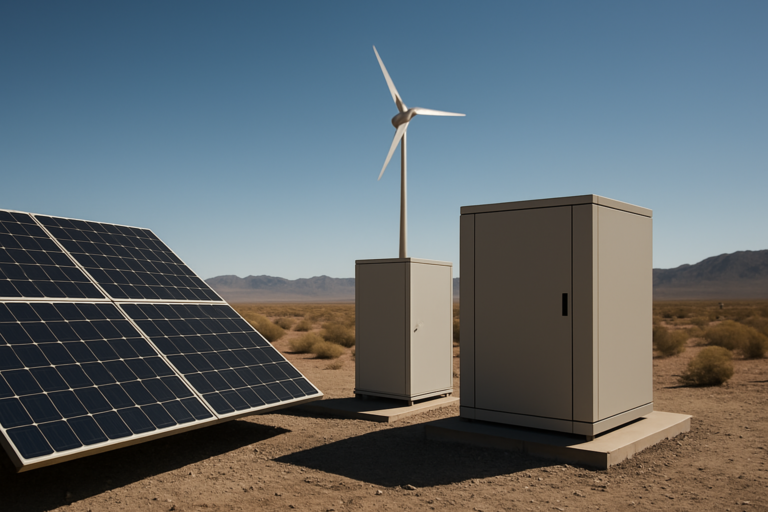
In a world increasingly dependent on connectivity and constant power, millions of people in remote hubs—from island communities to mountain lodges, military outposts to disaster zones—still struggle with unreliable electricity. The conventional solution of extending transmission lines is often prohibitively expensive or logistically impossible. Enter autonomous microgrids: self-contained, intelligent energy systems that can operate independently or in coordination with the main grid. These localized networks are not just a stopgap; they are a transformative approach to energy independence, combining renewable generation, battery storage, and advanced control algorithms to deliver stable power where it’s needed most.
The Anatomy of an Autonomous Microgrid
An autonomous microgrid is more than a solar panel and a battery. It is a sophisticated system integrating multiple distributed energy resources (DERs)—such as solar photovoltaics, wind turbines, diesel generators, and energy storage—under a central controller that continuously balances supply and demand. What sets it apart is its ability to “island” itself from the main grid during outages or operate entirely off-grid without any connection to a utility. The controller uses real-time data from sensors and weather forecasts to dispatch power, manage load shedding, and even predict faults before they happen.
According to a 2022 report from the International Energy Agency (IEA), over 1.2 billion people worldwide still lack access to reliable electricity. In regions like sub-Saharan Africa and parts of South Asia, microgrids have already proven to be up to 40% cheaper than grid extension over a 20-year lifecycle. These numbers underscore the economic and social imperative for deploying autonomous systems in remote hubs.
Self-Healing Capabilities: The Intelligent Core
One of the most compelling features of next-generation microgrids is self-healing. Using machine learning algorithms and real-time diagnostics, the controller can automatically reroute power, isolate faulty segments, and reconfigure the network without human intervention. For instance, if a solar array goes offline due to shading or a panel fault, the system seamlessly draws from battery reserves or ramps up a backup generator. This dynamic adaptability drastically reduces downtime—a critical factor for remote health clinics, research stations, or telecommunication towers.
- Fault detection within milliseconds
- Automatic islanding when the main grid becomes unstable
- Predictive maintenance alerts via IoT sensors
- Black start capability to restart the grid after a complete shutdown
Why Remote Hubs Are Ideal Candidates
Remote hubs face unique energy challenges: high transmission losses, vulnerability to weather, limited access to fuel, and often a weak economic case for large-scale infrastructure. Autonomous microgrids address each of these pain points directly.
Cost Savings and Fuel Independence
Diesel generators are the default for many off-grid sites, but they come with volatile fuel costs, logistical headaches, and carbon emissions. A microgrid powered by solar and storage can reduce diesel consumption by 70–90%, according to case studies from the Rocky Mountain Institute. For an Alaskan fishing village or a Chilean mining camp, that translates into millions of dollars in annual savings. Moreover, by leveraging local renewables, these communities become less exposed to global fuel price shocks.
Reliability Beyond the Grid
In 2021, a major ice storm knocked out power to nearly half a million people in Texas, but a handful of remote microgrids in the state—like the one powering the Blue Mountain ski resort—kept running. These systems are designed for worst-case scenarios, with redundant components and the ability to operate indefinitely on stored energy and renewables. For emergency response hubs or off-grid scientific facilities, this resilience is non-negotiable.
Real-World Deployments That Work
Across the globe, autonomous microgrids are moving from pilot projects to mainstream adoption.
- The island of Ta’u, American Samoa – Completed in 2016, this microgrid uses 5,328 solar panels and 60 Tesla Powerpacks to supply 100% of the island’s electricity, displacing 109,500 gallons of diesel annually. The system is fully autonomous, with no backup generator required.
- Canada’s Kasabonika Lake First Nation – This remote indigenous community replaced its diesel dependence with a 300 kW solar array, 1 MWh battery, and a smart controller that optimizes for weather patterns. Result: 80% reduction in diesel usage and a stable power supply even in -40°C winters.
- Hawaii’s Molokai Island – A community microgrid aggregates solar from households and a central battery to reduce curtailment and improve grid stability. The controller uses AI to forecast demand and manage charging cycles.
These examples demonstrate that autonomous microgrids are not science fiction—they are deployable today, with proven technology and financing models.
The Role of Digital Twins and AI
Modern microgrid controllers increasingly rely on digital twins—virtual replicas of the physical energy system. These digital models simulate thousands of scenarios, from extreme weather to component failures, allowing operators to test responses without risking the real equipment. AI algorithms then optimize dispatch schedules in real time, factoring in electricity prices, weather forecasts, and battery degradation.
For remote hubs that lack on-site engineering staff, the autonomous layer becomes even more critical. Cloud-based monitoring platforms enable technicians thousands of miles away to diagnose issues, update software, and even conduct remote hardware resets. This scalability reduces the total cost of ownership and makes microgrids viable for smaller communities.
Challenges on the Road to Autonomy
Despite the promise, autonomous microgrids are not plug-and-play. Key hurdles include:
- High upfront capital costs – Batteries and controllers remain expensive, though prices have fallen 80% since 2010.
- Regulatory barriers – Many regions lack clear policies for interconnection, net metering, or private ownership of microgrids.
- Skill gaps – Designing, installing, and maintaining an autonomous system requires specialized knowledge that is still scarce in remote areas.
- Cybersecurity risks – As microgrids become more connected, they are vulnerable to cyberattacks that could disrupt critical operations.
However, innovations in modular hardware, standardized software platforms, and community financing models are gradually addressing these obstacles. For instance, the World Bank’s Lighting Global program has helped deploy over 100 microgrids in Africa using a pay-as-you-go model, lowering the barrier for low-income users.
The Future: Swarm Microgrids and Transactive Energy
Looking ahead, the next evolution is the “swarm” microgrid—a network of multiple autonomous microgrids that can trade energy among themselves using blockchain or similar peer-to-peer protocols. In this vision, a solar-powered village in the hills could