
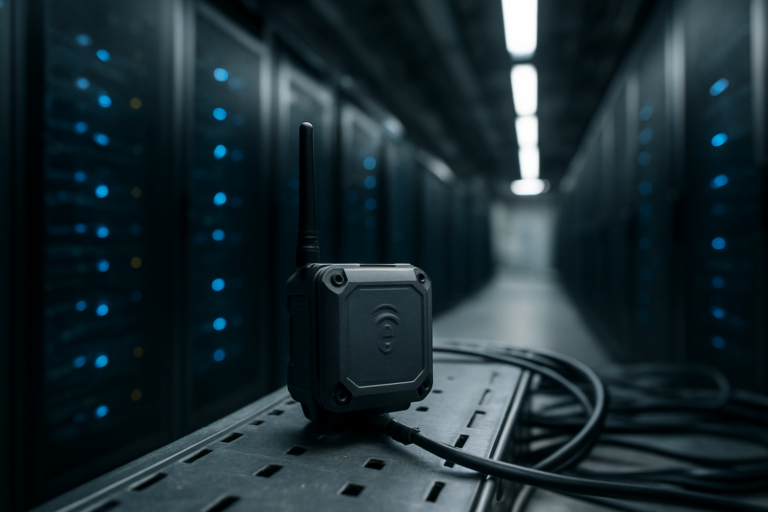
The exponential growth of Internet of Things (IoT) devices has created an unprecedented attack surface. From smart thermostats in offices to industrial sensors on oil rigs, every connected endpoint represents a potential gateway for cybercriminals. Traditional perimeter-based security models—where trust is granted once a device is inside the corporate network—are no longer sufficient. Enter Zero Trust: a security framework that eliminates implicit trust and continuously verifies every access request, regardless of origin. For hyper-connected IoT environments, Zero Trust is not just an upgrade; it is a necessity.
Why Traditional Security Fails IoT
Classic network security relies on a castle-and-moat approach: strong defenses at the perimeter, but once inside, devices and users are trusted. IoT devices, however, are often resource-constrained, lack built-in security features, and are deployed in vast numbers. A single compromised smart sensor can serve as a pivot point for lateral movement, leading to data exfiltration or ransomware attacks. According to a 2023 report by Palo Alto Networks, 57% of IoT devices are vulnerable to medium- or high-severity attacks, and nearly 98% of all IoT traffic is unencrypted. Traditional firewalls and VLANs cannot keep pace with the dynamic, device-dense reality of hyper-connected environments.
Core Principles of Zero Trust for IoT
Zero Trust is built on three foundational tenets, each adapted for the unique constraints of IoT:
- Never trust, always verify: Every device, user, and application must authenticate and be continuously authorized before accessing any resource. For IoT, this means devices must prove their identity—often via hardware-rooted certificates or device attestation—each time they connect. There is no “trusted network” badge.
- Least-privilege access: Devices are granted only the minimum permissions required to perform their function. A temperature sensor should not be able to communicate with a database server. Micro-segmentation enforces this by isolating devices into logical groups with strict traffic rules.
- Assume breach: The network must be designed as if an attacker is already inside. IoT devices are monitored for anomalous behavior, such as unexpected data flows or firmware changes, and automatically quarantined when suspicious activity is detected.
Implementing Zero Trust in IoT Environments
1. Device Identity and Authentication
Before a device can do anything, it must be recognized. This starts at onboarding. Using Public Key Infrastructure (PKI), each IoT device receives a unique digital certificate baked into its firmware or hardware security module. During connection, the device presents its certificate to a network access control (NAC) system, which validates it against a trusted registry. For devices that cannot run full TLS stacks, lightweight alternatives like Datagram Transport Layer Security (DTLS) or token-based authentication can be used. The key is that no device, even a known one, is trusted simply because it is physically plugged in.
2. Micro-Segmentation and Software-Defined Perimeters
Instead of flattening the network, Zero Trust divides it into micro-perimeters. IoT devices are isolated into separate virtual networks based on function, location, or risk profile. For example, building automation devices (HVAC, lighting) are segmented from medical IoT devices in a hospital. Software-defined perimeter (SDP) solutions enforce these boundaries at the application layer, hiding resources from unauthorized devices. Traffic between segments flows through a policy enforcement point that inspects each packet. This containment prevents a compromised sensor from infecting an entire building’s control system.
3. Continuous Monitoring and Behavioral Analytics
Zero Trust assumes that a device’s identity may be stolen or its behavior may change. Machine learning models establish baseline patterns for each device’s traffic: normal communication partners, packet sizes, frequency, and time of day. Deviations—such as a smart meter suddenly sending large data blocks to an external IP—trigger automated responses. These can include revoking access, forcing re-authentication, or isolating the device to a quarantine VLAN. Real-world deployments, like those at a large manufacturing plant, have used such analytics to catch zero-day exploits targeting programmable logic controllers (PLCs) within minutes.
4. Policy Enforcement Everywhere
Access policies are not static firewall rules. In Zero Trust, policies are dynamic and context-aware. They can consider device health (e.g., patch level, antivirus status), user identity, time, location, and even current threat intelligence feeds. For example, a firmware update server might be reachable only by devices that have a specific certificate and are requesting during a scheduled maintenance window. Policies are enforced both at the network edge (via switches, routers, and SD-WAN) and at the cloud gateway. This aligns with the reality that many IoT devices communicate directly with cloud services—bypassing the corporate data center entirely.
Challenges and Real-World Considerations
While Zero Trust offers robust security, IoT environments present unique obstacles:
- Resource constraints: Many IoT devices have limited CPU, memory, and battery life. Heavy cryptographic operations can tax them. Edge gateways often offload authentication and policy enforcement to reduce device burden.
- Scale: Enterprises may manage tens of thousands of IoT endpoints. Manual certificate provisioning is infeasible. Automated enrollment protocols like SCEP (Simple Certificate Enrollment Protocol) and secure onboarding frameworks like FIDO Device Onboard (FDO) streamline mass deployment.
- Legacy devices: Older equipment may lack support for modern security protocols. In such cases, network segmentation and virtual patching (e.g., intrusion prevention policies) provide compensatory controls without upgrading hardware.
A 2024 study by Gartner predicted that by 2026, 60% of organizations will adopt Zero Trust for at least one IoT use case, up from 10% in 2023. The shift is driven by both regulatory pressure—such as the EU Cyber Resilience Act—and high-profile attacks like the 2023 breach of a major water utility via unsecured internet-connected pumps.
The Future: Self-Healing IoT with Zero Trust
Advanced Zero Trust architectures are beginning to incorporate automated remediation. When a device is compromised, the system not only blocks it but also triggers a self-healing response: the device’s firmware is rolled back to a known good state, or it is issued a new certificate after re-attestation. Combined with AI-driven threat detection, this creates a security loop that adapts in real time. The hyper-connected perimeter becomes a living, breathing defense—constantly verifying, isolating, and repairing.
Organizations should start by inventorying every IoT device on their network and categorizing them by risk. Deploy strict identity-based access controls on the most critical systems first. Then extend Zero Trust policies to the entire IoT fabric. The goal is not to eliminate risk entirely—that is impossible—but to reduce the blast radius of any single failure. In a world where every light bulb, valve, and camera can be a vector, Zero Trust is the only logical response. The perimeter is no longer a wall; it is a persistent, vigilant process.