
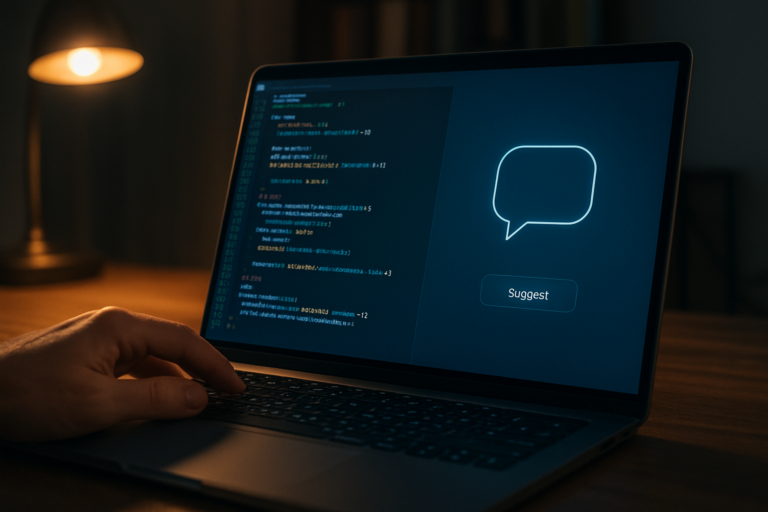
The landscape of software development is undergoing a seismic shift. For decades, writing code was a purely human endeavor—crafting every line, debugging every error, and architecting every solution. Today, artificial intelligence has begun to write code alongside us, not as a replacement, but as a powerful collaborator. Tools like GitHub Copilot, ChatGPT, and Amazon CodeWhisperer are already generating millions of lines of code daily. This transformation raises a fundamental question: what does the future hold for human coders when AI can write code at scale?
The Rise of AI Code Assistants
The concept of AI writing code is not new—early research in program synthesis dates back to the 1970s. But the breakthrough came with large language models (LLMs) trained on vast repositories of public code. OpenAI’s Codex, the engine behind GitHub Copilot, was trained on billions of lines of code from GitHub repositories. When released in 2021, it stunned developers by generating functional code from natural language prompts.
Since then, adoption has skyrocketed. GitHub reported that Copilot is used by over 1.8 million developers and has been integrated into more than 20,000 organizations. A 2023 study by GitHub and Microsoft found that developers using Copilot completed tasks 55% faster than those who did not. The impact is not just speed—it’s about reducing the cognitive load of writing boilerplate, remembering syntax, and searching for documentation.
Other players have entered the arena. Google’s Gemini, Anthropic’s Claude, and Meta’s Code Llama all offer code generation capabilities. Even IDEs like Visual Studio Code and JetBrains have built-in AI assistants. The era of AI writing code is no longer speculative—it is here, and it is reshaping how software is built.
How AI Changes the Developer’s Role
As AI takes over the mechanical aspects of coding, the developer’s role is evolving from writer to curator and architect. Instead of typing every line, developers now spend more time reviewing AI-generated suggestions, validating correctness, and ensuring security and performance. This shift demands a deeper understanding of system design, business logic, and user experience.
From Syntax to Intent
One of the most profound changes is the move from “how” to “what.” Traditional coding requires developers to specify every implementation detail. AI code assistants allow developers to express intent in plain English and let the model handle the underlying syntax. For example, a developer can type “Create a function that validates email addresses” and see a complete, parameterized function appear in seconds.
This frees up mental energy for higher-level thinking. Developers can focus on the overall architecture, edge cases, and integration with other systems. The result is faster prototyping, fewer repetitive tasks, and a more creative engineering process.
The Curator’s Mindset
With AI generating code, quality assurance becomes paramount. Studies show that AI-generated code can contain subtle bugs, security vulnerabilities, or logical errors. A 2024 analysis by Stanford researchers found that code from LLMs often passed unit tests but failed in edge cases. Developers must now act as careful reviewers, testing thoroughly and understanding the generated code before accepting it.
This curator role is not new—code review has always been part of software development—but the volume increases. Teams need to adopt new workflows, such as automated testing pipelines that specifically validate AI-generated code.
Impact on Education and Learning
The rise of AI writing code is reshaping how we teach programming. Novice programmers can now use AI assistants to get instant feedback, understand code snippets, and accelerate their learning curve. Platforms like Replit and Codecademy integrate AI tutors to help students debug and explain concepts.
However, there is a risk: over-reliance on AI can hinder the development of fundamental problem-solving skills. Educators are now rethinking curricula to emphasize computational thinking, debugging strategies, and system design, rather than memorizing syntax. The goal is to produce developers who can use AI as a tool, not a crutch.
Ethical and Quality Considerations
AI writing code raises several ethical and practical concerns. First, code generation models are trained on publicly available code, often without explicit consent from original authors.