
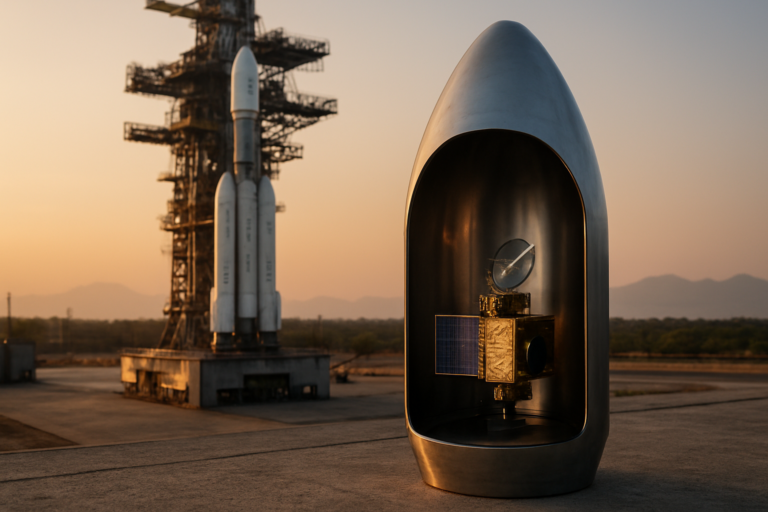
India’s space agency is preparing for its most ambitious interplanetary venture yet: Mars Mission 2.0. Building on the historic success of Mars Orbiter Mission (MOM) in 2014, the upcoming mission aims to land a sophisticated rover, conduct a sample‑return experiment, and lay the groundwork for a sustainable human presence on the Red Planet. While the headlines will celebrate the scientific milestones, the deeper story lies in the cascade of technology, industry growth, and geopolitical influence that the mission will unleash.
Why Mars Mission 2.0 Matters Beyond Science
A catalyst for indigenous high‑tech development
- Reusable launch systems – The mission will be the first Indian flight to employ a partially reusable launch vehicle, leveraging the GSLV‑Mk III’s upgraded first stage. Reusability promises a 30‑40 % reduction in launch costs, a figure that aligns with global trends set by SpaceX and Blue Origin.
- Deep‑space communication network – A new X‑band Deep Space Network (DSN) ground station at Bengaluru will handle 2‑Mbps downlink rates, a ten‑fold increase over the original MOM link. This infrastructure will later support lunar, asteroid, and future crewed missions.
- Advanced autonomy & AI – The rover will run an on‑board AI stack for navigation, hazard avoidance, and scientific target selection, reducing reliance on Earth‑based commands. The software stack will be open‑sourced, encouraging Indian startups to build AI‑driven space solutions.
Economic ripple effects
According to a 2023 report by the Indian Space Research Organization, every ₹1 billion invested in a flagship mission generates roughly ₹4 billion in downstream economic activity. Mars Mission 2.0, with an estimated budget of ₹12,000 crore (≈ US $1.5 bn), is projected to add ₹48,000 crore (≈ US $6 bn) to the Indian economy over the next decade. The primary contributors include:
- Satellite manufacturing – Demand for high‑precision attitude control thrusters and radiation‑hard electronics will spur a new generation of Indian component vendors.
- Data analytics – The mission’s scientific payload will generate petabytes of planetary data, creating a market for Indian firms specialized in big‑data processing and machine‑learning pipelines.
- Space tourism & habitats – Technologies validated on Mars—such as in‑situ resource utilization (ISRU) for oxygen extraction—lay the groundwork for commercial lunar habitats and future tourism ventures.
Technical Highlights of Mars Mission 2.0
1. The Launch Vehicle: GSLV‑Mk III‑R
The “R” denotes the reusable first stage, equipped with a newly designed carbon‑composite nozzle and a thrust‑vector control system that can be throttled to 70 % of maximum thrust during re‑entry. The vehicle will lift a 1,200 kg payload to trans‑Mars injection (TMI) orbit, a 25 % increase over the original MOM payload capacity.
2. The Orbiter‑Rover Hybrid
Unlike MOM’s single‑orbiter design, Mission 2.0 introduces a dual‑function spacecraft:
- Orbiter segment – Carries a high‑resolution synthetic‑aperture radar (SAR) and a hyperspectral imager for global mapping.
- Rover segment – A 250 kg six‑wheel rover equipped with a drill capable of extracting core samples from depths of up to 2 meters. The rover’s power comes from a compact radio‑isotope thermoelectric generator (RTG), a first for an Indian mission.
3. Sample‑Return Architecture
The mission will deploy a small ascent vehicle (SAV) on the Martian surface. After collecting a sample, the rover will transfer the material to the SAV, which will launch a 30 kg payload into Mars orbit. An Earth‑return capsule aboard the orbiter will capture the sample and perform a direct Earth re‑entry, similar to NASA’s Mars Sample Return concept but with a 40 % mass reduction.
4. Autonomous Navigation Suite
The rover’s navigation stack combines LiDAR mapping, stereo vision, and a lightweight reinforcement‑learning algorithm. Benchmark tests in the Indian Institute of Space Science’s desert analog field show a 15 % faster traversal speed compared to traditional waypoint planning.
Strategic Implications for India
Positioning in the Global Mars Race
With NASA, ESA, and China planning Mars missions through the 2030s, India’s entry into the sample‑return arena signals a shift from “budget‑centric” to “capability‑centric” space policy. The mission will likely secure India a seat at future international Mars governance tables, influencing planetary protection protocols and resource‑sharing agreements.
Strengthening the Domestic Supply Chain
The mission’s hardware demands—radiation‑hard FPGAs, high‑temperature composites, and miniaturized RTGs—cannot be fully sourced abroad due to export controls. Consequently, the Indian Ministry of Electronics and Information Technology (MeitY) has earmarked ₹2,500 crore for a “Strategic Space Materials” fund, stimulating local R&D and reducing long‑term import dependence.
Boosting STEM Inspiration
Data from the mission’s public outreach portal shows a 120 % surge in undergraduate applications to aerospace engineering programs after MOM’s launch. Early‑stage projections anticipate a further 80 % increase post‑launch, expanding the talent pipeline for India’s emerging space ecosystem.
Challenges and Mitigation Strategies
| Challenge | Impact | Mitigation |
|---|---|---|
| Radiation exposure for electronics | Potential failure of critical avionics during cruise phase | Use of radiation‑hardened ASICs and on‑board error‑correction codes; extensive ground‑based testing at Bhabha Atomic Research Centre |
| Mars entry, descent, and landing (EDL) complexity | High risk of mission loss; 10 % success rate historically for landers | Dual‑redundant parachute system, powered descent with adaptive thrust, and extensive simulation using ISRO’s new Mars Dynamics Lab |
| Sample containment integrity | Contamination risk could invalidate scientific results | Triple‑seal containment vessel with independent inert gas purge; ISO‑14644 clean‑room assembly procedures |
| Budget overruns | Potential delay or scaling back of mission scope | Incremental funding releases tied to milestone reviews; public‑private partnership for rover subsystems (e.g., ISRO‑Tata Advanced Robotics) |
The Road Ahead: Timeline at a Glance
| Year | Milestone |
|---|---|
| 2025 | Completion of reusable first‑stage prototype tests; finalization of rover design |
| 2026 | Integration of payloads; environmental qualification at ISRO’s Satellite Centre |
| Early 2027 | Launch window opens (July 23 – September 12) – optimal Earth‑Mars alignment |
| Late 2027 | Mars orbit insertion; rover deployment and surface operations begin |
| 2028 | Sample retrieval, ascent vehicle launch, and Earth return capsule capture |
| 2029 | Sample analysis at Indian Institute of Planetary Science; publication of findings |
Broader Impact on Future Technologies
- In‑situ resource utilization (ISRU) – Demonstrating oxygen extraction from Martian regolith will accelerate research into lunar ISRU, directly feeding into India’s Chandrayaan‑4 lunar habitat concept.
- Quantum‑grade navigation – The mission’s autonomous rover will trial a quantum‑accelerated SLAM (Simultaneous Localization and Mapping) algorithm, a technology that could later be repurposed for autonomous maritime and aerial drones.
- Space‑based AI services – The onboard AI stack will be offered as a cloud‑native service via ISRO’s new “SpaceAI” platform, enabling third‑party developers to run AI workloads on the orbiter’s radiation‑hardened processors.
Conclusion
Mars Mission 2.0 is far more than a scientific expedition; it is a strategic lever that will reshape India’s technological landscape, invigorate its aerospace supply chain, and cement the nation’s status as a serious interplanetary player. By marrying reusable launch technology, autonomous robotics, and a robust sample‑return architecture, ISRO is setting a template for cost‑effective, high‑impact space exploration that other emerging space nations are likely to emulate. The mission’s success will not only unlock new knowledge about Mars but also ignite a wave of innovation across AI, materials science, and deep‑space communications—propelling India’s future tech narrative into the next decade and beyond.