
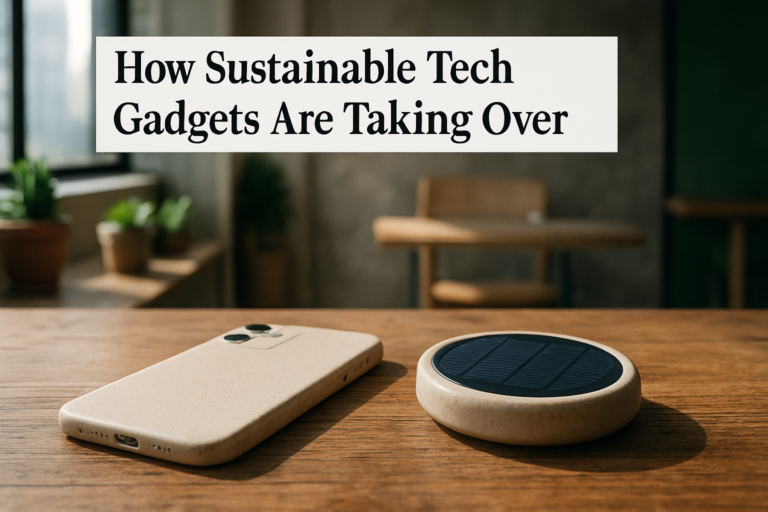
The tech world is undergoing a quiet revolution. While headlines still scream about faster processors and bigger screens, a parallel narrative is gaining momentum: sustainability is no longer a niche concern but a core driver of product design. From smartphones built with recycled aluminum to wearables powered by kinetic energy, eco‑friendly gadgets are moving from the periphery to the mainstream. This shift is reshaping supply chains, influencing consumer choices, and setting new standards for innovation.
The Market Momentum Behind Green Gadgets
Rapid Growth Statistics
- Global market size: The sustainable electronics market was valued at $12.4 billion in 2023 and is projected to reach $23.1 billion by 2030, growing at a CAGR of 8.5 % (Source: Grand View Research).
- Consumer demand: A 2024 Pew Research poll found that 68 % of tech buyers consider a product’s environmental footprint before purchase, up from 49 % in 2019.
- Corporate pledges: Over 70 % of Fortune 500 tech firms have announced zero‑carbon hardware goals for the next decade, accelerating R&D investment in green materials.
These numbers illustrate that sustainability is becoming a commercial imperative, not just a corporate social responsibility checkbox.
Drivers of Adoption
- Regulatory pressure – The EU’s “Eco‑Design Directive” now mandates minimum reparability scores for electronic devices, forcing manufacturers to design for longevity.
- Resource scarcity – Critical minerals such as cobalt and rare earths face supply constraints, prompting a shift toward alternative materials and circular reuse.
- Consumer activism – Millennials and Gen Z, who together represent over 40 % of global purchasing power, actively seek products with transparent carbon footprints.
Core Technologies Powering Sustainable Gadgets
1. Recycled and Bio‑Based Materials
- Aluminum & steel: Closed‑loop recycling can cut production emissions by up to 95 % compared with virgin extraction.
- Bioplastics: Derived from corn starch or algae, these polymers replace petroleum‑based plastics in casings and accessories, offering biodegradability without sacrificing durability.
- Mushroom mycelium: Emerging as a shock‑absorbing, compostable material for protective cases, reducing landfill waste.
2. Energy‑Efficient Architecture
- Low‑power processors: ARM’s “Efficient‑Core” designs consume up to 30 % less energy while delivering comparable performance for everyday tasks.
- Dynamic voltage scaling: Real‑time adjustment of power draw based on workload, extending battery life and reducing heat output.
- Edge AI: Performing inference locally eliminates constant cloud communication, saving data‑center energy.
3. Renewable Power Integration
- Solar panels: Integrated photovoltaic layers on wearables and laptop lids provide trickle charging in daylight, extending usage by 15‑20 %.
- Kinetic harvesters: Piezoelectric films embedded in straps convert motion into usable electricity, ideal for fitness trackers.
- Thermoelectric generators: Capture body heat to power low‑energy sensors, a breakthrough for medical wearables.
4. Modular Design & Repairability
- Snap‑fit modules: Batteries, cameras, and storage can be swapped without soldering, encouraging upgrades over replacements.
- Standardized screws and tools: Aligning with the “Right to Repair” movement, many manufacturers now publish repair manuals and provide spare parts for up to ten years.
Real‑World Examples Leading the Charge
| Company | Sustainable Gadget | Key Eco Feature |
|---|---|---|
| Fairphone | Smartphone (4th gen) | 100 % recycled aluminum frame, modular components, conflict‑free tin |
| Apple | iPhone 15 Pro | 100 % recycled rare earth magnets, carbon‑neutral aluminum enclosure |
| Garmin | Vivosmart 5 | Solar‑assisted charging, recyclable silicone band |
| Dell | Latitude Rugged Extreme | 95 % post‑consumer recycled plastic chassis, easy‑replace battery |
| Nest Hub (2nd gen) | Low‑power OLED display, 30 % less standby power |
These products demonstrate that sustainability can coexist with premium performance and design aesthetics.
Environmental Impact: Beyond the Product
Reducing E‑Waste
Electronic waste accounted for 57 million metric tons globally in 2022, the fastest‑growing waste stream. Sustainable gadgets mitigate this by:
- Extending product lifespans through repairability (average lifespan increase of 2.5 years).
- Enabling take‑back programs that recover up to 85 % of component weight for reuse.
Carbon Footprint Savings
A life‑cycle assessment of a modular smartphone versus a conventional model shows a 40 % reduction in CO₂e emissions, primarily due to:
- Lower material extraction impacts.
- Decreased manufacturing energy through smaller, incremental upgrades.
- Higher resale value encouraging secondary markets.
Social Benefits
Ethical sourcing of conflict‑free minerals improves labor conditions in mining regions, while transparent supply chains foster trust among consumers and investors.
Challenges Still Ahead
- Cost parity – Eco‑friendly materials can be pricier; economies of scale are needed to bring prices down.
- Performance trade‑offs – Bioplastics may still lag behind high‑grade polymers in heat resistance; ongoing R&D is crucial.
- Standardization – Lack of universal repairability metrics hampers cross‑brand comparisons and consumer understanding.
Addressing these hurdles requires collaboration among manufacturers, regulators, and research institutions.
How Consumers Can Drive the Trend
- Prioritize repairability scores when shopping; look for “E‑Score” labels on packaging.
- Participate in take‑back programs offered by brands; many now provide prepaid shipping for old devices.
- Support open‑source hardware projects that emphasize modularity and longevity.
- Demand transparency by asking manufacturers for full life‑cycle impact reports.
Individual choices, aggregated across millions, create market pressure that accelerates sustainable innovation.
The Future Outlook: What’s Next?
- Circular ecosystems: Companies are experimenting with subscription models where users lease devices and return them for refurbishment, keeping hardware in a closed loop.
- AI‑guided design: Machine learning optimizes material usage, reducing waste by predicting stress points and suggesting lighter structures.
- Smart‑grid integration: Future wearables could feed excess solar energy back into home energy systems, blurring the line between personal devices and the broader energy network.
- Quantum‑efficient chips: Emerging low‑temperature quantum processors promise orders‑of‑magnitude lower power consumption for specialized tasks, opening a new frontier for green computing.
The convergence of these innovations points toward a tech landscape where performance, convenience, and planetary stewardship are mutually reinforcing rather than mutually exclusive.
In summary, sustainable tech gadgets are no longer a fringe experiment. They represent a decisive shift in how the industry approaches design, manufacturing, and end‑of‑life management. By embracing recycled materials, energy‑efficient architecture, renewable power sources, and modular repairability, today’s innovators are laying the groundwork for a greener digital future—one device at a time.